
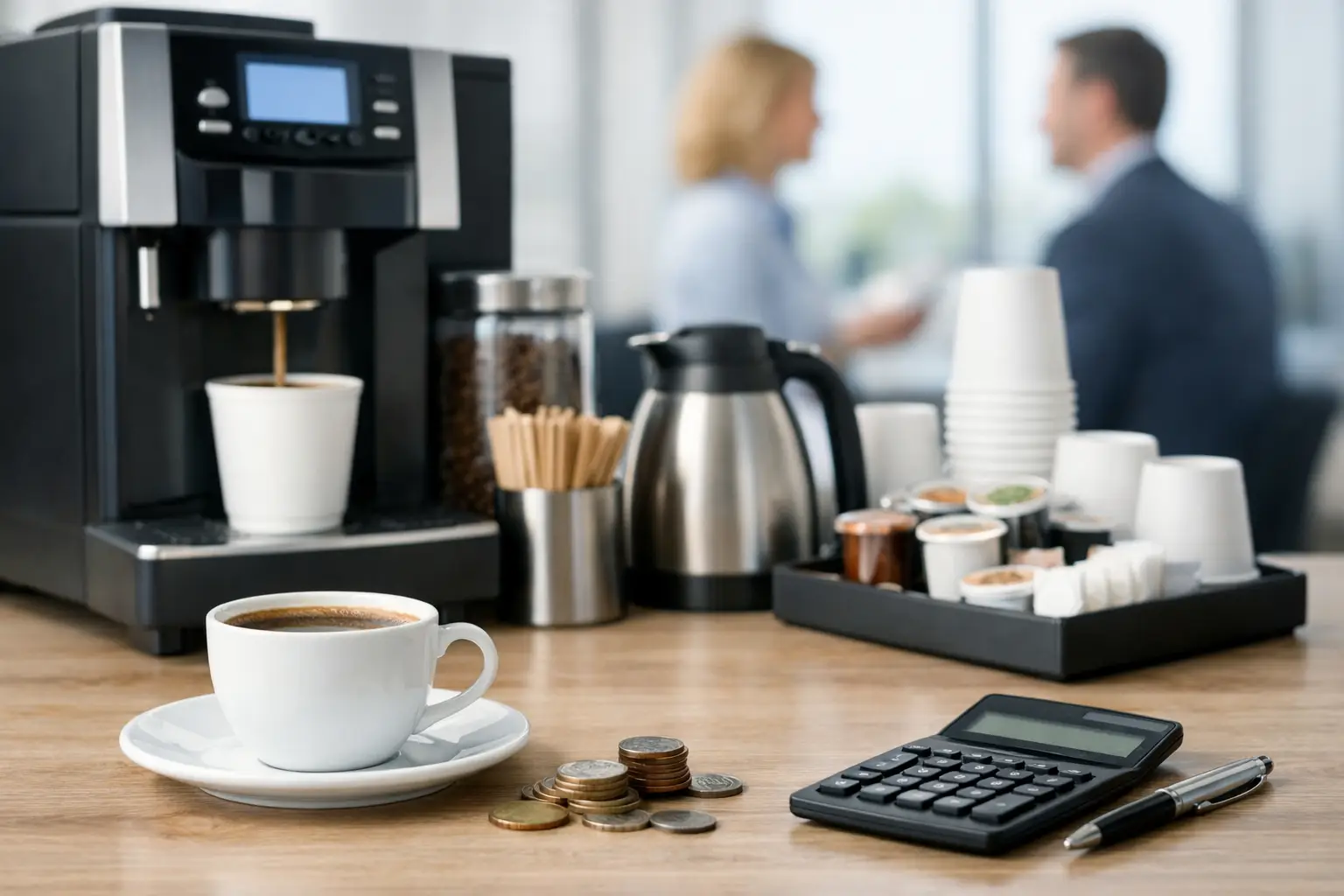
When an office asks how much is office coffee service, the real question is usually bigger than price alone. It is about what your team will actually drink, how often supplies need to be replenished, what kind of machine fits your workplace, and how much time your staff should spend managing any of it.
For some businesses, office coffee service is a simple countertop brewer with regular deliveries of coffee, cups, and creamers. For others, it means a premium bean-to-cup system, filtered water, branded beverages, tea, break room supplies, and ongoing equipment support. The monthly cost can vary quite a bit, but the good news is that most offices can find a setup that fits both budget and expectations.
How much is office coffee service for most workplaces?
A basic office coffee service plan can start around $40 to $100 per month for a small office with modest coffee consumption and a simple brewer. A mid-sized office with higher usage, more product variety, and scheduled replenishment may land closer to $150 to $400 per month. Larger workplaces, premium coffee programs, or offices with advanced equipment can run $500 per month and up.
Those numbers are helpful as a starting point, but they are not one-size-fits-all. Two offices with the same headcount can have very different costs depending on drinking habits, equipment preferences, and service expectations. A 25-person office where five people drink one cup a day will price differently than a 25-person office where most employees and visitors expect specialty coffee throughout the day.
That is why reliable providers usually build pricing around usage and service needs rather than offering a flat number that does not reflect reality.
What drives office coffee service pricing?
The biggest cost factor is consumption. The more coffee, tea, cups, sweeteners, and condiments your workplace uses, the higher the monthly spend. This sounds obvious, but it is where many buyers underestimate the total. Guest traffic, meetings, and hybrid schedules can all change usage patterns.
Equipment is the next major variable. Traditional glass pot brewers and thermal brewers are generally more economical than bean-to-cup machines or premium single-cup systems. If your goal is straightforward, dependable coffee for a break room, a classic brewer may be the most cost-effective route. If you want café-style drinks, fresh grinding, and a more upscale employee experience, the monthly investment will usually be higher.
Product selection also matters. National coffee brands, specialty roasts, single-cup pods, premium teas, and branded condiments all affect the bottom line. Offices that want more variety usually spend more, but they also tend to see stronger employee satisfaction because there is something for everyone.
Then there is service frequency. A workplace that needs weekly restocking and active account support will be priced differently than one with lower usage and less frequent deliveries. Reliable service has value, especially when your office wants to avoid running out of product or dealing with machine downtime.
Equipment choices and how they affect cost
If you are comparing options, it helps to think in terms of function rather than just machine type.
A traditional brewer is often the most budget-friendly option. It works well for offices that need dependable regular coffee without extra complexity. Costs stay lower because the equipment is simpler, coffee format is efficient, and maintenance tends to be straightforward.
Single-cup pod systems offer convenience and variety, but the per-cup cost is usually higher. They make sense for smaller offices, executive spaces, or workplaces where employees want different roasts and flavors without brewing full pots.
Bean-to-cup machines sit at the premium end of many office programs. They grind fresh beans for each cup and can deliver a higher-end experience. For businesses focused on workplace culture, client impressions, or employee perks, that can be worth the added cost. For others, it may be more machine than they need.
Automatic espresso-style systems can cost even more, especially when paired with milk-based drink capability or high-volume use. These are best for offices that want a true premium beverage station, not just standard coffee service.
Coffee service costs by office size
A small office with 5 to 15 employees often benefits from a simple setup. In many cases, a brewer or pod machine with coffee, cups, creamers, sugars, and occasional tea service can stay in a manageable monthly range. The key is not overbuilding the program.
A mid-sized office with 15 to 50 employees usually needs a more structured service plan. Usage becomes less predictable, supply levels matter more, and equipment reliability becomes a bigger issue. This is where many businesses shift from buying coffee ad hoc to using a dedicated office coffee service provider.
Larger offices often need multiple stations, larger-capacity equipment, broader beverage options, and tighter service schedules. At that point, coffee service becomes part of workplace operations, not just a pantry item. The monthly cost rises, but so does the need for consistency and accountability.
The hidden costs of doing it yourself
Some companies try to manage coffee internally to save money. On paper, that can look less expensive at first. In practice, it often creates waste, inconsistency, and extra work for office staff.
Someone has to monitor inventory, place orders, receive shipments, clean equipment, troubleshoot issues, and restock the break room. If the machine stops working or supplies run out before a meeting, the savings disappear quickly. There is also the issue of product mismatch – too much of one item, not enough of another, and no clear system for keeping everything balanced.
A full-service program is not only about coffee delivery. It is about reducing the administrative burden on your team and keeping the break room running without constant attention.
How to estimate what your office should budget
A practical budget starts with four questions. How many people regularly use the break room? How many cups are consumed on a typical day? What type of machine experience do you want? And how important is hands-on service?
If your office mainly needs regular coffee for employees, your costs will likely stay toward the lower end. If you want multiple beverage choices, premium brands, tea, filtered water, or upscale equipment, the number moves up.
It also helps to decide whether coffee service is being treated as a basic necessity or part of your employee experience. There is no wrong answer, but it changes the right solution. A law office hosting clients may want a more polished setup than a warehouse break room. A growing company competing for talent may see better coffee as a worthwhile workplace investment.
What a good office coffee service quote should include
When asking how much is office coffee service, make sure you are comparing complete quotes, not partial ones. A low number does not mean much if it leaves out equipment maintenance, delivery frequency, cup and condiment supply, or service response.
A good quote should make clear what equipment is included, what products are stocked, how replenishment works, and what happens when service is needed. Transparency matters. So does flexibility. Your office may need one solution today and a different one six months from now as headcount or usage changes.
This is also where working with an experienced local provider can make a difference. A service-driven partner can recommend the right level of equipment and products based on actual workplace patterns instead of pushing the most expensive setup.
Price matters, but reliability matters more
Most offices do not lose sleep over paying a little more for coffee. They do notice when the machine is down, the supplies are gone, or employees complain that the break room never seems fully stocked.
That is why the best office coffee service is rarely the cheapest option on paper. It is the one that delivers dependable equipment, recognized brands, timely replenishment, and responsive support. For many workplaces, that consistency is what justifies the investment.
A provider with long-term experience, strong local service, and a full range of machine options can help you avoid the common problem of being locked into a solution that does not really fit your office. In a market like South Florida, where service speed and accountability matter, that support becomes part of the value.
Certified Coffee Service has built its reputation around that idea – giving offices a dependable source for coffee, tea, water, equipment, and break room support with Service Above All.
If you are pricing office coffee service for your workplace, start with what your team truly needs, then choose a program that can support it consistently. The right setup should feel less like another vendor to manage and more like one less thing your office has to worry about.