
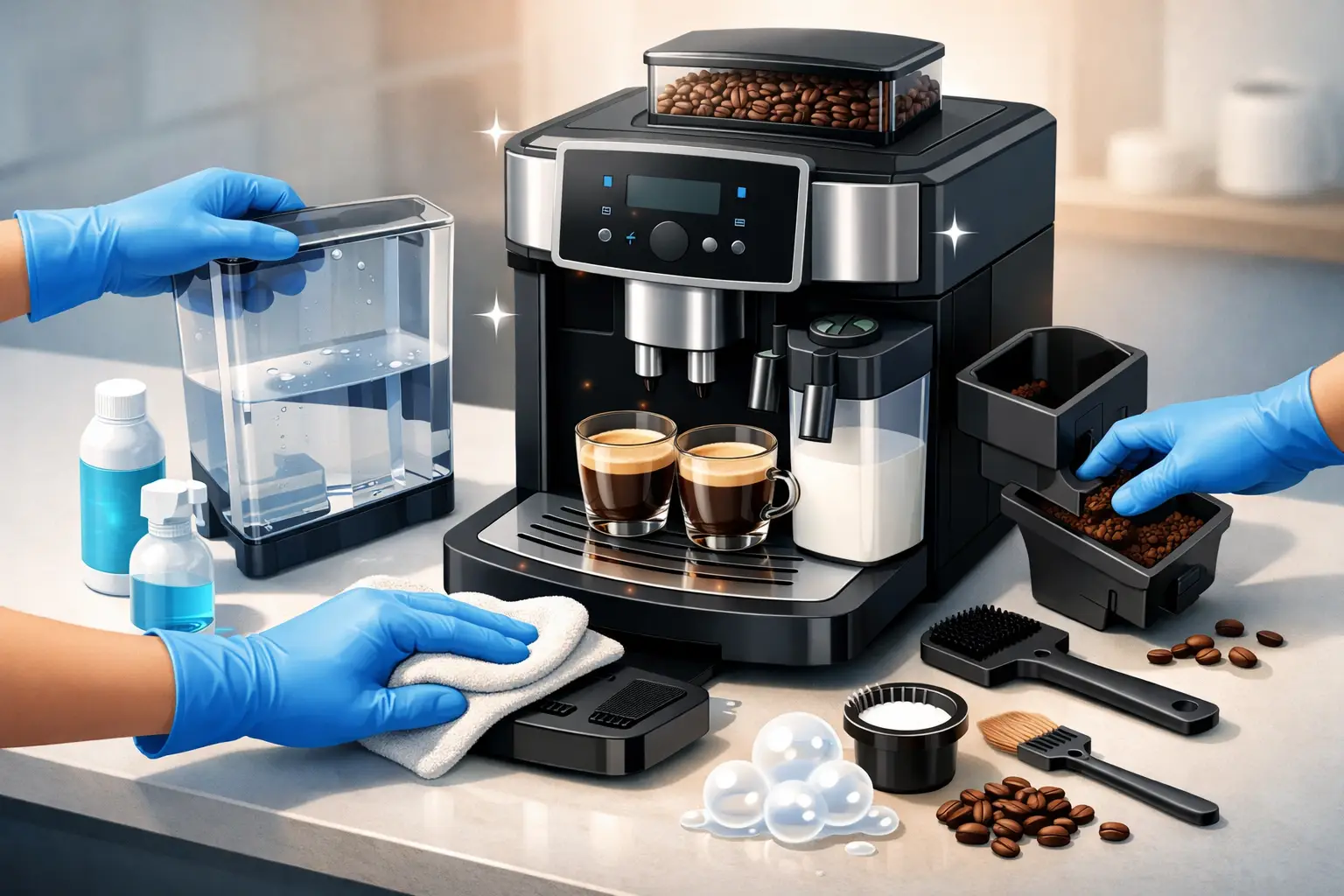
The first sign a bean-to-cup machine needs attention is rarely a service alert. More often, it is a weaker cup of coffee, an unusually full drip tray, coffee grounds left in the brew unit, or milk that no longer foams as it should. In a busy office, those small issues can quickly affect employee satisfaction and create avoidable downtime. Knowing how to clean a bean to cup coffee machine gives your team a practical way to protect beverage quality between scheduled service visits.
Bean-to-cup equipment grinds fresh coffee for every drink, which is a major advantage for workplace coffee service. It also means grounds, coffee oils, milk residue, and mineral deposits need to be managed on a consistent schedule. Cleaning is not just about appearance. It helps preserve flavor, supports machine reliability, and keeps the break room ready for the next employee or guest.
Start With the Machine Manufacturer’s Instructions
Every bean-to-cup coffee machine has its own removable parts, cleaning cycles, and approved cleaning products. Before beginning, check the machine’s display prompts and operating manual. Many commercial machines automatically request a rinse, brewer cleaning tablet, milk-system cleaning cycle, or descaling program at specific intervals.
Daily Cleaning for a Bean-to-Cup Coffee Machine
Daily attention takes only a few minutes, but it is the foundation of dependable coffee service. Assign ownership to a designated office manager, facilities team member, or break room attendant so the task does not become everyone’s responsibility and no one’s job.
At the end of the day, empty the drip tray and coffee grounds container. Rinse both with warm water, then dry them before returning them to the machine. Leaving wet grounds in the container overnight can create odors, encourage mold growth, and make the next morning’s cleanup more difficult.
Wipe the exterior, beverage spouts, touchscreen or buttons, and cup area with a clean, damp cloth. Keep excess water away from electrical connections and vents. A clean exterior matters in a shared workplace, but the beverage outlet deserves special attention because coffee residue can accumulate where drinks are dispensed.
If the machine has an automatic rinse cycle, run it as directed. Many units rinse the coffee path when switched on or off. Let that cycle finish instead of cutting power immediately. The rinse removes loose coffee particles and helps keep the internal dispensing path clear.
Give Milk Systems Extra Attention
Machines that prepare cappuccinos, lattes, and other milk drinks require a more disciplined routine. Milk residue can dry quickly inside tubes, frothers, and dispensing nozzles, affecting both hygiene and drink quality.
After each period of heavy use, or at the end of each day at minimum, run the machine’s approved milk-cleaning cycle. Remove and rinse any external milk tubes, connectors, and nozzles according to the manufacturer’s directions. If your system uses a refrigerated milk container, empty remaining milk as required, wash the container, and allow it to dry fully before refilling.
For offices with frequent milk beverage orders, it may be appropriate to clean the milk system more than once daily. The right frequency depends on drink volume, the equipment model, and the manufacturer’s requirements. When in doubt, choose the more conservative schedule.
Weekly Cleaning Keeps Coffee Tasting Fresh
Coffee beans contain natural oils. Those oils are part of what makes a fresh cup appealing, but they can become rancid when left on internal and external parts. Weekly cleaning targets the areas that a quick daily rinse does not fully address.
Remove and wash accessible components such as the drip tray grate, grounds container, water tank if applicable, and removable brew unit. Some brew units can be rinsed under lukewarm water, while others should only be cleaned through an automatic program. Never force a component out of the machine. If it does not release easily, consult the manufacturer’s instructions.
Clean the bean hopper only when it is empty or nearly empty. Wipe it with a dry, lint-free cloth. Water and moisture do not belong in the hopper, as damp beans can clog the grinder and compromise coffee freshness. Avoid topping off old beans indefinitely. Rotating inventory helps ensure the coffee in the hopper is fresh and performing as expected.
Inspect the dispensing area for blocked openings or visible buildup. A soft brush designed for coffee equipment can help clean around the grinder chute or grounds area, but do not insert tools into internal mechanisms unless the manual directs you to do so.
Use Cleaning Tablets When the Machine Calls for Them
Most commercial bean-to-cup machines include an automatic coffee-system cleaning program that uses a manufacturer-approved cleaning tablet. The display will usually indicate when this process is needed. The tablet breaks down coffee oils in the brew chamber and internal coffee path more thoroughly than water alone.
Plan for the process to take the machine out of service briefly. Place a suitable container under the beverage outlet, confirm there is sufficient water, insert the tablet into the designated compartment, and start the cycle following the screen instructions. Do not interrupt the program once it begins.
In an office setting, this is a good reason to schedule cleaning outside peak coffee times. A short planned interruption is much easier to manage than a machine that stops unexpectedly because a required cleaning cycle was ignored.
Descale on Schedule, Not Only When There Is a Problem
Descaling addresses mineral buildup from water, commonly called scale. Over time, scale can restrict water flow, affect brewing temperature, and place additional strain on internal components. It is especially relevant in areas where water has a higher mineral content.
Many machines calculate descaling needs based on water hardness, drink volume, or internal programming. If your equipment uses a water filter, replace it on schedule and make sure the machine settings reflect the filter change. A filter can reduce mineral buildup, but it does not eliminate the need for regular maintenance.
When the machine requests descaling, use the approved solution and allow enough time to complete every stage, including rinsing. Do not use coffee during the process. If your workplace has a high-volume machine, coordinate the timing so employees have access to another coffee option while the cycle runs.
Create a Simple Office Cleaning Schedule
A written schedule makes the process easier to maintain, particularly when several people share responsibility for the break room. Keep the checklist near the machine or in the same system used for other facilities tasks. It should identify the task, frequency, responsible person, and any supplies needed.
Daily tasks should include emptying and rinsing the drip tray and grounds container, wiping contact surfaces, running required rinses, and cleaning the milk system. Weekly tasks can cover removable components, the bean hopper, and a closer inspection of the dispensing area. Machine-prompted cleaning tablet and descaling cycles should be completed as soon as they are requested, then recorded.
This documentation is useful when troubleshooting changes in coffee quality. If drinks suddenly taste weak, the grinder sounds unusual, or the machine produces less coffee than normal, a clear maintenance record helps identify whether the issue is related to cleaning, ingredients, water supply, or equipment service.
Know When Cleaning Is Not Enough
Regular cleaning resolves many common issues, but it cannot correct every mechanical problem. Contact your service provider if the machine leaks, makes grinding noises it did not make before, displays repeated errors after cleaning, produces cold drinks, or continues to request the same cleaning cycle after it has been completed correctly.
Trying to disassemble internal components without training can turn a minor service need into a larger repair. For workplaces, the best approach is a combination of routine employee care and responsive professional support. Certified Coffee Service helps South Florida workplaces keep their coffee equipment, products, and break room essentials working together with a service-first approach.
A clean bean-to-cup machine is one of the simplest ways to make the office coffee break feel consistently cared for. Give the daily tasks a clear owner, respond to the machine’s maintenance prompts, and let trained service support handle concerns that go beyond normal cleaning.