
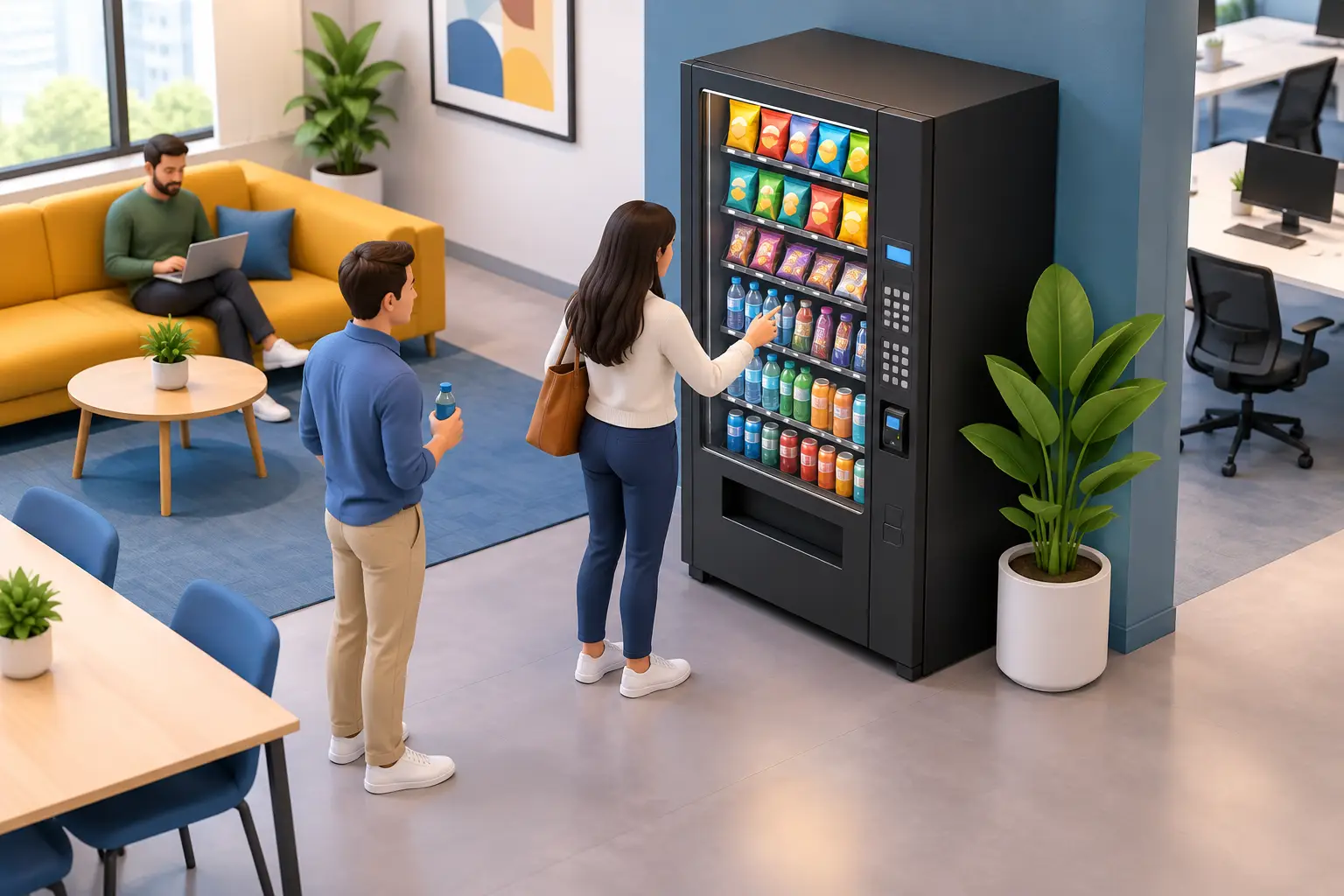
A vending machine can be fully stocked with products employees want and still underperform if it is placed in the wrong part of the building. Effective office vending machine placement is not simply about finding an empty wall. It is about putting convenient refreshment options where people naturally pause, gather, and recharge without creating traffic problems, noise concerns, or service obstacles.
For office managers and facilities teams, the right location supports employee satisfaction while making replenishment and maintenance easier. A thoughtful plan also helps ensure the vending area feels like a useful part of the break room experience, not an afterthought tucked into an inconvenient corner.
Start With Employee Traffic, Not Available Space
The best location is usually where people already move throughout the day. Look at how employees enter the office, travel between departments, visit restrooms, and use common areas. A vending machine placed along a natural path is more likely to be used than one located in a quiet conference wing or behind restricted access doors.
Break rooms are often the strongest choice because employees already associate them with coffee, water, meals, and short breaks. When space allows, placing vending near coffee equipment or a water station creates one centralized refreshment area. Employees can grab a snack with their coffee or select a cold beverage after lunch without making multiple stops.
That said, the busiest route is not always the right route. A narrow hallway outside executive offices may see plenty of traffic, but it can become congested when someone is selecting an item, waiting for payment, or when a service technician is restocking the machine. The goal is accessible placement with enough room for people to use the equipment comfortably.
Evaluate the Space Around the Machine
A vending machine needs more than a footprint. The surrounding area affects safety, accessibility, appearance, and ongoing service. Before selecting a location, measure the proposed space and consider how employees will approach and stand in front of the machine.
Allow clear space in front of the vending machine so a person using it does not block a doorway, walkway, or emergency path. The machine should not interfere with ADA access, fire exits, electrical panels, or building equipment. Facilities managers should also verify the floor is level and capable of supporting the machine’s weight, particularly in older buildings or upper-floor office suites.
Think about the environment, too. Avoid placing vending equipment in direct sunlight, near exterior doors that bring in heat and humidity, or beside equipment that produces significant heat. In South Florida workplaces, temperature and humidity can affect both the employee experience and the performance of refrigerated beverage machines. A climate-controlled interior location is generally the most dependable option.
Plan for Power and Service Access
Vending equipment requires a nearby, properly rated electrical outlet. Using extension cords or placing equipment where cords cross a walkway creates an unnecessary safety concern and can complicate service. Confirm outlet availability before finalizing the location, not after a machine has been scheduled for delivery.
Service access matters just as much. A provider needs room to open machine doors, replenish inventory, clean components, and complete repairs when needed. If the location can only be reached through a crowded cubicle area, a locked storage room, or a tight doorway, routine service may take longer and disrupt employees.
A location close to a loading entrance can be helpful for installation, but it is not automatically ideal for daily use. Balance technician access with employee convenience. The best placement supports both.
Match Office Vending Machine Placement to Your Workplace
Every workplace has different traffic patterns, schedules, and employee needs. A professional office with 25 employees may benefit from one well-positioned combination machine in the break room. A larger corporate facility may need several machines across floors, departments, or shifts.
For multi-floor offices, placing all vending equipment on one floor can discourage use by employees who work elsewhere. Consider where employees take breaks and whether elevator travel creates a barrier. In some cases, a smaller vending setup on each occupied floor provides better convenience than one large vending area in a central location.
Shift-based environments require a different approach. If overnight or early morning teams have limited access to nearby restaurants and stores, vending should be located in an area that remains open and well lit outside standard business hours. A machine placed inside a daytime-only cafeteria may not serve the people who rely on it most.
For customer-facing businesses, consider whether vending is intended for employees, visitors, or both. A machine in a public waiting area can be useful, but product selection, appearance, and payment options should fit the setting. In many offices, an employee break room location is preferable because it protects privacy and makes the space easier to monitor.
Choose Products Before You Choose the Final Location
The product mix should influence where you place vending equipment. A snack-and-beverage area near the break room works well when employees want a variety of convenient options throughout the day. A cold beverage machine may perform especially well near a lunch space, fitness area, or larger meeting zone.
If your workplace already provides premium coffee, tea, and filtered water, vending can complement those services with snacks, sparkling beverages, energy drinks, and ready-to-eat items. When all refreshment options are grouped thoughtfully, the break room becomes more useful and employees spend less time leaving the property for small purchases.
It also helps to consider payment behavior. Cashless payment options are a practical fit for many modern offices, but the location must have reliable connectivity if the machine uses cellular or wireless processing. A basement, interior concrete room, or remote warehouse corner may create signal challenges that should be addressed before installation.
Avoid These Common Placement Mistakes
Poor placement often comes from making a quick decision based solely on unused space. Avoid locating a vending machine in a dead-end area with low visibility, where employees may not think to look for it. Do not place it directly beside workstations where compressor noise, conversation, and foot traffic may disturb employees who need a quiet environment.
Other common issues include placing machines too close to restrooms, blocking supply closets, and overlooking nearby seating. A vending machine does not need a large lounge around it, but a counter, table, or break room seating nearby can make the area more functional. Employees are more likely to take a genuine break when refreshments are part of a comfortable shared space.
Be careful about placing machines near sensitive departments, including finance, human resources, or client meeting areas. The convenience may be appealing, but employee traffic can conflict with the purpose of those spaces. In those cases, a nearby common area is usually a better solution.
Involve the People Who Will Use and Support It
A successful placement decision should include input from the office manager, facilities lead, building management, and employees who regularly use the break room. Building management may have rules regarding electrical work, delivery access, floor protection, or approved equipment locations. Addressing these requirements early prevents delays on installation day.
Employee feedback can also reveal patterns that are not obvious from a floor plan. Perhaps one department rarely visits the existing break room because it is too far away, or perhaps the main kitchen becomes crowded between noon and 1:00 p.m. A short conversation can help identify a better placement or show that a second machine would provide more value.
Once the machine is installed, monitor usage and listen for feedback. Low sales do not always mean employees dislike the products. The location may be hard to find, inconvenient during busy periods, or poorly matched to how the office operates. Placement can be adjusted as the workplace grows, departments move, or employee schedules change.
Make Service Part of the Placement Decision
Dependable vending is built on more than equipment. It depends on stocking, cleaning, maintenance, and responsive support. Select a location where your service provider can work efficiently and where the machine can stay clean, accessible, and ready for employees every day.
Certified Coffee Service approaches workplace refreshment with Service Above All, helping businesses create practical break room setups that support both employees and operations. When vending, coffee, water, and supplies are planned together, it is easier to maintain one reliable destination for everyday breaks.
The right spot should make life easier for the people using the machine and the people responsible for keeping it running. Walk the space at different times of day, picture the employee experience, and choose a location that remains convenient long after installation day.