
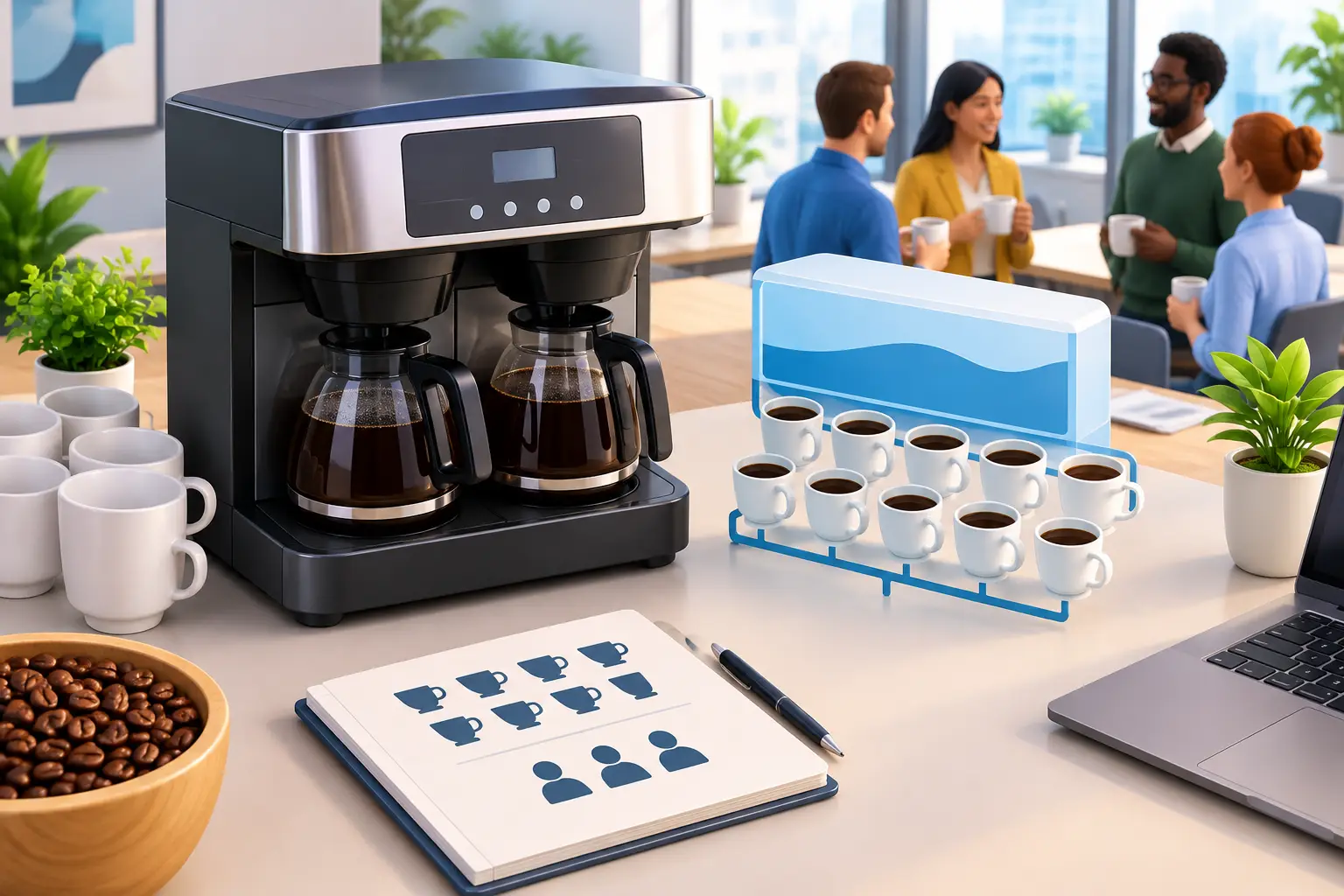
The 9:00 a.m. rush is where an office coffee setup proves its value. If the pot is empty, the brewer is still recovering from the last cycle, and employees are waiting before meetings, the equipment is undersized for the real demand. A practical brewer capacity calculation helps prevent that frustration by matching your equipment to how much coffee your team needs, when they need it, and how the break room operates.
For office managers and facilities teams, capacity is not simply a question of how many employees are on payroll. It is a service decision. The right brewer should keep coffee fresh, available, and easy to replenish without requiring staff to monitor the break room all morning.
Start With Actual Coffee Demand
Begin with the number of people who regularly use the office coffee station, not the total headcount. A 100-person office may have 65 daily coffee drinkers. Another may have 90, especially if early shifts, client meetings, or a coffee-centered workplace culture are part of the routine.
Next, estimate average consumption. One 8-ounce cup per coffee drinker is a conservative starting point, but many workplaces average closer to 1.5 or 2 cups per person each day. Consider tea drinkers separately if they use the same hot-water equipment, and account for visitors, training sessions, and conference-room service.
A basic daily estimate looks like this:
Daily coffee volume = regular coffee drinkers × average cups per person × cup size
For example, suppose 60 employees drink coffee, average 1.5 cups each, and use 8-ounce cups. The expected daily volume is 720 ounces, or roughly 5.6 gallons. Since a standard 64-ounce coffee pot holds one-half gallon, that office may use about 11 to 12 pots over a typical day.
That figure gives you a useful baseline, but it does not yet identify the right brewer. Daily consumption tells you how much coffee and how many supplies to plan for. Brewer capacity depends more heavily on peak demand.
Brewer Capacity Calculation Must Account for Peaks
Coffee consumption rarely arrives evenly from 8:00 a.m. to 5:00 p.m. Most offices have one or two concentrated periods: the first hour after arrival, a midmorning break, or a rush before afternoon meetings. A brewer that can meet the total daily volume may still create empty pots during these busy windows.
Estimate the share of daily coffee consumed during the busiest 60 to 90 minutes. In many offices, 35% to 50% of the day’s coffee is served in the morning rush. Returning to the example above, if 40% of the 720 daily ounces are consumed between 8:30 and 10:00 a.m., the break room needs about 288 ounces, or 4.5 pots, during that period.
Now consider how quickly the equipment can brew and how much coffee it can hold ready for service. A traditional glass-pot brewer may produce one 64-ounce pot in four to six minutes. A thermal brewer can produce a similar volume while holding coffee in insulated servers. A high-volume commercial unit may brew larger batches or support multiple stations at once.
The practical question is not, “How many cups can this machine make per day?” It is, “Can this equipment keep four or five pots available and fresh during our busiest period?” For a small office, one brewer may be enough. For a larger office or a location with frequent visitors, two brewers, larger thermal servers, or a combination of brewing methods may provide better coverage.
Match the Equipment to the Workplace
Traditional batch brewers remain a dependable choice for offices that serve several cups at once. They work especially well when employees are comfortable pouring coffee from a shared pot or thermal dispenser. Glass-pot systems offer visibility and familiarity, but coffee should not sit on a warmer too long. Thermal systems are often a stronger fit for offices that want to preserve quality over a longer service window.
Single-cup systems handle variety well. They can serve employees who prefer different roasts, decaf, tea, or specialty beverages without brewing a full pot. However, a single-cup machine has a slower output during a concentrated rush. If 20 people arrive for coffee within 15 minutes, one single-cup unit can quickly become a bottleneck.
Bean-to-cup and premium automatic coffee machines can offer fresh-ground coffee with simple drink selection and a more elevated employee experience. Their capacity should be evaluated by drinks per hour, bean hopper size, water supply, waste capacity, and cleaning needs, not only by the size of the machine. They are often an excellent option for workplaces that value beverage choice, but they still need to be sized for the busiest part of the day.
For many offices, the best answer is a blended setup. A batch brewer can cover the morning rush and meeting service, while a single-cup or bean-to-cup unit handles individual preferences throughout the day. This approach can reduce lines without forcing employees to choose between speed and variety.
Build in a Reasonable Service Margin
A capacity calculation should leave room for the days that are busier than expected. Client visits, all-hands meetings, seasonal hiring, and rain-heavy mornings can all change coffee demand. Planning for average usage with no extra capacity can leave the break room short when service matters most.
A reasonable margin is usually 15% to 25% above normal peak demand. In the example office needing 288 ounces during the morning peak, planning for roughly 340 ounces provides a better operating cushion. That does not mean keeping excess coffee sitting for hours. It means choosing equipment that can replenish supply quickly and having enough airpots, pots, or stations to serve people without delay.
Freshness remains part of the calculation. Brewing a large volume too far in advance can create waste and reduce the quality of the coffee experience. The goal is sufficient ready-to-serve coffee plus enough brewing speed to refill before the next rush, not maximum volume at all times.
Consider the Details That Change Capacity
Two offices with the same headcount can need very different equipment. Before selecting a brewer, consider the daily rhythm of the workplace. Early operations teams may need coffee ready before office staff arrive. A call center may have staggered breaks, which spreads demand over several hours. A law firm or sales office may need extra coffee in conference areas when clients are present.
Cup size also matters. An 8-ounce calculation is useful for planning, but many employees use 10- or 12-ounce cups. If your supply program includes larger cups, build that into the volume estimate. Decaf demand matters as well. A small dedicated decaf brewer or a single-cup option may prevent waste while still giving employees a reliable choice.
Water access, counter space, electrical requirements, and cleanup procedures can also affect the right setup. A high-capacity brewer does little good if it is placed far from the people who need it or if staff have no convenient place to refill supplies. Equipment selection works best when it supports the traffic flow of the break room.
Review Usage After Installation
The first capacity estimate should guide the setup, not end the conversation. Track coffee consumption for several weeks after installation. Notice how often pots run empty, whether employees wait during peak periods, how much coffee is discarded, and which beverage choices are used most often.
This review can reveal simple improvements. An office may need another thermal server rather than a second brewer. Another may find that moving a single-cup machine to a conference area reduces pressure on the main station. Supply replenishment should be reviewed at the same time, including coffee, cups, lids, sweeteners, creamers, stirrers, and water.
Certified Coffee Service helps South Florida workplaces look beyond a machine specification and plan a coffee program around actual employee demand. With the right equipment, recognized coffee options, and dependable ongoing support, the break room can stay prepared for the moments employees notice most.
A well-sized brewer does more than produce coffee. It keeps meetings moving, gives employees a reliable break, and lets the person responsible for the office know the coffee station will be ready when the day gets busy.