
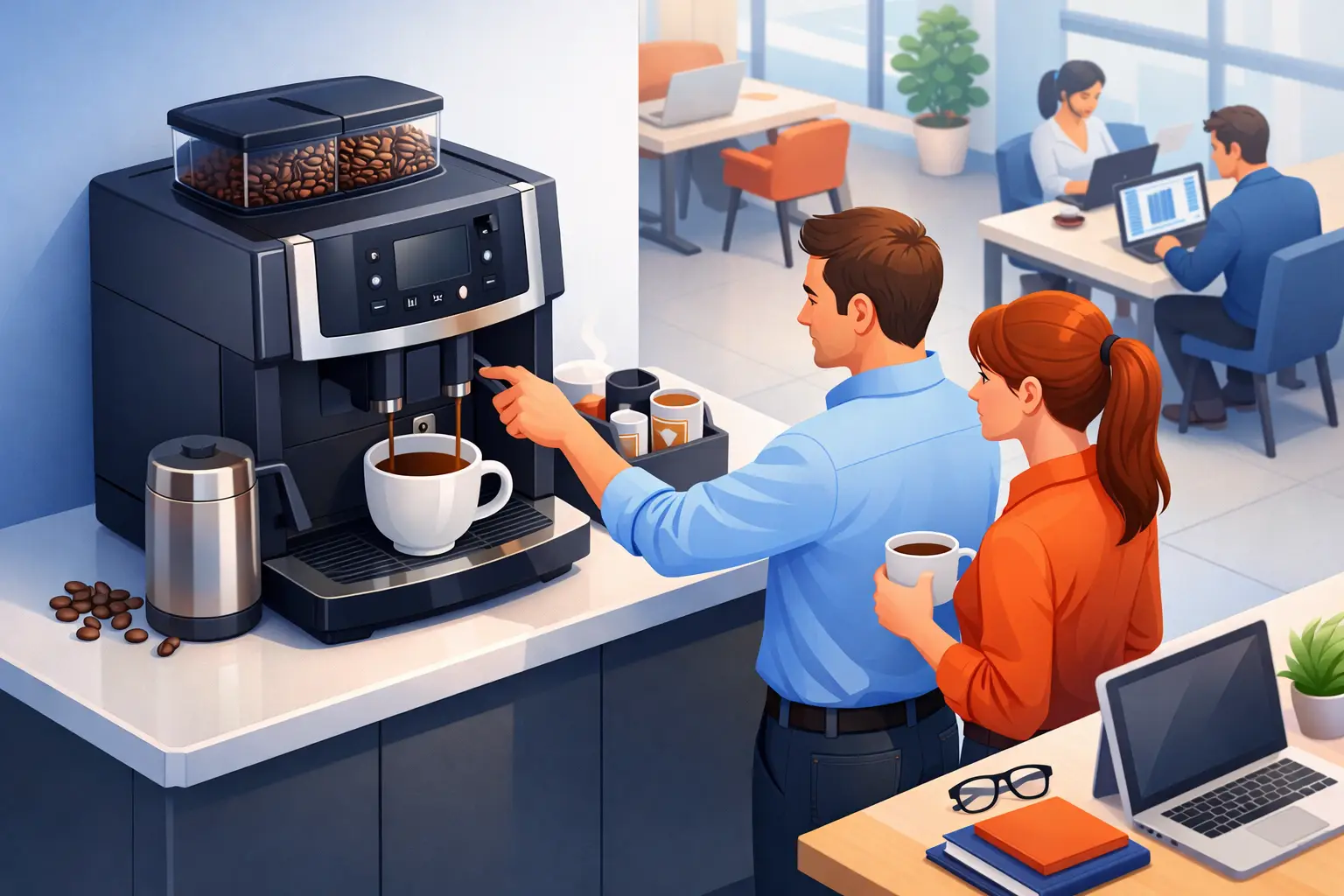
At 8:15 a.m., the office coffee machine can set the tone for the entire day. Knowing how to use a bean to cup coffee machine correctly helps employees get a fresh, consistent drink without creating delays, waste, or unnecessary service calls. These systems grind whole beans for each beverage, making them an excellent fit for workplaces that want premium coffee with simple, self-serve convenience.
A bean-to-cup machine is designed to do much of the work automatically, but its performance still depends on proper daily use and routine care. A few clear instructions near the machine can help keep coffee quality high and the break room running smoothly.
Start With the Machine Ready for Service
Before the first drink is made, check that the machine is powered on and has completed its startup rinse or heating cycle. Most commercial bean-to-cup coffee machines display a message when they are ready. If the screen shows a cleaning prompt, an empty water supply, a full grounds container, or another alert, address it before brewing.
Confirm that the bean hopper contains the appropriate whole coffee beans. The hopper lid should remain closed to protect beans from humidity and preserve freshness. Avoid adding flavored beans, oily beans, or ground coffee to a hopper unless the equipment manufacturer specifically approves them. Very oily beans can leave residue in the grinder and affect both machine performance and beverage flavor.
For machines that use a water tank rather than a direct water line, make sure the tank is filled with clean, cold water and seated properly. In a busy workplace, a plumbed-in system is often the more convenient option because it reduces the need for staff to monitor water levels throughout the day.
How to Use a Bean to Cup Coffee Machine for Each Drink
Once the machine is ready, the process is usually straightforward. Place a suitable cup beneath the dispensing spouts, select the desired beverage on the screen or button panel, and allow the machine to complete the drink cycle. Depending on the model, choices may include regular coffee, espresso, americano, cappuccino, latte, hot water for tea, or other specialty beverages.
Use a cup that fits the machine’s drip tray and has enough capacity for the selected drink. A small espresso cup under a large beverage setting can create spills, while an oversized travel mug may not fit under fixed-height spouts. Some machines offer adjustable coffee outlets, which should be lowered close to the cup when possible to reduce splashing and help maintain crema on espresso drinks.
After a selection is made, the machine measures the beans, grinds them, brews the coffee, and deposits the used grounds into its internal container. Employees should avoid opening doors, removing trays, or interrupting the cycle while the machine is operating. A drink may take slightly longer when the machine is preparing milk foam or when it has just started up, but that short wait is part of producing a fresh beverage.
Choosing the Right Beverage Setting
A bean-to-cup system gives employees variety, but the best setting depends on the drink they want. Regular coffee is generally the simplest choice for a larger, familiar cup. Espresso provides a concentrated, smaller beverage, while an americano combines espresso with hot water for a fuller cup and a different flavor profile than drip coffee.
Milk-based selections such as cappuccinos and lattes offer a more café-style experience. They also require more attention to cleaning, especially when the machine uses fresh milk. For offices with frequent milk drink orders, a machine with an automatic milk system can be a strong employee benefit, provided the milk container is refrigerated or handled according to the equipment instructions.
It is best to use programmed beverage sizes rather than repeatedly changing settings without guidance. Facility managers can work with their coffee service provider to set sensible defaults for strength, cup size, and milk volume. This helps control product usage while giving employees consistently good results.
Use the Bypass Chute Only When Approved
Some bean-to-cup machines include a bypass chute for pre-ground coffee. This feature can be useful when someone wants decaffeinated coffee but the main hopper contains regular beans. It should not be used as an extra storage area or filled in advance.
Add only the amount of coffee needed for one drink, then select the appropriate pre-ground or bypass setting. Using too much coffee may cause a blockage or lead to a weak, poorly extracted beverage. If decaf is requested frequently, a machine with separate bean hoppers or a dedicated decaf solution may be more practical than relying on a bypass chute all day.
Keep the Milk System Clean
Milk is where workplace bean-to-cup machines need the most consistent attention. If the equipment has a milk hose, milk container, refrigerator, or automatic frothing system, follow the machine’s daily cleaning instructions exactly. The machine may run a quick rinse after each milk drink, but that is not always a substitute for the required end-of-day cleaning cycle.
At the end of the day, dispose of any remaining milk as directed, clean the milk container and components, and run the approved milk-system cleaning program. Use only the recommended cleaner. Household soaps or unapproved chemicals can leave residue, damage components, or affect beverage taste.
A poorly maintained milk system can create odors, inconsistent foam, and avoidable downtime. In a commercial setting, assigning this task to a designated office contact, cleaning crew, or service provider is more reliable than assuming someone will handle it.
Follow a Simple Daily Care Routine
The machine will signal when it needs attention, but waiting for an alert is not the best approach in a high-use break room. A quick daily check helps prevent small issues from becoming interruptions during the morning rush.
Empty the drip tray and grounds container when needed, even if they are not completely full. Wipe the exterior and beverage spouts with a clean, damp cloth. Refill beans before the hopper runs low, and check cups, lids, stirrers, sweeteners, and creamers so employees are not left with a great coffee machine but no way to enjoy the drink.
Most machines also require periodic cleaning tablets, brew-unit rinsing, filter changes, or descaling. The timing depends on the model, water conditions, and daily drink volume. Descaling is especially relevant in areas with hard water, where mineral buildup can reduce heating performance and shorten equipment life. Follow the machine prompts and service schedule rather than skipping maintenance to keep the machine available.
Avoid Common Operating Problems
Many calls for coffee equipment service start with an issue that can be resolved quickly. If a machine is not dispensing coffee, first check the display for messages about water, beans, grounds, doors, drip trays, or cleaning. Remove and reseat components gently, making sure they click into place.
If coffee tastes weak, the issue may be a low-strength beverage setting, stale beans, or a grinder setting that needs professional adjustment. Do not make major grinder changes without guidance, particularly on a shared office machine. A finer grind can improve extraction in some cases, but it can also slow the brew process or cause the brewing unit to work too hard.
If beverages are dispensing too slowly, the machine may be completing a rinse, heating water, or indicating a cleaning need. If an error persists after following the display instructions, avoid repeated attempts to force a drink through the system. Contact the service team with the machine model, the message on the screen, and a brief description of what happened. That information helps speed up support.
Make the Machine Part of a Well-Run Break Room
The right bean-to-cup coffee machine can make a workplace feel more welcoming while reducing the need for employees to leave the office for specialty coffee. Still, equipment alone does not create a dependable coffee program. It takes the right coffee selection, adequate supplies, clear user guidance, and responsive maintenance.
For office managers, the most effective approach is to choose a machine that matches employee volume and preferences. A small office may need a compact unit with a few popular selections, while a larger workplace may benefit from a higher-capacity system with multiple bean options, milk drinks, and a direct water connection. More beverage choices can improve employee satisfaction, but they also bring added cleaning and replenishment needs.
Certified Coffee Service helps South Florida workplaces pair coffee equipment with the supplies and support needed to keep the break room ready for business. When employees know the basics and the machine receives regular attention, every cup can be as dependable as the service behind it.