
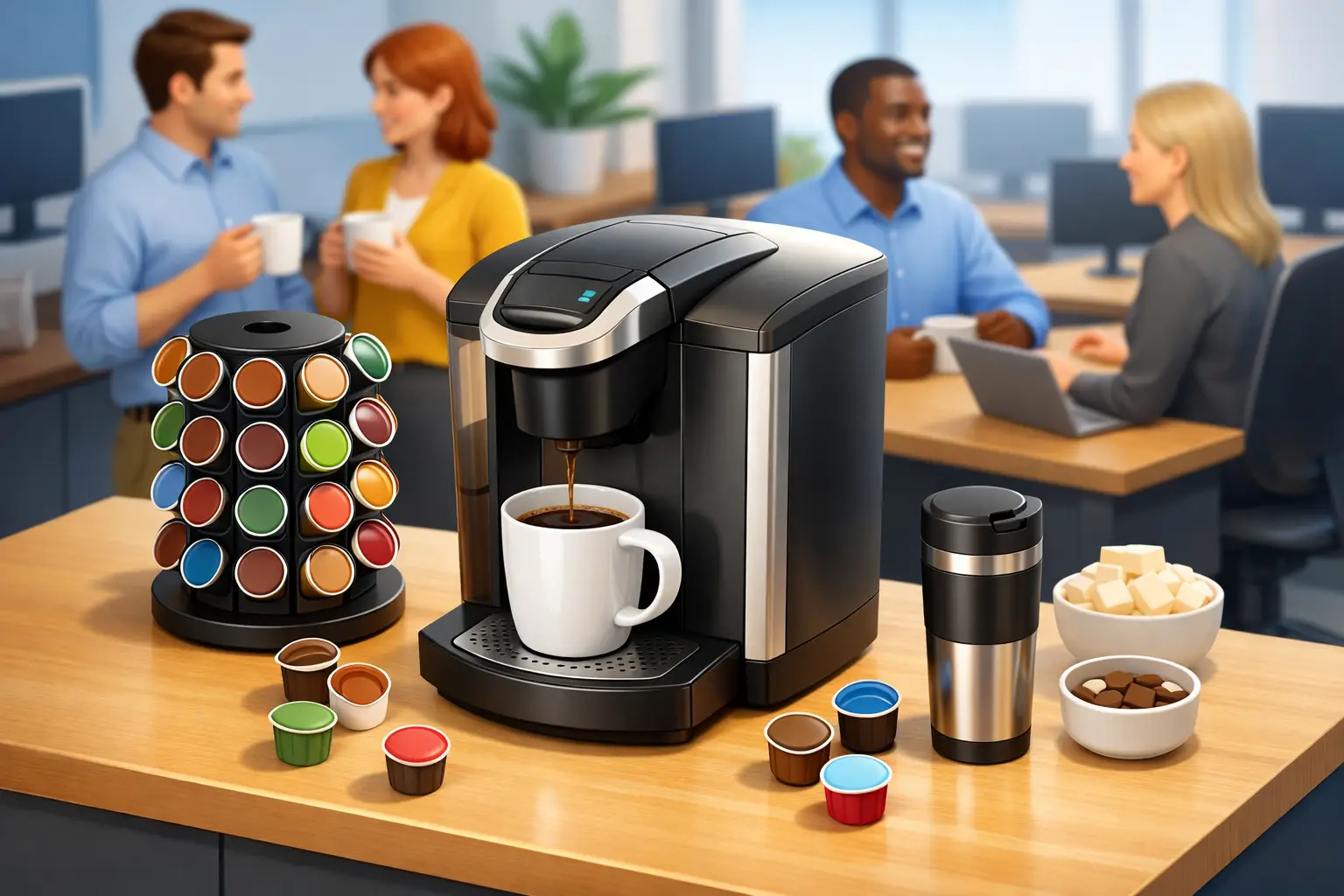
At 9:00 a.m., the office coffee station needs to work without a line, a messy counter, or a call to the office manager because the machine is out of options. A single cup pod coffee system for office use can meet that need by giving employees and guests a familiar, fast way to make coffee, tea, cocoa, and other hot beverages one cup at a time.
For many workplaces, the appeal is simple: each person chooses what they want, brews it fresh, and gets back to work. The best results, however, depend on more than selecting a popular machine. Office traffic, beverage preferences, product replenishment, countertop space, and responsive service all matter.
Why Offices Choose Single-Cup Pod Systems
A pod system offers a level of choice that a traditional pot brewer cannot always provide. One employee can brew a dark roast coffee, another can select decaf, and a visitor can choose tea or hot cocoa. There is no need to prepare a full pot before anyone knows whether it will be used.
That flexibility is especially useful in offices with varied schedules. Sales teams may arrive early, administrative staff may take breaks throughout the day, and client meetings can happen with little notice. A single-cup system keeps a broad selection available without requiring staff to monitor a thermal carafe or discard coffee that has been sitting too long.
The format also helps create a cleaner break room. Pods are portion-controlled, brewing is generally fast, and employees do not need to measure grounds or handle filters. That convenience supports a more professional coffee station while reducing routine tasks for the people responsible for the office.
Choosing a Single Cup Pod Coffee System for Office Demand
The right machine is not necessarily the largest or the most feature-heavy model. It is the one that can handle daily demand reliably while giving employees the beverage selection they value.
Start With Daily Cup Volume
An office with 10 occasional coffee drinkers has very different needs from a workplace where 50 employees use the coffee station throughout the day. Estimate not only the number of employees, but also the number of cups brewed during peak periods. Morning rushes, afternoon meetings, and guest traffic can put far more pressure on a brewer than an average daily estimate suggests.
For a smaller office, a compact commercial single-cup brewer may be a practical fit. Larger offices often benefit from a higher-capacity unit with a larger water reservoir or direct water-line connection. A plumbed machine can reduce refill interruptions and help the station stay ready during busy periods.
It is also wise to consider growth. If a business is adding staff, expanding its customer-facing area, or consolidating break rooms, installing a system that is already near its limit can create avoidable frustration later.
Consider Beverage Variety, Not Just Coffee
Coffee may be the primary reason for installing the system, but it should not be the only consideration. A well-stocked pod station can include regular and decaf coffee, flavored coffee, tea, and specialty beverages. Recognizable brands such as Starbucks, Lipton, and Bigelow can make the break room feel more complete while accommodating different preferences.
The right mix depends on the workplace. A law office that regularly hosts clients may prioritize premium coffee and tea options. A warehouse office may need dependable regular coffee in several roast profiles. A health-conscious team may appreciate herbal teas and low-calorie beverage choices.
Variety matters, but overstocking every possible flavor can lead to wasted product. Review what employees actually use, then adjust the selection over time. A service provider that understands office consumption patterns can help keep popular choices available without cluttering the break room with slow-moving inventory.
Look at Water, Power, and Counter Space
A coffee system should fit the break room operationally, not just physically. Before choosing a model, confirm where it will sit, how it will be powered, and whether a water line is available or appropriate. Countertop machines need enough clearance for loading pods, filling reservoirs, and accessing water tanks when necessary.
A dedicated water line is often a strong choice for high-use locations, but it is not required for every office. Reservoir models can be effective in smaller settings with moderate volume, provided someone can refill them consistently. The trade-off is simple: lower installation requirements versus more hands-on attention.
Do not overlook the surrounding station. Employees need room for cups, lids, sweeteners, creamers, stirrers, and a waste container. A cramped setup can make even an excellent brewer feel inconvenient.
The Service Details That Keep the Break Room Running
A single-cup pod brewer is convenient only when it is clean, stocked, and operating properly. That is where a full-service office coffee partner can make a meaningful difference.
Regular replenishment prevents the familiar problem of finding an empty pod rack at the start of a busy morning. The same provider can supply cups, lids, sugar, stirrers, creamers, napkins, water solutions, and other break room essentials, reducing the burden of managing several vendors and purchase orders.
Maintenance also deserves attention. Mineral buildup, incorrect cleaning procedures, and heavy daily use can affect machine performance over time. Commercial equipment should be supported by a provider that can respond when a brewer needs attention, rather than leaving the office to troubleshoot a key workplace amenity on its own.
Certified Coffee Service has supported South Florida workplaces since 1975 with equipment, product replenishment, and hands-on account support built around its promise of Service Above All. For office managers and facilities teams, that local accountability can be just as valuable as the machine itself.
When a Pod System Is Not the Only Answer
Single-cup pod systems are a strong fit for many workplaces, but they are not automatically the best answer for every environment. If most employees drink the same regular coffee and consume large volumes in a short window, a traditional thermal brewer may offer a lower cost per cup and faster high-volume service.
Bean-to-cup equipment may be a better choice for offices that want freshly ground coffee, a premium presentation, and more control over beverage quality. Those systems can offer an elevated coffee experience, though they may require more space, a greater equipment investment, and a different maintenance plan.
Some locations benefit from a combination. A pod brewer can handle individual preferences, decaf, tea, and guest service, while a thermal coffee brewer supports large meetings or teams with heavy regular-coffee consumption. The best setup reflects how people actually use the break room.
Build a Better Office Coffee Station
A quality pod coffee program should feel easy from the employee’s perspective. The brewer is ready. Favorite beverages are in stock. Supplies are organized. The counter is clean. When something needs attention, there is a dependable contact who takes ownership of the issue.
That consistency turns coffee from a routine expense into a practical part of workplace culture. It gives employees a convenient pause in the day, makes meetings more welcoming, and helps visitors feel cared for without adding work to the office staff.
Before selecting a machine, observe the morning rush, ask employees what they drink, and consider how much support your team needs after installation. The right single-cup solution is the one that serves your people reliably long after the first cup is brewed.