
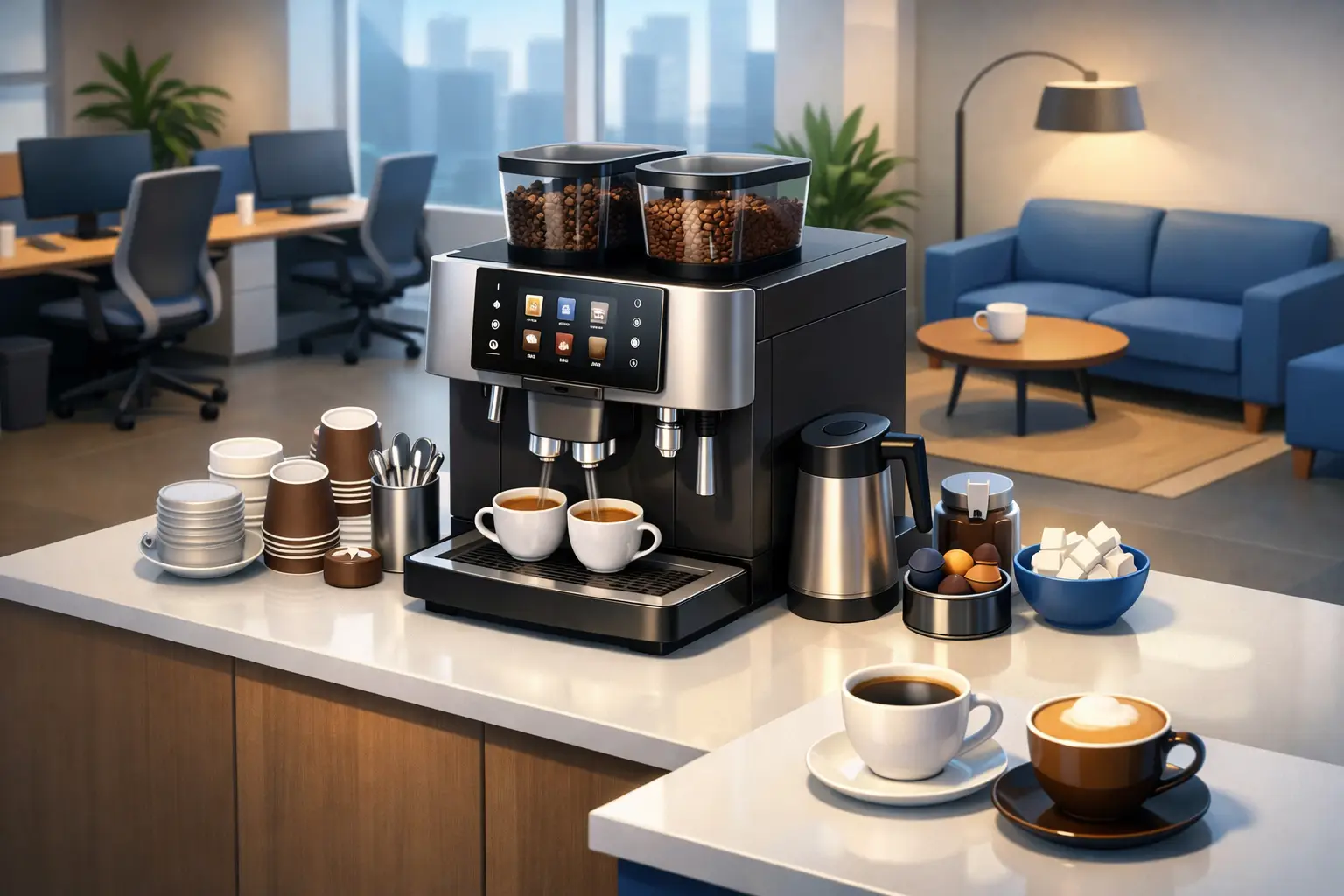
A commercial coffee machine buying guide should begin with one question: what happens when 40 employees want coffee between 8:00 and 9:00 a.m.? The right equipment keeps that rush moving, delivers a consistent cup, and does not leave an office manager troubleshooting a brewer before a meeting. The wrong choice creates wait times, waste, frustrated employees, and unnecessary service calls.
For offices and commercial workplaces, coffee equipment is part of the employee experience. It also needs to be practical. A machine should fit your daily traffic, beverage preferences, available counter space, water access, cleaning capacity, and budget. The best choice is not always the machine with the most features. It is the system your team will use reliably and your service partner can support without disruption.
Start With Your Daily Coffee Volume
Before comparing machine styles, estimate how many cups your workplace serves each day. Count regular employees, visitors, meeting traffic, and shift changes. A 25-person office with a few morning coffee drinkers has different needs than a 150-person workplace where coffee is available around the clock.
Also consider peak demand rather than daily volume alone. A machine that can produce enough coffee over an entire day may still be too slow for a busy morning. In a high-traffic setting, multiple brewers or a larger-capacity system can prevent lines and keep coffee fresh.
Think about serving size as well. Employees filling 12-ounce travel mugs use more product and capacity than a workplace serving smaller cups. If coffee is a major employee perk, plan for growth instead of buying only for current usage.
Commercial Coffee Machine Buying Guide: Choose the Right Style
The machine category should match how your employees drink coffee and how much hands-on involvement your workplace wants. Each option has a place in a well-run break room.
Bean-to-Cup Machines
Bean-to-cup equipment grinds whole beans and prepares coffee, espresso-style drinks, or both on demand. It is a strong option for offices that want fresh coffee, a premium presentation, and a broad range of beverage choices without requiring a trained barista.
These machines are especially appealing when employees value lattes, cappuccinos, americanos, and specialty drinks. They can reduce trips to outside coffee shops and make the break room feel more inviting. The trade-off is that bean-to-cup systems need regular cleaning, proper ingredient management, and dependable technical service. Capacity also matters. A small countertop unit may be excellent for an executive suite but may not keep pace with a large office rush.
Traditional Brewers
Traditional commercial brewers remain a dependable choice for offices that serve a high volume of regular coffee. They brew full batches efficiently and work well with glass pots, thermal servers, or airpots.
Glass pot brewers are familiar and economical, but coffee can lose quality when it sits on a warmer too long. Thermal brewers and airpot systems hold coffee without continued heating, helping preserve flavor while allowing teams to place coffee in conference rooms, reception areas, or shared spaces. For workplaces with steady demand for classic coffee, this approach is often the most efficient.
Single-Cup Pod Systems
Single-cup systems offer convenience, variety, and easy portion control. Employees can choose different roasts, decaf, tea, hot cocoa, or specialty beverages without brewing a full pot. They are often a good fit for smaller offices, conference rooms, executive areas, and workplaces with varied preferences.
The limitation is cost per cup and speed during peak periods. A single-cup machine can become a bottleneck if dozens of employees use it at once. It may be best as a secondary station or paired with a traditional brewer for a larger team.
Premium Automatic Coffee Machines
Premium automatic machines create a polished workplace experience with programmable drink selections, touch controls, and consistent results. They can suit professional offices, customer-facing environments, and organizations using hospitality as part of their culture.
Features should serve a real need. A menu with many drink options is valuable only if employees will use it and the machine can be maintained properly. Prioritize proven components, practical capacity, clear cleaning routines, and a service plan over features that add complexity without improving the break room.
Match the Machine to Your Water and Space
Coffee quality depends on water quality. A plumbed-in commercial machine provides convenience and consistent operation, but it requires access to a suitable water line, drainage in some cases, and filtration that supports both taste and equipment protection. Scale buildup can shorten machine life and affect performance, particularly when water conditions are not addressed from the start.
Pour-over equipment can work where plumbing is unavailable, but it adds labor and leaves more room for inconsistency. For a busy workplace, the convenience of a properly installed water line is often worth considering.
Measure the actual space before selecting equipment. Include counter depth, height beneath cabinets, electrical outlets, clearance for opening lids or adding ingredients, and room for coffee, cups, sweeteners, creamers, and waste containers. A machine that technically fits but crowds the break room is not a practical solution.
Think Beyond Coffee: What Does Your Team Expect?
A successful office beverage program usually includes more than regular coffee. Decaf, flavored coffee, tea, hot chocolate, and filtered water can make the break room more inclusive and useful throughout the day. Recognized brands also matter to many employees because they bring familiarity and confidence to the experience.
Ask employees what they actually drink before making a major investment. A short survey can reveal whether the office wants fresh-ground coffee, a reliable pot of medium roast, single-serve variety, or better tea options. It can also show whether a premium machine would be appreciated or simply underused.
Consider visitors and meetings. A conference room serving clients may need an attractive single-cup station or thermal coffee service, while a production environment may benefit more from durable, high-volume brewing equipment. One machine type does not need to serve every location in the building.
Evaluate Total Cost, Not Just Equipment Price
The purchase or lease price is only one part of the decision. Consumables, filters, coffee, pods, cleaning products, installation, utility needs, preventive maintenance, repairs, and downtime all affect the true cost of ownership.
A lower-cost machine can become expensive if it requires frequent attention or fails during busy periods. Likewise, a higher-end bean-to-cup machine may make financial sense if it improves employee satisfaction and reduces outside coffee purchases, but only when usage is high enough to justify it.
Ask for a clear picture of ongoing needs. Who supplies coffee and other ingredients? Who monitors inventory? How are water filters handled? What cleaning is expected from staff, and what is covered by the service provider? These operational details determine whether a coffee program feels effortless or becomes another task on an office manager’s list.
Service and Support Should Influence the Decision
Commercial coffee equipment works hard. Grinders, brewers, water lines, heating systems, and dispensing components all need proper care. Reliable service is not an add-on. It is part of choosing the right machine.
Look for a provider that can recommend equipment based on your workplace, install it correctly, replenish products, and respond when a problem affects your team. Local accountability is especially valuable when the break room is a daily gathering place and downtime is immediately noticed.
Certified Coffee Service has supported South Florida workplaces since 1975 with coffee equipment, beverage products, water solutions, vending, and break room essentials. That full-service approach can simplify vendor management while keeping the focus where it belongs: reliable daily service and a better workplace experience.
Build for Reliability, Then Improve the Experience
The best commercial coffee setup is one employees trust. It delivers a good cup when they need it, fits the pace of the workplace, and has a clear plan for supplies, cleaning, and service. Start with the volume and habits of your team, then select equipment that makes daily operation easier rather than more complicated.
A well-chosen machine turns a routine coffee break into a dependable part of the workday, giving employees one more reason to feel cared for when they walk into the break room.
1 comment