
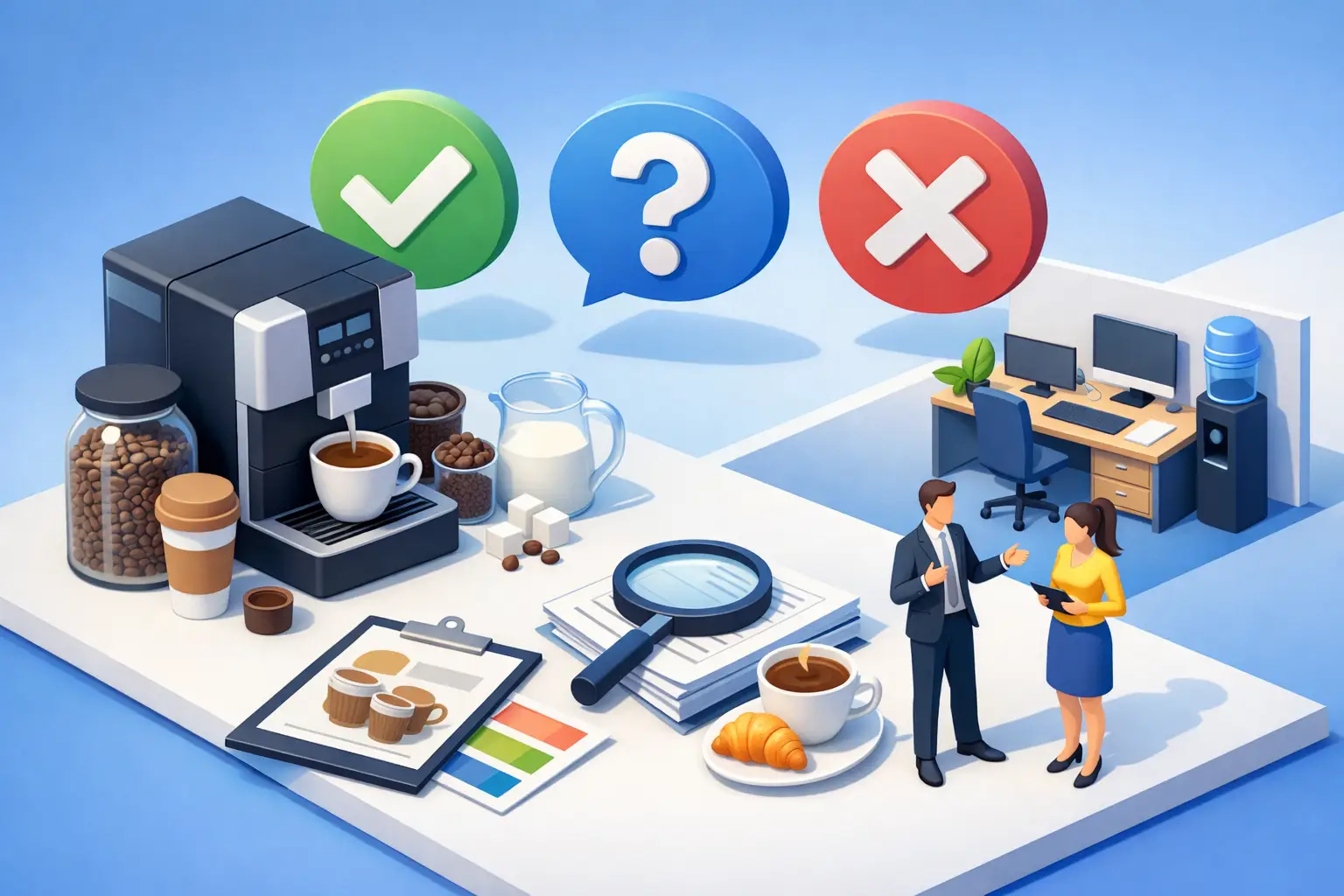
A coffee machine that sits empty, runs out of supplies, or needs constant attention does not improve the workday. It creates another task for the office manager. Knowing how to choose office coffee service starts with looking beyond the machine itself and choosing a partner that can keep your break room stocked, working, and ready for the people who rely on it.
Coffee service is part of how employees begin the day, welcome guests, take a break, and reconnect between meetings. The right program should feel simple from the customer’s side, even though it requires careful planning behind the scenes.
Start With Your Workplace, Not the Equipment
The best coffee solution depends on the people using it. A small professional office with 15 employees has different needs than a busy corporate location with multiple floors, shift workers, and frequent visitors. Before comparing equipment, consider daily headcount, peak coffee times, available counter space, water access, and whether the break room is a casual convenience or a high-traffic gathering place.
Usage patterns matter as much as employee count. An office where most people arrive between 8:00 and 9:00 a.m. may need a system that can serve several people quickly. A workplace with staggered schedules may benefit more from single-cup brewing or a bean-to-cup machine that prepares fresh drinks throughout the day.
It also helps to ask what your employees actually drink. Traditional drip coffee remains a practical choice for many offices, particularly when teams want full carafes available for meetings. Others expect specialty coffee, flavored options, espresso-based drinks, tea, or hot chocolate. A service provider should help you balance preferences with practical demand rather than sell more equipment than your office needs.
How to Choose Office Coffee Service by Equipment Type
Every equipment category offers a different mix of speed, variety, cost, and maintenance needs. The right choice is usually the one that matches your traffic and beverage expectations without overcomplicating the break room.
Traditional brewers and thermal systems
Traditional brewers are dependable, familiar, and well suited to offices that serve multiple cups at once. Glass pot brewers can work well where coffee is consumed quickly and staff can monitor fresh pots. Thermal brewers are often a better fit for workplaces that want coffee to stay hot and fresh without sitting on a burner.
These systems make sense when regular coffee is the main event. They are also an efficient option for conference rooms, client meetings, and workplaces with predictable consumption. The trade-off is less individual drink customization, so they may not satisfy a team that expects espresso drinks or single-cup variety.
Single-cup pod systems
Single-cup systems offer convenience and choice. Employees can select regular or decaf coffee, tea, and other beverages without brewing a full pot. They are a strong option for smaller offices, executive areas, or teams with varied preferences.
The consideration is volume. In a heavily used break room, a single-cup machine can create lines during busy times and generate more packaging waste than a bulk brewer. Product replenishment also needs to be managed carefully. A good provider helps set the right mix of popular varieties so the most requested choices are available when people want them.
Bean-to-cup and premium automatic machines
Bean-to-cup systems and premium automatic coffee machines bring fresh-ground coffee and a more elevated experience to the workplace. Depending on the model, they can prepare coffee, espresso, cappuccino, lattes, and other specialty drinks with the touch of a button. They are an excellent fit for organizations that see the break room as part of employee experience or client hospitality.
These machines require more attention than a simple brewer. Cleaning schedules, ingredient levels, water filtration, and technical support all affect performance. That does not make them difficult to own, but it does make reliable service essential. A premium machine only delivers a premium experience when it is clean, calibrated, and ready to use.
Look at the Full Beverage Program
Coffee may be the centerpiece, but a well-planned office beverage program should account for people who do not drink it. Tea is a workplace essential, not an afterthought. Offering recognized options such as Lipton and Bigelow gives employees a familiar choice and makes the break room more inclusive.
Consider decaf coffee, hot chocolate, creamers, sweeteners, cups, stirrers, lids, and napkins as part of the same program. When these supplies come from separate vendors, small shortages become recurring frustrations. A coordinated service plan helps ensure that the coffee machine is not ready to brew while the cups or creamers are missing.
Water should also be part of the conversation. Filtered water systems, bottled water options, and water coolers can complement office coffee service while supporting hydration throughout the day. For larger workplaces, vending and break room supplies may belong under the same provider as well. Consolidating these needs can reduce administrative work and create more consistent service.
Evaluate Service Before You Sign
Equipment features are easy to compare. Service is where office coffee providers separate themselves over time. Ask what happens when a machine needs attention, a delivery is short, or your office adds employees and needs a different setup. The answer should be clear, specific, and backed by a local team that takes ownership.
A dependable office coffee service should provide regular replenishment based on your actual consumption, not a one-size-fits-all delivery schedule. Your needs may change seasonally, during busy projects, or after a return-to-office expansion. The provider should be able to adjust product quantities, beverage selections, and service frequency without making the process difficult.
Ask about preventive maintenance as well as repairs. A provider that only responds after equipment fails can leave employees without coffee at the worst possible time. Routine cleaning, inspections, filter changes, and proactive support protect both the machine and the daily experience around it.
For South Florida businesses, local accountability can make a meaningful difference. Certified Coffee Service has supported workplace beverage programs since 1975 with a service-first approach built around long-term customer relationships. The goal is not simply to place equipment. It is to keep the break room operating the way your team expects.
Compare Value, Not Just the Monthly Price
The lowest quote is not always the lowest operating cost. A cheaper system may require frequent staff involvement, produce inconsistent beverages, or lack responsive repair support. Those hidden costs show up in employee complaints, time spent placing emergency orders, and an underused break room.
When evaluating proposals, look at the complete picture: equipment suitability, product quality, delivery frequency, maintenance, response time, supply management, and flexibility as your office changes. Recognized brands such as Starbucks can add familiarity and perceived value, while the right equipment ensures those products are served properly.
There is also a practical budget question: do you want to prioritize high-volume efficiency, broad beverage variety, or a premium coffeehouse-style experience? Many offices can achieve two of these goals easily. Achieving all three may require a larger investment. An experienced provider can help identify where spending will have the greatest effect on your employees and guests.
Plan for Growth and Day-to-Day Reality
Choose a service that works for your office now but can adapt later. A growing business may begin with a traditional brewer and add a single-cup station, water service, or a premium automatic machine as the team expands. A flexible provider should make those changes manageable rather than require you to start over.
Pay attention to the physical details, too. Confirm counter dimensions, electrical requirements, plumbing needs, drainage, and access for service technicians. Consider where employees will stand while waiting for drinks and where supplies will be stored. These details are easy to overlook, but they shape whether the break room feels organized or crowded.
Finally, involve a small group of regular users before making a major change. Facilities and office managers see the operational side, while employees can offer useful input on drink preferences and pain points. You do not need to satisfy every individual request, but understanding the most common needs will help you build a program people will use.
A well-supported coffee service gives employees one less thing to think about. When fresh coffee, tea, water, and supplies are consistently available, the break room becomes a dependable part of the workplace rather than another item on the facilities checklist.