
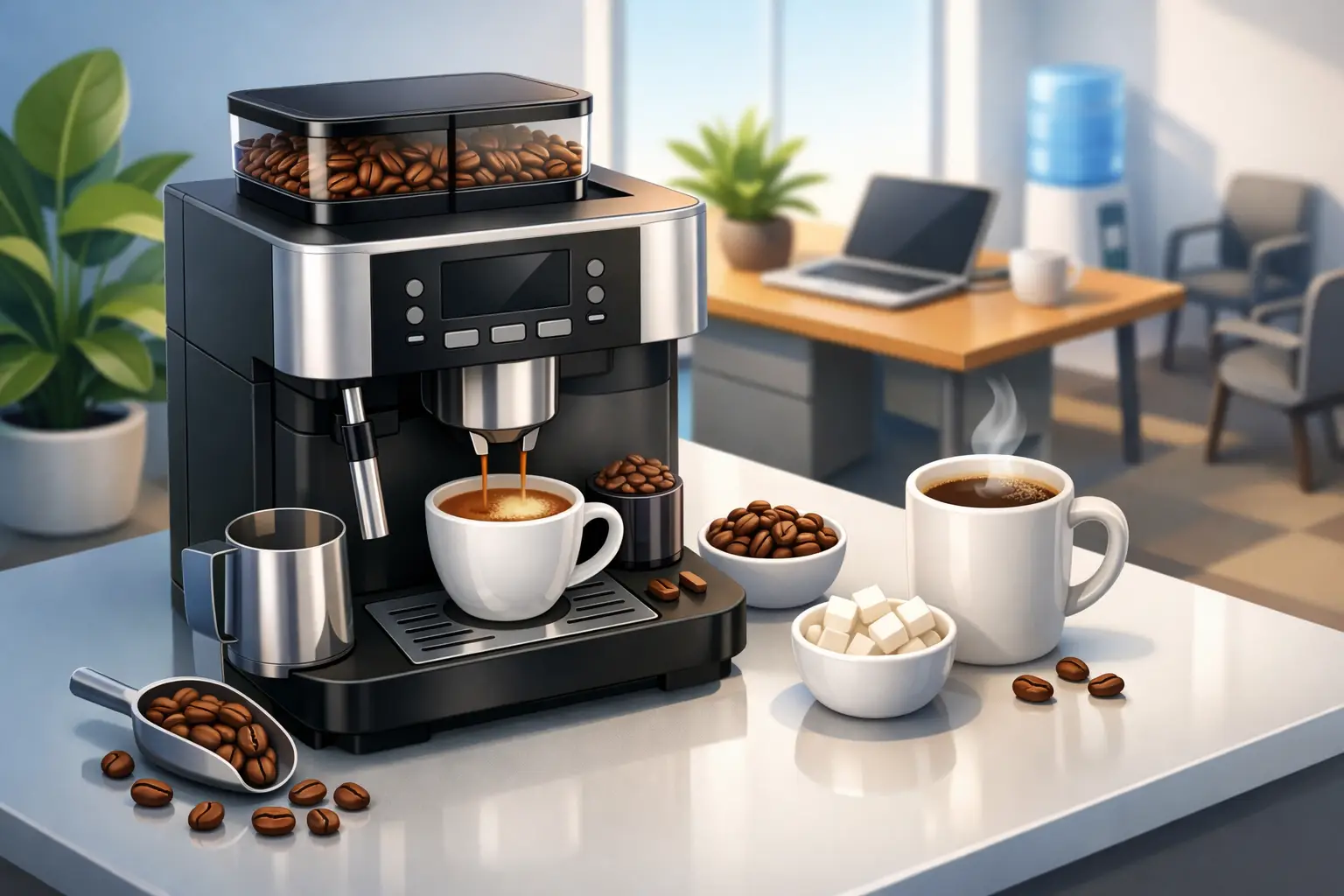
The morning coffee line says a great deal about a workplace. If employees are waiting for a pot to brew, settling for stale coffee, or leaving the office to buy drinks elsewhere, the break room is not doing its job. Bean to cup machines give offices a practical way to serve fresh, café-style coffee with less guesswork, less waste, and more consistency from cup to cup.
For office managers and facilities teams, the appeal goes beyond a better-tasting cup. The right system can simplify daily service, offer employees more beverage choice, and create a more polished experience for visitors. The key is choosing a machine and service plan that fit the way your team actually uses the break room.
Why Bean to Cup Machines Work in Offices
A bean to cup machine grinds whole coffee beans for each drink, then brews the beverage automatically. Depending on the model, employees may choose regular coffee, espresso, cappuccino, latte, hot chocolate, or other specialty drinks from a simple touchscreen or button panel.
That fresh grinding step matters. Whole beans retain their flavor longer than pre-ground coffee, so the finished cup is typically more aromatic and more satisfying. For businesses that want to offer a noticeable coffee upgrade without asking employees to learn barista skills, automatic equipment is a strong middle ground between a traditional brewer and a coffee shop counter.
These systems also support consistency. Beverage recipes, water volume, grind settings, and brew cycles are programmed into the machine. Whether the first person arrives at 7:30 a.m. or the last person heads to an afternoon meeting, the process remains the same. That reliability is valuable in busy offices where no one has time to monitor coffee preparation.
The Workplace Benefits Go Beyond Coffee
Coffee is a daily routine, but it is also part of how people experience the workplace. A well-equipped break room gives employees a reason to pause, connect, and recharge without leaving the building. It can make an office feel more considerate to current staff and more welcoming to candidates and clients.
Bean to cup machines can also reduce unnecessary waste. Rather than brewing a full pot that may sit too long or be poured out, the machine prepares single beverages as they are requested. This does not eliminate all waste, but it can help offices better match coffee production to actual demand.
For employers, a premium coffee option can be an efficient amenity. It offers a meaningful everyday benefit without the administrative burden of managing coffee runs, coordinating multiple supply vendors, or replacing a countertop machine every time it develops a problem.
Choosing the Right Bean to Cup Machine
There is no single best machine for every office. Capacity, drink preferences, available counter space, water access, and traffic patterns all affect the right choice. A small professional office with 15 employees has different needs than a healthcare facility, dealership, or corporate campus serving hundreds of people each day.
Start with daily volume, not headcount alone
The number of employees is a useful starting point, but it does not tell the whole story. Consider how many people are in the office on a typical day, whether clients use the break room, and when beverage demand peaks. A machine that handles the average volume may struggle if most employees try to make drinks between 8:00 and 9:00 a.m.
A higher-capacity unit may cost more, but it can be the better operational choice for a busy location. It helps reduce waits, avoids frequent refilling, and keeps the experience positive during high-demand periods. On the other hand, an oversized system in a low-volume office may add complexity that is not needed.
Match beverage choices to your culture
Some teams simply want excellent fresh-brewed coffee. Others expect espresso drinks, milk-based beverages, decaf options, or hot chocolate. The right menu should reflect the people using it, not just the most elaborate equipment available.
Consider dietary preferences as well. If a machine uses dairy milk or powdered milk, confirm whether that arrangement works for your employees and your cleaning routine. Some workplaces prefer a black-coffee and espresso-focused machine paired with separate dairy and non-dairy options. Others value an all-in-one specialty beverage experience. Both approaches can work when expectations are clear.
Review the physical setup
A bean to cup system needs more than a place on the counter. Ask about electrical requirements, water connection options, drainage needs, clearance for refilling ingredients, and access for service technicians. Plumbed-in machines are often a convenient choice for higher-volume environments because they eliminate the need to refill internal water tanks.
The surrounding area matters too. Employees need room for cups, lids, stirrers, creamers, and clean-up. If a machine is placed in a cramped corner with no nearby waste container, even excellent equipment can become frustrating to use.
Service Is Part of the Equipment Decision
Automatic coffee equipment has moving parts, grinders, brew units, ingredient containers, and cleaning cycles. It is designed for convenience, but it is not maintenance-free. The quality of the ongoing service behind the machine often has as much impact as the machine itself.
A dependable office coffee provider helps keep products stocked, checks equipment performance, addresses service needs, and gives your team a clear point of contact when something is not right. That is especially important when coffee service supports a large staff or client-facing location. A machine that is out of service on a Monday morning quickly becomes everyone’s problem.
Before selecting a provider, ask practical questions. Who handles routine maintenance? What happens when a machine needs attention? Are coffee, cups, sweeteners, creamers, tea, and related break room supplies available through the same service partner? A coordinated program reduces the time your staff spends placing orders and following up on deliveries.
Certified Coffee Service has supported South Florida workplaces since 1975 with equipment, recognized beverage brands, replenishment, and responsive local support. That service-first approach is important because office coffee should be easy to manage, not another item on an already full facilities checklist.
Keeping the Experience Fresh and Reliable
Even the best bean to cup machine needs a routine. Employees should know basic daily expectations, such as emptying a grounds container when prompted or reporting an error message rather than trying to force a fix. Clear, simple instructions near the machine can prevent avoidable interruptions.
Regular cleaning is equally important. Coffee oils, milk residue, and mineral buildup can affect taste and machine performance over time. Many automatic systems guide users through cleaning steps, while a professional service program can help ensure deeper maintenance is completed correctly and on schedule.
Product selection deserves attention as well. The beans in the hopper determine much of the final cup quality. A trusted coffee brand, proper storage, and timely replenishment help preserve the fresh experience that made the investment worthwhile. If employee preferences change, the coffee program should be flexible enough to change with them.
When a Different Coffee System May Be Better
Bean to cup machines are an excellent option for many workplaces, but they are not automatically the answer in every setting. A small office with very light use may prefer a single-cup system for maximum variety. A conference-heavy business may need thermal brewers that can serve multiple people quickly. A location with limited counter space or no convenient water access may benefit from another format.
The best approach is to look at the complete break room, not just one appliance. Coffee, tea, water, snacks, cups, and service all work together. When the system fits the workplace, employees get a better daily experience and the people responsible for the office have fewer details to chase.
A good cup of coffee should not depend on who remembered to start the pot or whether the break room supply cabinet was checked. With the right bean to cup machine and dependable support behind it, the coffee station can become one of the easiest parts of a well-run workplace.