
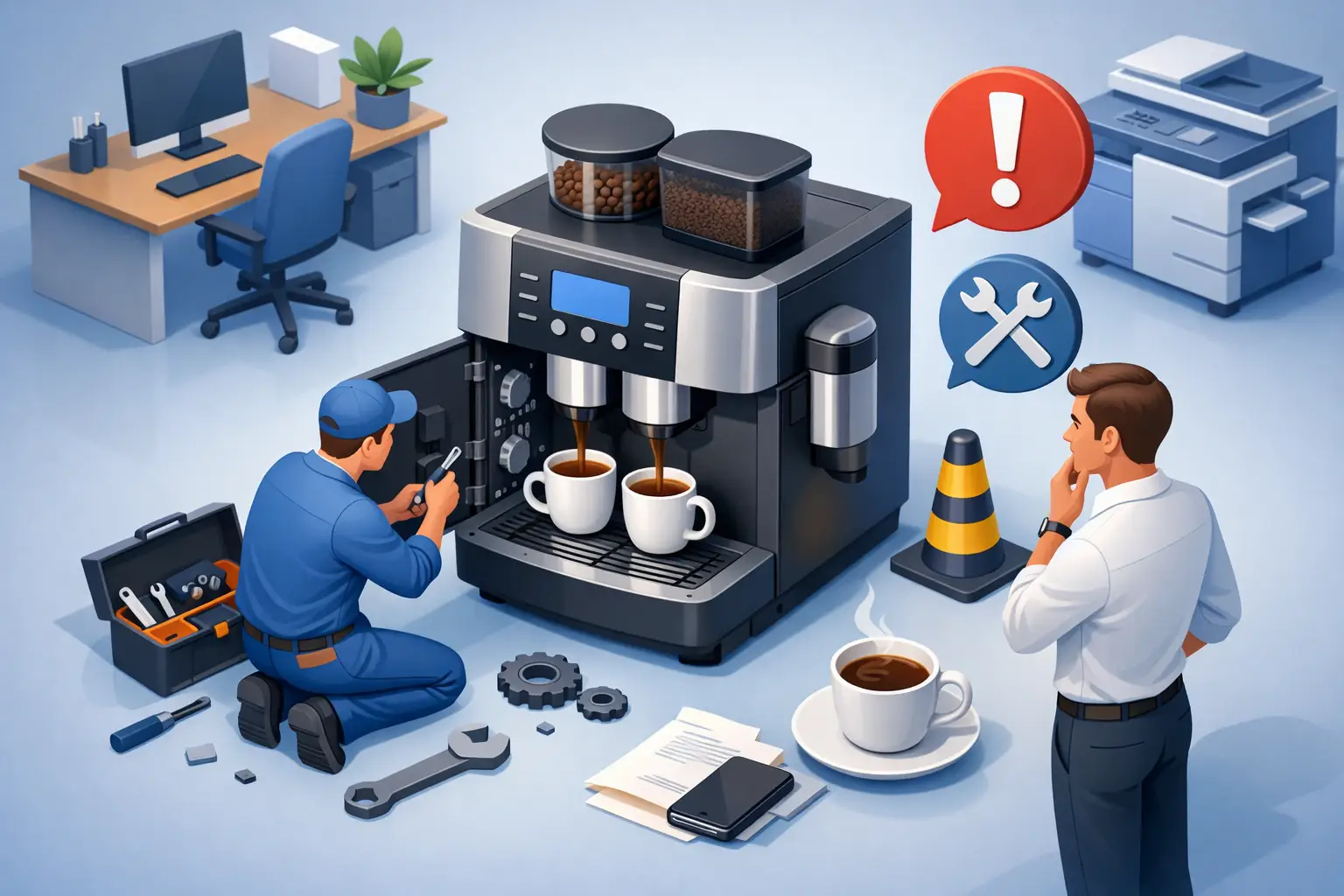
A coffee machine that stops working at 8:15 a.m. can create a much larger problem than a missed cup of coffee. Employees lose a dependable part of their routine, visitors notice an unprepared break room, and the office manager is left trying to find a fast fix. To prevent workplace coffee machine downtime, treat equipment reliability as part of your workplace service plan, not an afterthought.
The right approach combines properly matched equipment, consistent daily care, planned maintenance, and a service partner that takes responsibility when an issue occurs. For offices throughout South Florida, that level of attention keeps the break room ready for the workday rather than becoming another item on the facilities checklist.
Why coffee machine downtime happens
Most equipment failures do not begin as sudden, unavoidable breakdowns. They often start with small operating issues: mineral buildup in water lines, coffee grounds accumulating in brewing components, an overfilled waste bin, worn seals, incorrect cleaning products, or supplies that are not compatible with the machine.
Water quality is a major consideration in commercial coffee service. Mineral deposits can restrict water flow, affect brewing temperature, and shorten the working life of internal components. A machine may still produce coffee while buildup develops, but slower brew cycles, inconsistent taste, leaks, or error messages can follow.
Usage also matters. A compact single-cup unit that works well for a small team may be strained in an office where dozens of employees use it during a short morning rush. Likewise, a bean-to-cup machine offers fresh, premium coffee but has more moving parts and requires a disciplined cleaning routine. The best machine is not simply the most advanced option. It is the option sized, supplied, and supported for how your workplace actually operates.
Choose equipment that fits the workplace
Preventing downtime starts before installation. Facilities managers and office decision-makers should consider daily beverage volume, peak demand, available counter space, water access, employee preferences, and the level of upkeep the team can reasonably handle.
Traditional glass pot brewers and thermal brewers are proven options for workplaces that need volume quickly. They are straightforward to operate, but they still need regular cleaning, correct filter use, and periodic inspection of spray heads, warming plates, and water connections. Thermal systems can be especially useful when coffee needs to remain available without sitting on a heated plate.
Single-cup pod systems provide convenience and variety, particularly in smaller offices or executive areas. Their trade-off is that reservoirs, puncture mechanisms, and needle assemblies need attention. Using approved pods and keeping the unit clean helps avoid clogs and brewing errors.
Bean-to-cup and premium automatic machines create a higher-end coffee experience with fresh-ground beverages, espresso-style drinks, and menu variety. They are an excellent fit for workplaces where coffee is part of the employee experience or client hospitality. Because these systems manage grinders, brewers, milk options, and waste containers, they benefit most from regular professional service and clearly assigned daily care.
A qualified office coffee provider can help evaluate these practical differences rather than placing a one-size-fits-all machine in every location.
Build daily habits that prevent workplace coffee machine downtime
The daily routine does not need to be complicated, but it must be consistent. Assign one employee, receptionist, pantry attendant, or facilities team member to perform a short opening or closing check. When responsibility belongs to everyone, it often belongs to no one.
For most workplace coffee machines, the basic routine includes emptying drip trays and grounds containers before they overflow, wiping exterior surfaces and dispensing areas, checking water and coffee levels, and confirming that no error message is displayed. For bean-to-cup equipment, follow the manufacturer-approved rinse and cleaning cycle. For brewers, make sure baskets, carafes, and spray components are clean and properly positioned.
Use only the cleaners, filters, coffee, pods, and other consumables recommended for the equipment. Substituting products to save a small amount can create avoidable service calls. For example, an improperly fitted filter can cause overflow, while a non-approved cleaner can damage internal parts or leave unwanted residue.
It also helps to make reporting simple. Employees should know who to notify if coffee begins brewing slowly, tastes unusual, leaks, makes unfamiliar noises, or displays a warning. These signs are useful early warnings. Addressing them promptly is usually easier than waiting for a complete shutdown.
Schedule maintenance before there is a problem
Daily care keeps a machine presentable and operating properly between service visits. Preventive maintenance goes further by checking the components employees do not see.
The exact schedule depends on machine type, water conditions, and usage volume. A busy office may need more frequent attention than a small location with occasional use. During a maintenance visit, a trained technician can inspect water filtration, descale where needed, clean internal brewing areas, check hoses and connections, examine grinders and seals, test temperature and flow, and update settings when appropriate.
Do not rely only on a calendar if the office has seasonal changes in occupancy. A workplace that hosts training sessions, tax-season staff, or frequent client events may place much heavier demand on the coffee station during certain periods. Let your provider know when usage changes. Service schedules can be adjusted to protect performance when the break room is under greater pressure.
Water filtration deserves special attention. Good filtration supports better-tasting coffee and helps protect equipment from scale. However, filters are not permanent. A filter that is overdue for replacement can reduce flow or allow minerals through, creating the very issues it was intended to prevent.
Keep supplies organized and compatible
A coffee machine can be technically operational and still fail the workplace if essential supplies run out. No coffee, cups, lids, creamers, filters, or cleaning tablets means the break room cannot serve employees as intended.
A full-service program should account for both equipment and replenishment. Review consumption patterns regularly, especially after office attendance changes or a new machine is introduced. Bean-to-cup systems may reduce the need for packaged coffee but increase the importance of whole-bean inventory and cleaning products. Single-cup programs require the right mix of coffee varieties, tea options, and compatible pods.
Keep supplies in a clean, dry, accessible area. Coffee should be protected from heat and humidity, and staff should avoid stacking items where they can block ventilation or interfere with machine access. A little organization makes daily checks faster and helps staff spot shortages before the morning rush.
Have a clear service response plan
Even well-maintained commercial equipment can occasionally need repair. The difference between a minor interruption and a frustrating, day-long outage is often the service response.
Before a problem occurs, know how to request service, what details to provide, and what temporary options are available. The person calling should be prepared to share the machine model, error message, symptoms, and any steps already taken. Clear information helps a service team arrive prepared.
It is also wise to think about backup coverage for high-demand workplaces. A large office, customer-facing reception area, or facility with multiple shifts may benefit from more than one beverage station. This is not always necessary for a small office, but where coffee availability is essential, redundancy can be a practical investment.
Certified Coffee Service approaches workplace beverage programs with Service Above All – pairing dependable equipment with ongoing product support and local accountability. That relationship matters when a machine needs attention, because a provider that understands the office setup can respond with the right parts, supplies, and service history.
Make coffee reliability part of workplace culture
The best coffee programs are easy for employees to use and easy for managers to maintain. Place simple operating instructions near the machine, especially when equipment has touchscreen menus, multiple beverage selections, or required end-of-day cleaning steps. Keep the instructions short and specific so they are used rather than ignored.
Encourage employees to treat shared coffee equipment with the same care they would expect at home: dispose of grounds properly, do not force doors or drawers, report leaks quickly, and avoid using unapproved products. These small actions protect the equipment while preserving a clean, professional break room.
A reliable coffee station is a daily signal that the workplace is prepared for its people. With the right machine, regular care, planned maintenance, and responsive service, coffee can remain one of the easiest parts of the workday.