
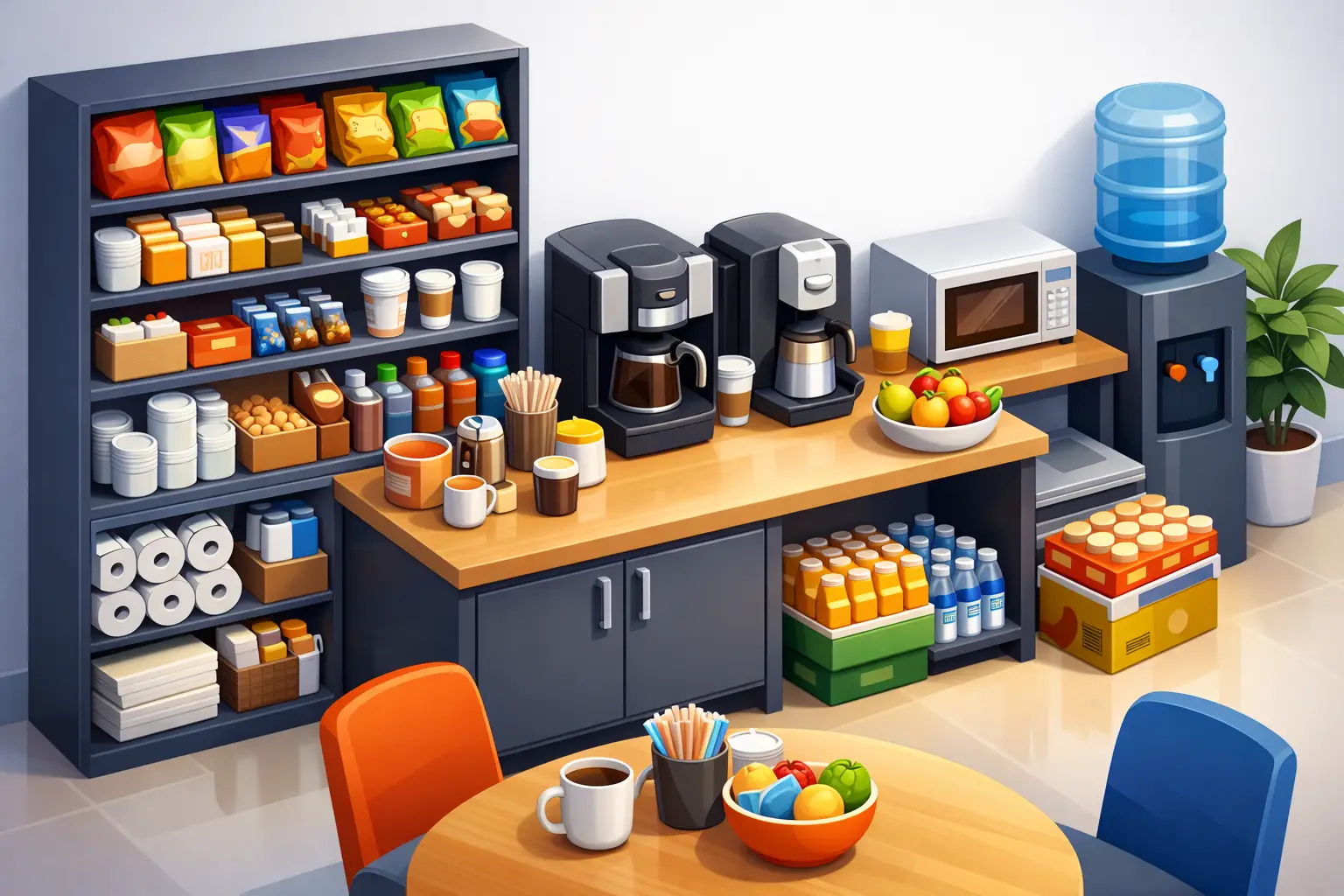
A break room rarely runs out of supplies at a convenient time. It happens before a client meeting, during a busy Monday morning, or just as the last coffee pod disappears. Knowing how to stock break room supplies is less about filling a cabinet and more about creating a dependable system that supports employees, visitors, and daily operations.
For office managers and facilities teams, the goal is simple: give people good choices, keep essentials available, and avoid spending valuable time chasing down products from multiple vendors. A well-stocked break room helps reinforce a professional workplace while giving employees a place to recharge.
Start With How Your Office Actually Uses the Break Room
The right supply plan begins with usage, not assumptions. A 15-person office with a traditional coffee brewer has different needs than a 150-person workplace using bean-to-cup equipment, single-cup brewers, filtered water, and vending. Headcount matters, but so do work schedules, visitor volume, employee preferences, and how often people are in the office.
Track consumption for two to four weeks before setting standard order quantities. Note how quickly coffee, creamers, tea, cups, sweeteners, bottled water, snacks, and paper goods are used. This provides a more reliable starting point than ordering based on what looks low at the end of the month.
Also consider peak demand. Many offices consume most of their coffee in the first two hours of the day, while cold beverages and snacks may move faster in the afternoon. If your team hosts regular meetings, training sessions, or client visits, build those occasions into your forecast rather than treating them as surprise demand.
How to Stock Break Room Supplies by Category
A practical break room has a core group of supplies that should be available consistently. The exact product mix can vary, but the categories should be covered.
Coffee, Tea, and Beverage Options
Coffee is often the center of the break room, so start with the equipment and products your workforce prefers. Offices may choose whole-bean coffee for a bean-to-cup machine, ground coffee for traditional brewers, coffee pods for single-cup systems, or a combination of formats. The best choice depends on volume, convenience, variety, and the type of coffee experience you want to offer.
Keep enough coffee on hand to cover your normal delivery cycle plus a small reserve. A backup case is useful, but excessive inventory can create freshness issues and take up valuable storage space. For premium coffee, portion-controlled pods, and specialty items, ordering based on actual usage is especially helpful.
Tea deserves the same attention. Include familiar choices such as black tea, green tea, herbal tea, and decaffeinated options. Recognized brands such as Lipton and Bigelow can make selection easy for employees and guests, particularly when a workplace serves a broad range of tastes.
Water should also be part of the plan. A bottleless water cooler or filtration system can reduce the need to store cases of bottled water, while a bottled water program may work well for locations with limited plumbing access. The right solution depends on your facility and consumption levels.
Creamers, Sweeteners, and Condiments
The items beside the coffee maker have an outsized effect on the employee experience. Stock a balanced mix of dairy creamer, non-dairy creamer, sugar, sugar substitutes, stirrers, and napkins. If your office has employees with dietary restrictions, include a clearly labeled plant-based option and avoid relying on a single creamer choice.
Pay attention to portion format. Individual creamers and packets support cleanliness and portion control, while bulk containers may reduce packaging waste in larger offices. Neither approach is automatically better. A high-traffic break room with limited refrigeration may benefit from shelf-stable individual creamers, while a smaller office may prefer refrigerated milk or a shared container.
Cups, Lids, and Everyday Disposables
A coffee program cannot function without the supplies that make it usable. Keep hot cups in appropriate sizes, lids, sleeves when needed, stirrers, napkins, and paper towels near the beverage station. Cold cups, straws, and utensils may be necessary if the break room also supports water, soft drinks, or snacks.
Reusable mugs can reduce disposable cup usage and create a more comfortable office culture, but they require a practical cleaning setup. If employees do not have convenient access to a dishwasher or sink area, disposable cups remain an important backup. Many workplaces use both: reusable mugs for regular employees and disposables for visitors, meetings, and busy days.
Snacks and Light Refreshments
Snack selection should reflect your workplace, not a generic assortment. Start with reliable, recognizable options and add variety over time based on what employees choose. Individual snacks are easy to distribute, easy to track, and suitable for offices without a full kitchen.
A balanced snack program usually includes savory items, sweet options, and a few better-for-you selections. In a larger office, vending machines can help manage variety and availability without requiring staff to monitor shelves every day. In a smaller office, a curated countertop selection may be enough.
Avoid overstocking perishable snacks unless there is proven demand. Fresh options can be a welcome benefit, but they require more frequent attention and clear ownership. Shelf-stable products are often the more dependable foundation for a busy commercial environment.
Cleaning and Organization Supplies
A break room that is well supplied but poorly maintained will not feel inviting. Keep trash liners, disinfecting wipes, hand soap, paper towels, dish soap, sponges, and cleaning cloths available in designated locations. Coffee filters, brewer cleaning materials, and waste containers should be included in the same operating plan.
Set up the space so employees can quickly find what they need and restock simple items when appropriate. Labels on shelves and cabinets reduce confusion. Place cups, lids, sweeteners, and stirrers close to the coffee station, and keep reserve inventory in one organized storage area rather than scattered across the office.
Set Par Levels Instead of Ordering When Shelves Look Empty
The most reliable way to manage break room inventory is to establish par levels. A par level is the minimum quantity that should be on hand before the next scheduled delivery or order. It gives your team a clear trigger to replenish supplies before an interruption occurs.
For example, if your office uses two cases of cups per month and receives deliveries every two weeks, your par level should cover expected usage through the next delivery period with a reasonable buffer. The buffer matters because attendance can change, meetings may be added, and consumption can rise during seasonal busy periods.
Review par levels after major changes such as hiring, a return-to-office policy, a new coffee machine, or a change in delivery frequency. A single-cup coffee system, for instance, may increase variety and convenience while changing how much inventory space is needed for pods. A bean-to-cup machine may reduce packaging volume but require a steady supply of fresh whole beans.
Assign Ownership and Create a Simple Check Routine
Even the best supply plan fails if nobody owns it. Assign a primary person or team to monitor the break room and a backup contact for absences. Their role does not need to involve daily counting. A quick weekly check can identify low inventory, equipment concerns, expired items, and cleaning needs before they affect the office.
Use a short checklist that covers the products most likely to run out: coffee, tea, cups, creamers, sweeteners, paper towels, water, and snacks. If your workplace has high traffic or several break areas, check more often. The right frequency depends on usage, but consistency matters more than complexity.
Equipment service should be part of that routine. An empty coffee supply is frustrating; an out-of-service coffee machine is worse. Make sure employees know who to contact if a brewer, bean-to-cup system, water cooler, or vending machine needs attention. Reliable service keeps a small issue from becoming a recurring workplace complaint.
Simplify Ordering With One Dependable Service Partner
Managing coffee, tea, water, snacks, disposables, and equipment through separate suppliers can create unnecessary work. Consolidating these needs with a qualified workplace beverage and break room provider can make inventory planning easier, improve consistency, and give your office one point of contact when service is needed.
Certified Coffee Service supports South Florida workplaces with coffee equipment, recognized beverage brands, water solutions, vending, and break room essentials backed by a Service Above All approach. For many offices, scheduled replenishment and responsive equipment support are more valuable than simply finding the lowest unit price. The true cost of a break room includes staff time, product shortages, service delays, and the impression the space leaves on employees and guests.
A well-run break room does not need to be elaborate. It needs the right products, enough inventory for normal demand, and a service plan that keeps the space ready without constant attention. When supplies are dependable, your employees can focus on their work and your team can spend less time managing the details behind a good cup of coffee.