
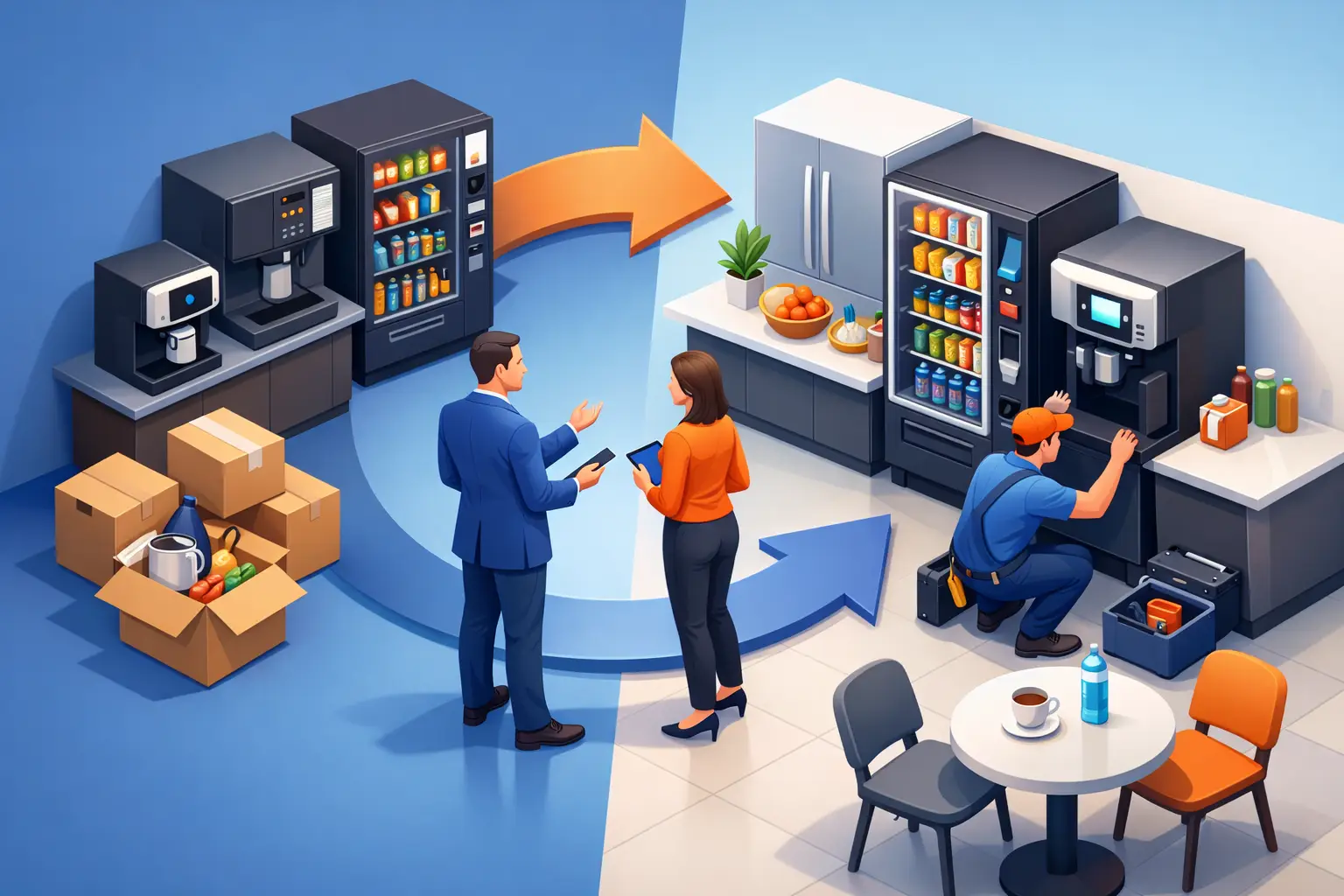
Changing break room providers should not mean empty coffee stations, missed water deliveries, or employees wondering why their usual supplies disappeared. A well-managed breakroom vendor transition plan protects daily operations while giving your organization the opportunity to improve equipment, product selection, service response, and overall value.
For office managers, facilities teams, and procurement leaders, the goal is not simply to replace one vendor with another. The goal is to make the change without disrupting the workplace experience employees rely on every day.
Start With the Reason for the Change
A vendor transition works best when the decision is tied to clear business needs. Perhaps service calls take too long, product deliveries are inconsistent, equipment has become outdated, or your current program does not reflect how employees use the break room. In other cases, the issue is administrative: too many separate vendors, unclear invoices, or no reliable point of contact when something goes wrong.
Document the concerns before selecting a new provider. This creates a practical benchmark for the new program and helps ensure the transition addresses the real problem. If machine downtime is the main concern, for example, the service process matters as much as the coffee equipment itself. If employees want more variety, focus on a supplier that can support coffee, tea, water, snacks, and break room essentials without creating more purchasing work for your team.
It also helps to identify what is working. Your employees may appreciate a particular coffee brand, a filtered water dispenser, or the convenience of a single-cup machine. A transition is a chance to improve the program, not discard the details people value.
Review Your Current Agreement and Equipment
Before setting an installation date, review the existing vendor agreement carefully. Confirm notice requirements, contract end dates, equipment ownership, removal responsibilities, and any early termination provisions. Some machines may be rented, leased, or supplied under a placement agreement, while others may belong to your company.
This is where many otherwise well-planned changes become difficult. A replacement machine cannot always be installed in the exact location of outgoing equipment if electrical needs, counter space, plumbing, drainage, or water filtration requirements differ. Take photos and measurements of each station, including access paths for delivery and service technicians.
A complete inventory should include coffee brewers, bean-to-cup systems, single-cup machines, water coolers or bottleless water units, vending equipment, refrigeration, condiment racks, and storage space. Note the product types currently used, average delivery frequency, and any recurring supply shortages. This information gives the incoming vendor a more accurate picture of your operation.
Build the Right Breakroom Vendor Transition Plan
The best breakroom vendor transition plan assigns responsibilities and timing before the old service ends. It should cover more than equipment replacement. Products, access, communication, billing, and support all need attention.
Start by selecting an internal transition lead. This may be an office manager, facilities manager, or administrative professional who can answer questions and coordinate access. The new vendor should also provide one accountable contact who understands your account, site requirements, and installation schedule.
A strong plan typically addresses these operational areas:
- Equipment removal and installation dates, including whether there will be any overlap between providers.
- Product inventory levels, so coffee, cups, creamers, tea, sweeteners, and water are available throughout the change.
- Building access, loading dock procedures, parking instructions, and any required certificates or scheduled delivery windows.
- Electrical, plumbing, filtration, and countertop requirements for each machine or water solution.
- Employee communication, particularly when equipment, product brands, or station locations will change.
Avoid scheduling removal and installation with no buffer when possible. A short overlap can be worthwhile for larger offices, multi-floor locations, or sites with high daily coffee consumption. It may add a small amount of coordination, but it reduces the risk of an unstaffed break room if a delivery window changes or a site condition needs correction.
Match Equipment to How Your Office Actually Uses It
An office coffee program should be sized for employee habits, not just headcount. A 75-person office with staggered shifts has different needs from a 75-person office where everyone arrives before 9 a.m. Peak demand, beverage preferences, available space, and cleaning expectations should all influence the equipment decision.
Traditional glass-pot brewers can be a practical fit for busy teams that want familiar, high-volume coffee service. Thermal brewers help preserve freshness when coffee is served over a longer period. Bean-to-cup equipment offers a premium experience with fresh-ground coffee and specialty beverage options, while single-cup systems provide choice and portion control for smaller teams or varied preferences.
Water deserves the same level of planning. Bottleless water systems can reduce bottle storage and handling, while bottled water may be better suited to certain locations, layouts, or temporary workplaces. The right answer depends on your space and usage, not on a one-size-fits-all package.
Consider whether the incoming provider can also support tea, recognized coffee brands, condiments, cups, paper goods, snacks, and vending. Consolidating these needs under one dependable service partner can simplify ordering and provide a clearer view of your recurring break room costs.
Protect Supply Continuity During the Change
Coffee service is easy to overlook until it stops. That is why product planning should begin before the first new machine arrives. Review how much coffee, tea, cups, lids, stirrers, creamers, sweeteners, and water your location uses in a typical week. Then account for special events, seasonal staffing, client meetings, and high-traffic days.
It is usually better to keep a modest reserve of core supplies during the transition than to run the break room down to the last box. This does not mean overbuying products that will not be used. It means protecting the items employees expect to find every morning.
Ask the new vendor how replenishment is managed after installation. Will the route representative monitor inventory? Is there a set delivery schedule? How are special requests handled? The answers reveal whether the provider is prepared to support your team after the sales process is complete.
Communicate the Change Without Making It Complicated
Employees do not need every detail of the vendor agreement, but they should know what will change and when. A short announcement can explain the installation date, any temporary station closures, new beverage options, and whom to contact if there is an immediate issue.
If the transition includes a new bean-to-cup or premium automatic machine, consider a brief demonstration or clear operating instructions near the station. Even excellent equipment can create frustration if employees are unsure how to select a drink, refill a water reservoir, or report a problem.
Feedback is useful during the first few weeks, especially when a company is introducing new brands or reducing a large assortment to create a more efficient program. Listen for patterns rather than reacting to every individual preference. A request for decaf, herbal tea, or additional dairy alternatives may be simple to address. A request that requires entirely different equipment may need more evaluation.
Evaluate Service After Installation
The transition is not finished when the equipment is in place. The first 30 to 60 days show whether the new program is delivering the reliability your office needs. Track service response time, delivery accuracy, equipment performance, product availability, and employee feedback.
This is also the time to confirm that invoices match the agreed program. Check product pricing, delivery charges, equipment fees, and any service terms. Clear reporting and responsive account support matter because break room issues rarely arrive at convenient times.
For South Florida businesses, a local provider with hands-on accountability can make a meaningful difference when equipment needs attention or workplace needs change. Certified Coffee Service has built its approach around Service Above All, with workplace coffee, water, vending, and break room support designed to keep the daily experience dependable.
A well-run transition gives your employees a better reason to gather, recharge, and stay productive. Choose a partner that treats every coffee station, water unit, and delivery as part of the service your workplace depends on.