
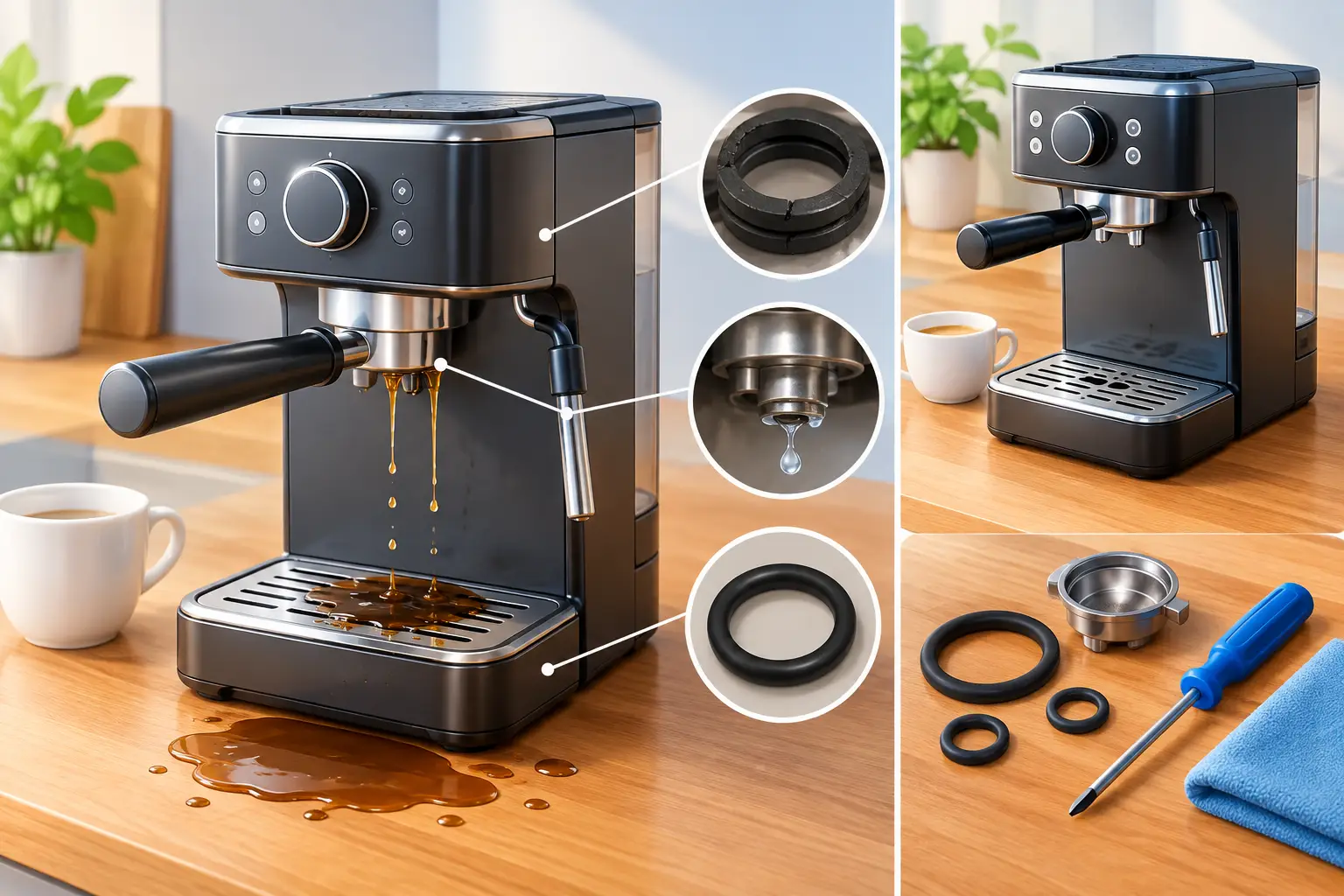
A puddle beneath the office coffee brewer is more than a housekeeping problem. It can interrupt a busy morning, create a slip hazard, damage cabinetry or flooring, and leave employees without the coffee they count on. Understanding why coffee machines leak helps workplace teams respond quickly, protect their equipment, and avoid a small issue becoming an expensive service call.
The source of a leak is not always obvious. Water may appear under the machine even when the actual problem is at the reservoir, inside a connection, around the brew basket, or in a drain line. The machine type matters, too. A bean-to-cup system, single-cup brewer, glass-pot brewer, and plumbed-in commercial machine each have different components that can fail or require attention.
Why Coffee Machines Leak in the Workplace
Most leaks come down to one of three causes: a worn part, an improperly positioned component, or a maintenance issue that restricts normal water flow. The right response depends on where the water is coming from and whether the machine is connected directly to a water line.
A leak that occurs only during brewing often points to an overflow, blocked drainage path, or problem around the brew basket. A leak that continues while the equipment is idle is more concerning. It may indicate a water supply connection, inlet valve, tank, or internal hose issue. In a commercial setting, that is a reason to stop using the machine and arrange service promptly.
Loose or Worn Water Connections
Plumbed-in coffee equipment relies on water lines, fittings, valves, and internal tubing to deliver a consistent supply. Over time, vibration, regular use, and normal wear can loosen a fitting or degrade a seal. Even a slow drip can collect behind or underneath the unit before anyone notices it.
If the machine has recently been moved, replaced, or serviced, inspect the visible connection point for moisture. Do not overtighten fittings or attempt to disassemble panels without proper training. Commercial coffee machines contain electrical components and pressurized water connections, so a quick adjustment can create a bigger problem if handled incorrectly.
A Full Drip Tray or Misaligned Parts
Not every puddle means the machine itself has failed. Drip trays fill faster than many people expect, especially on single-cup and bean-to-cup systems used throughout the day. Employees may also return a tray, grounds bin, water reservoir, brew basket, or carafe slightly out of position after cleaning.
Check that removable parts are seated correctly and that the drip tray has been emptied and reinstalled fully. On traditional brewers, confirm the carafe is centered on the warming plate and the brew basket is properly closed. Coffee can run down the exterior of a carafe or overflow from an improperly placed filter basket, making it look as if the machine is leaking from below.
Clogs Caused by Coffee Grounds or Mineral Scale
Coffee grounds, paper filter fragments, and mineral deposits can interfere with drainage. When water cannot move through the brew path at the intended rate, it may back up and overflow around the basket or internal components.
Scale is especially relevant in areas with hard water. It can build up gradually in valves, tubes, and heating areas, reducing performance before a visible leak appears. Slow brewing, unusual noises, inconsistent cup volume, or water collecting near the brew head are signs that the unit may need professional cleaning or descaling.
Using the correct filters, coffee portions, and cleaning schedule helps reduce these issues. More coffee than the brew basket is designed to hold can cause grounds to swell and water to overflow. The same is true when a filter collapses or is folded incorrectly inside the basket.
Damaged Reservoirs, Seals, and Internal Hoses
Pour-over brewers and countertop machines with reservoirs may leak when the water tank has a crack or when its gasket no longer seals correctly. Repeated removal, accidental impacts, and exposure to heat can all contribute to wear.
Internal hoses and O-rings also have a service life. These parts are out of sight, but they are essential to keeping water contained as it moves through the machine. If water seems to come from the bottom or rear of the unit and simple checks do not reveal the cause, internal service is usually required.
Overflow From an Inlet Valve Problem
In plumbed equipment, an inlet valve controls the amount of water entering the system. If the valve does not close fully, the machine may keep filling after it should stop. That can lead to overflow from the tank or a leak that appears only after the brewer has been sitting unused.
This is not a do-it-yourself repair. Turn off the water supply if it is safe to do so, unplug the equipment, place an absorbent towel around the area, and contact your coffee service provider. Continuing to operate a machine with a suspected valve issue risks water damage and electrical hazards.
How to Identify Where the Leak Starts
Before calling for service, a few simple observations can help speed up the diagnosis. First, clean and dry the counter or floor around the machine. Then note when water returns: during brewing, immediately after a drink is made, while the machine is idle, or only after the drip tray is removed.
Look at the water itself. Clear water often suggests a supply, reservoir, or internal water-path issue. Brown water or water with coffee grounds points more toward the brew basket, carafe, filter, or drainage area. Also check whether the machine is level. An uneven countertop can cause a full drip tray or carafe to spill in a direction that disguises the source.
For office managers, documenting the machine model, the time the leak occurred, and any error message is useful. A photo of the affected area can also help a service technician arrive prepared with the likely replacement parts.
When to Stop Using a Leaking Coffee Machine
It depends on the severity and source, but water near electrical equipment should always be treated seriously. A few drops from an overfilled drip tray can be cleaned up and monitored. A recurring leak, a leak beneath the machine, or water coming from the back of a plumbed brewer calls for immediate action.
Stop use and request service when you notice any of the following:
- Water pooling beneath or behind the machine
- A leak that continues when no one is brewing coffee
- Moisture near a power cord, outlet, or internal electrical area
- Repeated overflowing from the brew basket or reservoir
- A sudden change in brewing speed, water volume, or machine performance
Do not place the machine back in service simply because the leak seems to have stopped. Intermittent leaks are common with worn seals and valves, and they often return during the next high-use period.
Preventing Coffee Machine Leaks Before They Disrupt the Break Room
Reliable coffee service starts with equipment that matches the workplace. A small office using a high-volume machine beyond its intended capacity may see more overflow, wear, and cleaning issues than a properly sized system. The best setup balances employee demand, beverage preferences, available water connections, and the level of daily attention the equipment will receive.
Routine care matters just as much. Employees should know how to empty drip trays, position carafes, use the right filter and coffee amount, and report unusual behavior early. Facilities teams should avoid using harsh, unapproved cleaners that can damage seals or plastic components. A regular professional maintenance program can address scale buildup, inspect water lines, replace worn parts, and catch small issues before they affect the workday.
For businesses with several break room appliances, working with one accountable service partner also simplifies the response when something goes wrong. Rather than asking an office administrator to troubleshoot plumbing, equipment, and product supplies separately, the right provider can keep the entire beverage program running with less disruption.
Certified Coffee Service approaches workplace coffee with that practical standard: dependable equipment, appropriate product support, and Service Above All when equipment needs attention. A well-maintained machine should fade into the background while employees enjoy a consistent cup. When it does not, a quick response is the best way to keep a minor leak from interrupting the whole break room.