
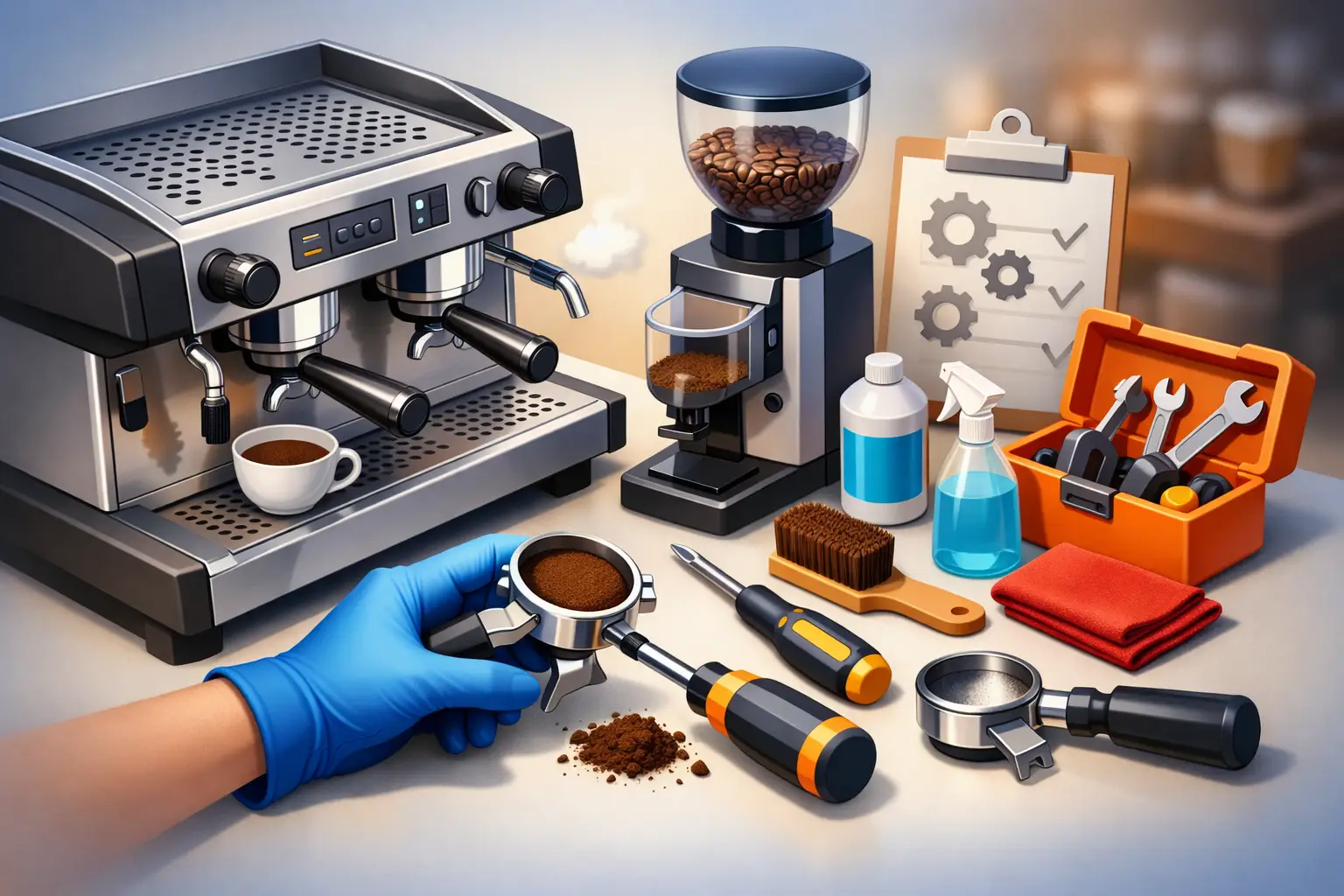
A coffee machine that stops working at 8:15 a.m. can affect far more than the first cup of the day. It creates a line in the break room, interrupts staff routines, and leaves office managers looking for a quick answer. Consistent commercial coffee equipment maintenance helps prevent those moments while protecting the quality, reliability, and useful life of the equipment your team depends on.
For a workplace, maintenance is not simply about keeping a machine clean. It is about preserving a dependable employee amenity, controlling avoidable repair costs, and making sure every cup meets the standard your business expects. The right routine will look different for a bean-to-cup system, a traditional brewer, a single-cup unit, or a premium automatic machine. Still, the goal remains the same: keep the break room ready for business.
Why Commercial Coffee Equipment Maintenance Matters
Coffee equipment works hard in a commercial setting. A brewer in a busy office may run repeatedly throughout the morning. A bean-to-cup machine may grind, brew, rinse, and dispense milk-based drinks dozens of times each day. Water minerals, coffee oils, grounds, powder residue, and everyday wear all build up over time.
When maintenance is delayed, the first warning is often a decline in the cup itself. Coffee may taste bitter, weak, burnt, or inconsistent. Brew cycles may slow down, water may not reach the proper temperature, and grinders can produce uneven grounds. Left unaddressed, small performance changes can become leaks, clogs, heating problems, or machine downtime.
Regular care also supports a more professional workplace experience. Employees and guests notice when the coffee station is clean, stocked, and functioning properly. They also notice when it is not. A reliable break room signals that the business pays attention to the details that support its people.
The Right Maintenance Schedule Depends on the Machine
There is no single maintenance schedule that fits every office. Usage volume, water quality, machine type, beverage menu, and the number of users all affect what the equipment needs. A lightly used single-cup brewer has different service needs than a high-volume bean-to-cup system serving a large corporate office.
Daily care protects coffee quality
Daily attention is usually the most important part of keeping equipment presentable and dependable. Staff should empty drip trays and grounds containers before they overflow, wipe external surfaces, clean the brewing area as directed by the manufacturer, and replace any needed consumables. For glass pot brewers, pots, brew baskets, and thermal servers should be washed thoroughly so old coffee residue does not affect the next batch.
Milk systems require particularly close attention. If your automatic equipment prepares cappuccinos, lattes, or other milk beverages, its milk lines and dispensing components must be cleaned according to the machine’s specific procedures. Skipping this task can create sanitation concerns and quickly affect drink quality.
Daily care is simple, but it needs ownership. The best programs identify who handles basic break room tasks and make instructions easy to follow. When responsibility is unclear, small cleaning jobs are often missed during busy workdays.
Weekly cleaning addresses buildup
Weekly maintenance goes beyond a quick wipe-down. It may include cleaning removable brewing components, washing drip trays and waste containers, wiping grinder hoppers, inspecting seals, and checking that no coffee grounds or residue are blocking moving parts.
For traditional brewers, weekly cleaning should include spray heads and brew baskets. These components can collect mineral deposits and coffee oils that restrict water flow. For single-cup systems, inspect the pod area and needle assembly following approved safety procedures. Grounds, foil fragments, or residue in this area can lead to poor extraction and incomplete brews.
A clean machine is not only about appearance. Coffee oils turn rancid, mineral buildup affects water flow, and accumulated grounds can interfere with normal operation. Weekly attention prevents routine residue from becoming a service call.
Scheduled descaling and preventive service
Descaling removes mineral deposits that form when water is heated. In South Florida, water conditions can make this especially relevant, though the appropriate interval depends on the equipment, filtration setup, and local water hardness. Descaling too infrequently can reduce heating efficiency, change brew performance, and shorten the life of internal components. Using the wrong chemical or process, however, can damage the machine or leave an unpleasant taste behind.
That is why scheduled preventive service is worth more than a last-minute repair. A trained technician can inspect internal parts, confirm brewing temperatures, check water connections, evaluate filters, clean areas that staff cannot safely access, and identify wear before it causes downtime. This is especially valuable for premium automatic machines with grinders, brewer assemblies, pumps, and milk systems.
Water Filtration Is Part of Equipment Care
Many coffee problems begin with water, not coffee. Water is the largest ingredient in every cup, and it affects taste, equipment performance, and maintenance frequency. Excess minerals can create scale inside heating elements and water lines. Sediment can restrict flow. Chlorine and other water characteristics can also affect the flavor of coffee and tea.
A properly selected filtration system helps protect equipment while supporting a cleaner-tasting beverage. Filters are not a set-it-and-forget-it item, though. They need replacement on schedule based on capacity, usage, and water conditions. Waiting until a filter is visibly worn or until the machine begins showing problems is usually too late.
The trade-off is straightforward: filtration and routine replacements add an ongoing cost, but they can reduce avoidable scale-related repairs and help maintain consistent coffee quality. For businesses serving a high volume of beverages, that investment is often easier to justify than repeated emergency service visits.
Watch for Early Signs of Trouble
Equipment rarely fails without giving some indication first. Office managers and facilities teams do not need to diagnose every mechanical issue, but recognizing changes early helps service providers respond before the break room goes down.
Pay attention to a machine that suddenly takes longer to brew, produces coffee at an inconsistent temperature, makes unusual noises, leaks water, displays recurring error messages, or leaves excessive grounds in the cup. A change in taste can matter too. If employees report that coffee tastes weak or burnt despite using the same product, the issue may involve the grinder, brew settings, water flow, or cleaning routine.
Do not try to force a machine through a recurring error or take apart internal components without proper training. That can create safety risks, worsen the problem, or affect equipment coverage. Instead, document what happened, note any error code, and report whether the issue affects every drink or only certain selections. That information helps a technician arrive prepared.
Build Maintenance Into Your Break Room Service Plan
The most effective approach is not asking an office manager to become a coffee equipment specialist. It is creating a clear division between simple daily responsibilities and professional support. Employees or designated break room staff can handle basic cleaning, emptying, and visual checks. A service partner can manage preventive maintenance, filter changes, repairs, calibration, and product replenishment.
This arrangement is especially useful when a workplace has several beverage solutions in one area, such as a coffee brewer, bean-to-cup system, water dispenser, tea selection, and vending equipment. Managing separate suppliers for each item can make accountability difficult. A coordinated service plan gives the business one reliable point of contact when supplies run low or equipment needs attention.
At Certified Coffee Service, Service Above All means supporting the equipment after it is placed, not simply delivering it. The right partner should understand your office’s usage patterns, recommend equipment that matches demand, and provide responsive support when service is needed.
A Practical Routine for Office Teams
A simple recurring process keeps maintenance from becoming an afterthought. Daily, clean external surfaces, empty waste containers, and check that the equipment has the supplies it needs. Weekly, clean removable components and look for leaks, residue, or changes in performance. On the service schedule, replace water filters, descale as recommended, and arrange professional inspection and preventive care.
Keep a brief record of service dates, filter changes, and recurring machine issues. This does not need to be complicated. A note near the break room or a shared facilities log can reveal patterns, such as a machine requiring more frequent cleaning or a particular location consuming more coffee than expected. Those details make future equipment and service decisions more accurate.
A well-maintained coffee station gives employees one less thing to think about. When the equipment is clean, stocked, and ready every morning, the break room can do what it should: provide a dependable place for people to recharge, connect, and get back to work.
2 comments