
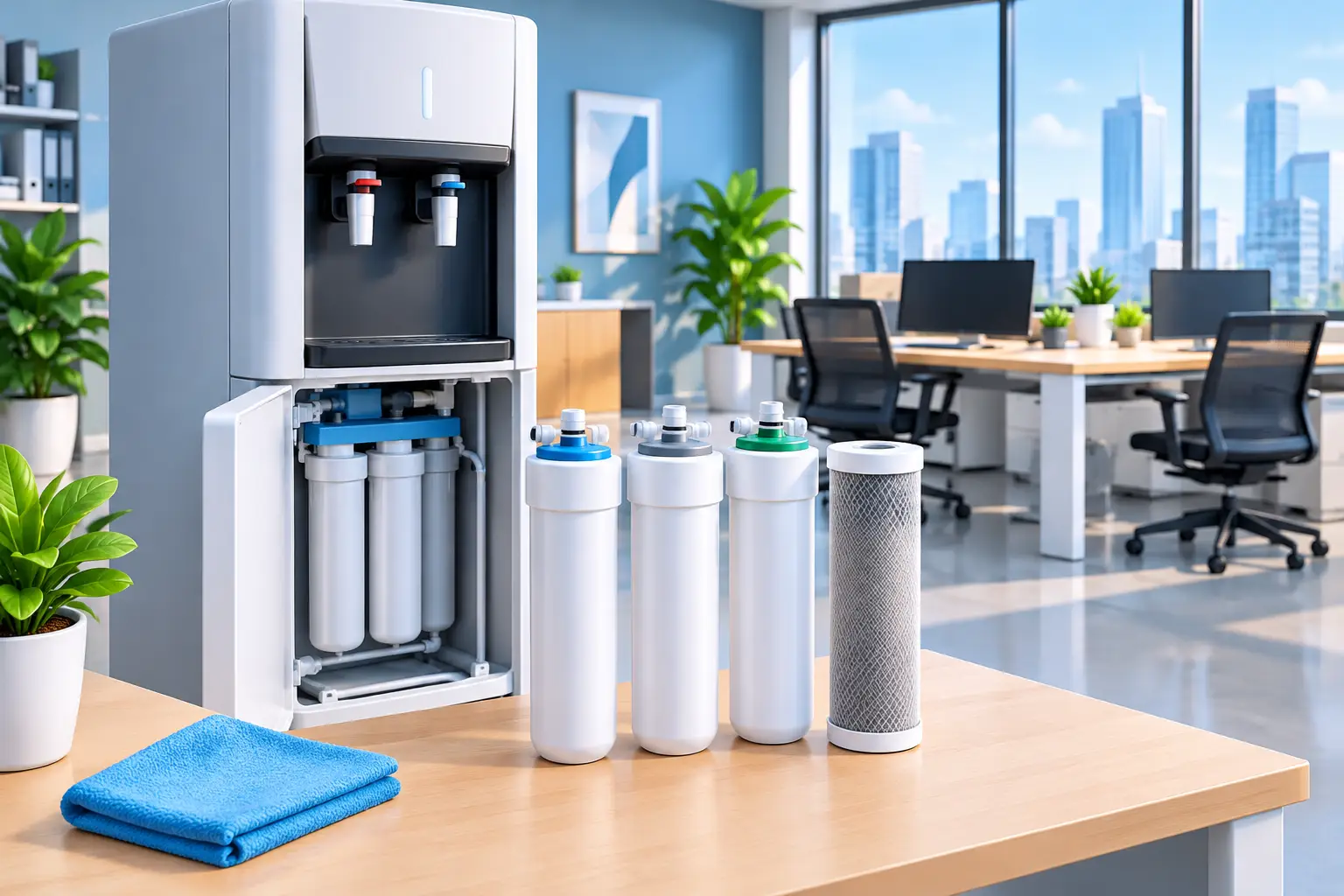
A missed water filter replacement can show up in small but noticeable ways: water that tastes different, ice with an unusual odor, a coffee brewer that runs slowly, or employees choosing bottled beverages instead. In a busy office, the water system supports far more than drinking water. It affects coffee, tea, ice, hydration stations, and the overall experience of the break room.
For facilities and office managers, the goal is not simply to change a filter when someone remembers. It is to maintain a dependable schedule that protects equipment, supports better-tasting beverages, and keeps workplace amenities ready for use. A properly managed water filtration program is one more way to eliminate avoidable disruptions from the workday.
Why Water Filter Replacement Matters in the Workplace
Office water filters are designed to reduce sediment, chlorine taste and odor, and other common contaminants that can affect water quality. The exact performance depends on the filtration system and cartridge type, but the result should be consistent: cleaner-tasting water and better protection for connected equipment.
That protection matters when a water line serves commercial coffee brewers, bean-to-cup machines, ice makers, bottleless water coolers, or premium dispensing systems. Minerals and sediment can accumulate inside valves, heating elements, tubing, and other components. Over time, that buildup may reduce performance, increase service needs, and shorten the useful life of equipment.
A fresh filter also supports the beverages employees notice most. Coffee is primarily water, so even high-quality coffee can taste flat, bitter, or off when the water source is not properly maintained. The same is true for tea and instant beverage systems. Keeping filtration current helps your chosen products deliver the flavor they are meant to provide.
When Should an Office Replace Its Water Filter?
There is no single replacement interval that fits every office. Filter life depends on the system, local water conditions, the volume of water used, and the type of equipment connected to the line. A small office using a bottleless cooler has different needs than a large workplace with multiple coffee stations, ice machines, and high daily traffic.
Many commercial filter cartridges are rated by gallons, months of use, or both. The manufacturer’s recommendation is the right starting point, but it should be treated as an operating guideline rather than a guess. If your office has high consumption, hard water, or seasonal changes in occupancy, a cartridge may reach capacity sooner than expected.
In South Florida, water conditions can vary by location. Mineral content and sediment levels may place additional demands on filters and equipment. A service partner familiar with the local market can help establish an interval that fits the water source and the way your workplace operates.
Signs a Filter May Need Attention Sooner
A scheduled change is always preferable to waiting for a problem. Still, staff should know what to report between service visits. A change in taste or odor, reduced water flow, slow brewing, unusual ice appearance, or a filter indicator alert may signal that the system needs inspection.
It is also worth paying attention after a building plumbing repair, water interruption, or construction work nearby. Those events can introduce sediment into lines and place extra strain on filtration equipment. In those cases, an earlier inspection may be the practical choice.
What Happens When Filter Changes Are Delayed?
Delaying replacement does not always create an immediate shutdown. That is part of why filters can be overlooked. The impact often develops gradually, beginning with reduced taste quality or slower performance before becoming a more expensive equipment issue.
Once a filter reaches capacity, it may no longer provide the expected reduction of chlorine, sediment, or other particles. The coffee brewer that once produced a clean, consistent cup may begin to deliver less satisfying results. For employees, that can affect how they perceive a break room service that otherwise includes great coffee, tea, and equipment.
There is also an operational cost. Scale and sediment can contribute to service calls, downtime, and repairs that might have been avoided with routine maintenance. Replacing a cartridge on schedule is usually simpler and less disruptive than responding after a coffee machine or water dispenser is already underperforming.
Building a Practical Water Filter Replacement Schedule
The most effective program is simple enough to follow consistently. Start by identifying every point-of-use filter in the workplace, including filters serving coffee equipment, water coolers, ice machines, and any specialty beverage system. Each location should have a documented cartridge type, installation date, expected replacement date, and responsible service contact.
For offices that manage their own systems, a visible maintenance log can prevent details from being lost during staff changes or busy periods. Record the date of every replacement, any observed water-quality concerns, and equipment service performed at the same time. This creates a useful history when deciding whether replacement frequency should be adjusted.
For many workplaces, outsourced service is the more efficient option. A qualified provider can track filter intervals, bring the correct cartridges, inspect connected equipment, and complete the work without requiring an office manager to manage inventory or maintenance reminders. This approach is especially valuable when several locations or equipment types are involved.
Match the Filter to the Equipment and Water Use
Not all filters serve the same purpose. A cartridge selected for a drinking water dispenser may not be appropriate for a high-volume coffee brewer or ice machine. Capacity, flow rate, scale reduction, and connection type all matter.
Commercial coffee equipment often benefits from filtration designed to balance water quality with equipment protection. A filter that improves taste but does not adequately address mineral content may not provide the level of scale control your brewer needs. On the other hand, over-specifying a system can add cost without delivering a meaningful benefit for a low-volume location.
This is where an equipment review helps. The right solution considers the number of employees, beverage demand, the existing water source, and the machine manufacturer’s requirements. It should also allow for easy, reliable service rather than creating another task for the office team.
Protecting Coffee Quality With Better Water Management
Workplace coffee service is often judged one cup at a time. Employees may not know whether an issue is related to the coffee, the machine, or the water, but they know when the experience falls short. Maintaining filters is a direct way to protect the investment in recognized coffee brands and professional brewing equipment.
For traditional brewers and thermal systems, filtered water helps preserve the intended taste profile while reducing the sediment that can affect components. For bean-to-cup and premium automatic machines, filtration supports consistent brewing and can help reduce maintenance caused by mineral buildup. Single-cup systems and hot-water dispensers also benefit from clean water and dependable flow.
The trade-off is that filtration is not a substitute for all equipment care. Machines still need routine cleaning, descaling when required, and professional attention when performance changes. Water filter replacement works best as part of a broader break room service plan, not as the only maintenance step.
Questions to Ask Your Service Provider
Before setting a replacement program, ask whether the provider evaluates water conditions, tracks cartridge capacity, and services the connected equipment. Confirm who is responsible for monitoring the schedule and whether replacement visits can be coordinated with coffee delivery, machine cleaning, or other break room support.
It is also helpful to ask what happens if a filter reaches capacity early or an employee reports a quality concern. A strong service plan should provide a clear path for inspection and resolution, not leave the office to diagnose a water issue on its own.
Certified Coffee Service approaches workplace beverage support with Service Above All, helping offices coordinate the equipment, products, water solutions, and service attention needed to keep break rooms operating professionally.
A well-maintained filter is easy to overlook when everything is working as it should. That is exactly the point. With the right schedule and responsive service support, your employees can simply enjoy better water, better coffee, and a break room that is ready when they are.