
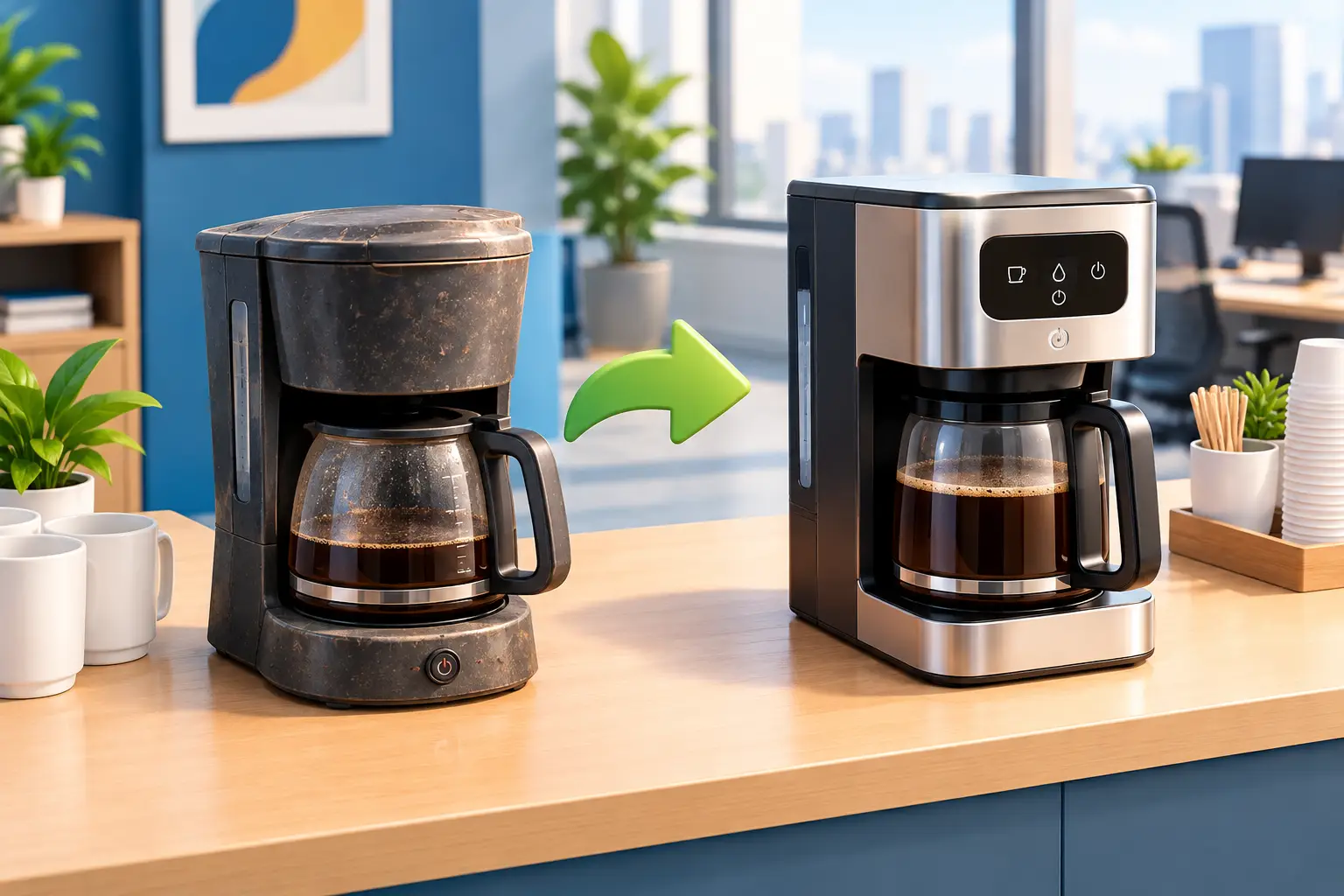
A brewer that works only when someone knows its quirks is not really working for your office. If employees are waiting on slow pots, reporting inconsistent coffee, or finding the machine out of service too often, the break room experience is already being affected. Knowing when to replace a coffee brewer helps prevent small equipment problems from becoming daily frustrations for employees, guests, and the person responsible for keeping the office running.
A replacement is not always the first answer. Many issues can be resolved with routine cleaning, water filtration, professional maintenance, or a simple repair. But commercial coffee equipment has a working life, and there comes a point when continuing to repair an older brewer costs more in downtime, service calls, and employee dissatisfaction than upgrading to a better solution.
When to Replace a Coffee Brewer Instead of Repairing It
The right decision depends on your equipment type, how heavily it is used, water quality, maintenance history, and the expectations of your workplace. A traditional glass-pot brewer in a small office may provide years of dependable service. A busy corporate break room with continuous coffee demand puts much more strain on its equipment.
Replacement deserves serious consideration when repairs become frequent or when the machine cannot consistently deliver a quality cup. One isolated issue, such as a worn spray head or a faulty warmer, may be a straightforward service repair. Repeated leaks, heating failures, electrical problems, or inconsistent brewing are different. Those signs suggest that key components may be reaching the end of their useful life.
Consider the total cost, not just the price of the next repair. An older brewer may require more technician visits, waste more coffee because of poor temperature control, and leave employees without a reliable beverage option at the start of the workday. If downtime has become routine, a replacement can be the more practical business decision.
Signs Your Office Coffee Brewer Is Nearing the End
A commercial brewer rarely fails without warning. Changes in performance often appear gradually, which can make them easy to overlook until the machine stops working during a busy morning. Facilities and office managers should watch for a pattern of issues rather than judging the equipment by a single bad day.
Coffee tastes weak, burnt, or inconsistent
When the same coffee is brewed differently from one pot to the next, the cause could be the coffee, the water, or the brewer itself. Mineral buildup can interfere with water flow and brewing temperature. Worn internal parts can also prevent the machine from extracting coffee correctly.
Descaling and professional service may restore performance if the issue is caught early. If flavor inconsistency returns soon after maintenance, however, replacement may be more sensible. Employees notice coffee quality, especially in offices where the break room is an important part of daily culture.
Brewing takes too long
A slow brewer creates a line, particularly in offices with early meetings, shift changes, or a large morning rush. Mineral deposits, worn valves, and heating issues can all extend brew times. The machine may still produce coffee, but it is no longer supporting the pace of your workplace.
Before replacing it, make sure the brewer has been cleaned and inspected. If service does not bring brewing time back to a reasonable level, an upgraded commercial brewer with the right capacity may be needed.
Temperature is unreliable
Coffee needs proper brewing and holding temperatures to taste its best. If brewed coffee is lukewarm, or if the warmer overheats and leaves coffee tasting burnt, the equipment may be struggling to regulate heat. This affects product quality and can lead to unnecessary waste when employees pour out coffee that is no longer enjoyable.
Thermal brewers are often worth considering for offices that want to maintain quality without relying on heated glass pots. They keep coffee hot in insulated servers and can reduce the burnt flavor associated with coffee sitting on a warmer too long.
The brewer leaks or requires repeated service
Leaks should never be ignored in a commercial break room. Water can damage counters, cabinets, flooring, and nearby electrical equipment. A small, occasional drip may be repairable, but recurring leaks and repeated component failures can signal broader wear.
Keep a simple record of service visits, repair costs, and days when the brewer is unavailable. That information makes it easier to see whether you are managing an isolated problem or investing too much in equipment that no longer provides dependable operation.
The machine no longer fits the office
Sometimes the brewer is functioning as designed, but the office has changed. A company may have added employees, returned to in-office work, opened a larger break room, or begun hosting more clients. A single traditional brewer that once handled demand may no longer be enough.
The opposite can also be true. An office with fewer people or varied schedules may waste coffee with large-volume brewing. In that setting, a single-cup system or bean-to-cup machine can offer greater flexibility and less product waste. Replacement is an opportunity to match the equipment to how people actually use the break room now.
Repair, Refresh, or Replace: Make the Practical Call
Before ordering a new coffee brewer, review a few operational details. Start with the machine’s age and service history. Commercial equipment that has been regularly maintained can often remain productive longer than a neglected unit of the same age. Water conditions matter as well. South Florida water can contribute to mineral buildup, making filtration and scheduled maintenance especially valuable for protecting coffee equipment.
Next, look at the cost and frequency of repairs. There is no fixed dollar amount that automatically means replacement is necessary. Still, if a repair is expensive, the brewer has had several recent service calls, and performance remains inconsistent, putting more money into the same machine may not be the best use of your budget.
Finally, ask whether your current setup provides the experience employees expect. Coffee service is not simply a utility. A reliable break room gives employees a convenient place to recharge, supports informal conversations, and helps visitors feel welcomed. Equipment that is constantly unavailable works against that goal.
Choosing the Right Replacement Brewer
The best replacement is not necessarily the newest or most complex machine. It is the one that delivers reliable coffee at the volume, speed, and level of choice your office needs.
Traditional glass-pot brewers remain a practical option for workplaces that serve regular coffee volume throughout the day and want a familiar, efficient setup. They are straightforward, economical, and well suited to offices where fresh pots are brewed often.
Thermal coffee systems are a strong choice when flavor quality and portability matter. Coffee can be brewed directly into insulated dispensers for conference rooms, reception areas, or larger gatherings without relying on a hot plate.
Single-cup pod systems work well for offices with varied preferences, lighter traffic, or employees who prefer a fresh cup on demand. The trade-off is that high-volume use can be slower and may require more attention to pod inventory and waste management.
Bean-to-cup and premium automatic coffee machines bring café-style variety to the workplace. They can prepare fresh-ground coffee and specialty beverages with simple operation, making them a good fit for offices that want an elevated employee and guest experience. These systems require appropriate cleaning and support, but the convenience and drink quality can justify the investment for the right environment.
Capacity should guide the choice. Count the number of employees, consider peak demand rather than average demand, and include conference rooms or customer-facing areas. A brewer that is technically large enough may still be inadequate if everyone needs coffee within the same 30-minute window.
Protect Your New Brewer With Ongoing Service
New equipment performs best when it is supported from day one. Regular cleaning, proper filtration, preventive maintenance, and reliable coffee and supply replenishment all help protect your investment. This also keeps the break room from becoming another item on an office manager’s growing task list.
A full-service coffee partner can help evaluate usage, recommend an appropriate machine, install it correctly, and provide continuing service when needs change. Certified Coffee Service has supported South Florida workplaces with dependable equipment, recognized beverage brands, and a commitment to Service Above All since 1975.
Your office should not have to work around an unreliable brewer. When coffee quality, uptime, or capacity begins to fall short, a well-timed replacement can make the break room feel dependable again – every morning, every meeting, and every cup.