
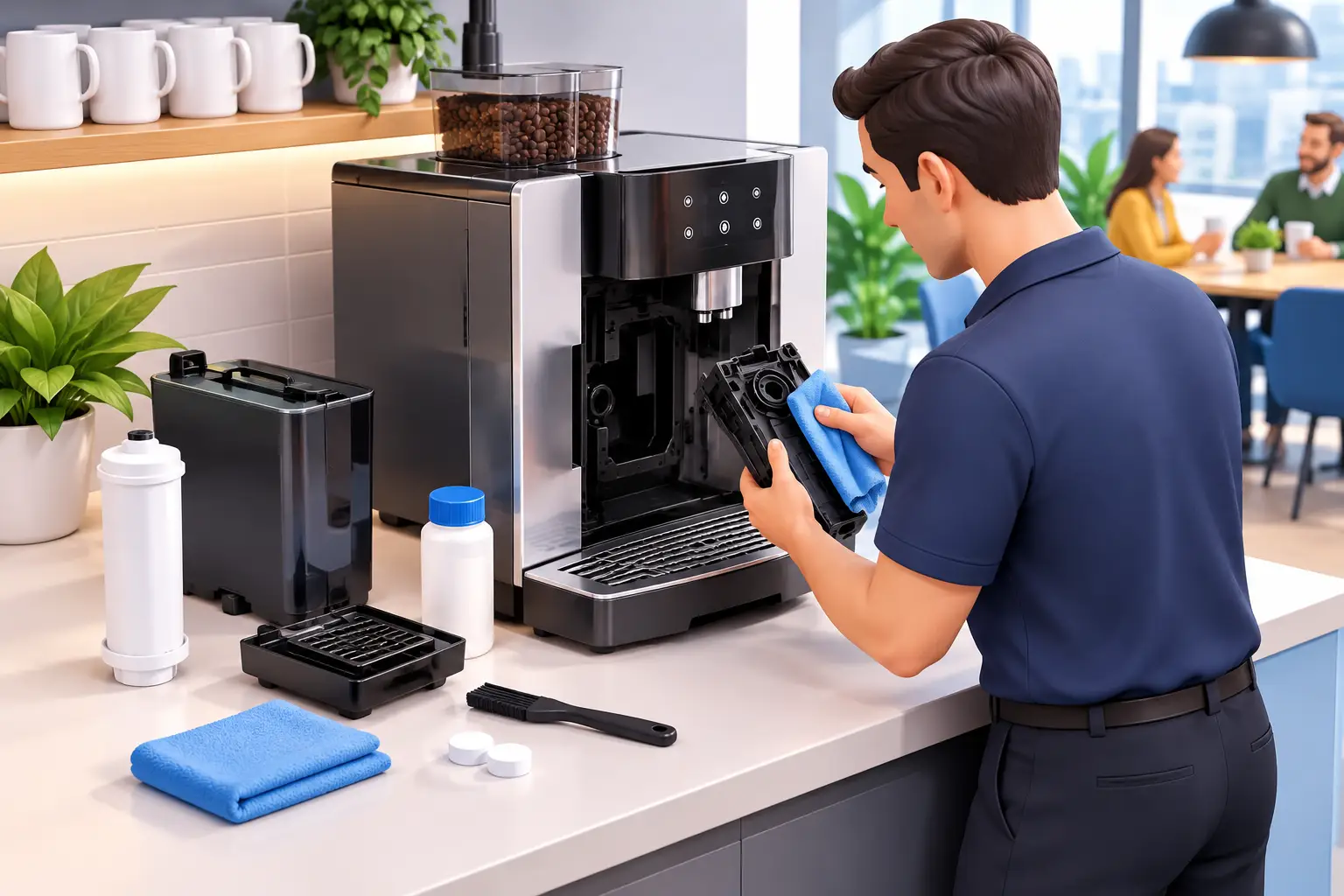
A coffee machine can be one of the busiest pieces of equipment in an office. When it is working well, employees get a dependable cup without a second thought. When it is not, the break room quickly becomes a source of complaints, wasted time, and unnecessary service calls. This office coffee machine maintenance guide helps workplace managers protect their equipment, preserve coffee quality, and keep daily service running smoothly.
Maintenance is not the same for every machine. A bean-to-cup brewer, single-cup pod system, traditional glass pot brewer, and premium automatic machine each have different cleaning needs. Still, the goal is consistent: remove coffee residue, manage water quality, refill supplies correctly, and address small issues before they interrupt the workday.
Why Office Coffee Equipment Needs Regular Care
Coffee leaves behind oils, fine grounds, and mineral deposits. In a busy office, those materials build up faster than many people expect. The result may be bitter coffee, slow brewing, inconsistent temperatures, leaks, error messages, or a machine that stops working before its expected service life.
Water is another major factor, especially in commercial settings. Minerals in the water supply can collect inside heating components, valves, and brewing lines. This buildup, often called scale, affects performance even when the machine looks clean on the outside. South Florida offices in particular may benefit from a clear water-filtration and descaling plan based on their equipment and local water conditions.
Regular care also protects the employee experience. Fresh coffee, clean dispensing areas, and reliable equipment make the break room feel organized and well managed. That matters when coffee service is part of a broader effort to support workplace culture and productivity.
Office Coffee Machine Maintenance Guide: Daily Tasks
The best maintenance programs are practical enough to follow every day. Assign a break room point person, or include these tasks in the responsibilities of the team that maintains shared spaces. The work typically takes only a few minutes, but it prevents many avoidable problems.
Start by emptying drip trays, used-ground containers, and spent pod bins before they overflow. Wipe the exterior, control panel, handles, and dispensing area with a clean, food-safe cloth. These surfaces collect spills and fingerprints throughout the day, and quick attention keeps the machine professional in appearance.
For traditional brewers, rinse brew baskets and decanters or thermal servers after use. Coffee should not sit in a glass pot for extended periods, as it loses flavor and can bake onto the warmer plate. If the equipment uses airpots or thermal containers, clean the lids, spouts, and interior according to the manufacturer’s instructions.
Bean-to-cup and automatic machines need special attention around milk systems when applicable. Milk tubes, frothing components, and dispensing nozzles should be cleaned after use or at the end of each day, following the machine’s programmed cleaning cycle. Skipping this step can create sanitation concerns and cause blockages that affect drink quality.
Finally, check supply levels. Coffee beans, pods, filters, cups, lids, sweeteners, creamers, and cleaning tablets should be ready before demand begins the next morning. A machine in perfect condition still cannot serve employees if the right products are missing.
Weekly Cleaning Protects Taste and Performance
Weekly maintenance goes beyond a quick wipe-down. It is the right time to wash removable parts, inspect brewing areas, and look for early signs of wear.
Remove and clean brew baskets, drip trays, waste containers, water tanks, and removable dispensing pieces. Use only cleaning products approved for commercial coffee equipment. Household soaps, harsh abrasives, or unapproved chemicals can leave behind residue, damage components, or affect beverage flavor.
Inspect the machine for loose parts, persistent leaks, unusual noise, or changes in brew speed. A slower-than-normal brew cycle may point to mineral buildup, a clogged filter, or an issue with the water line. A weak cup of coffee may be caused by incorrect portioning, old beans, a dirty brew chamber, or a worn grinder setting. Catching these changes early is usually simpler than waiting for a complete failure.
For bean-to-cup systems, follow the manufacturer’s schedule for cleaning the brew unit and grinder area. Coffee grounds can migrate into places they do not belong, particularly in high-volume settings. Do not spray water directly into electrical or grinder components. Use the recommended brush, vacuum attachment, or cleaning cycle instead.
Descaling and Water Filtration Are Not Optional
Descaling removes mineral deposits from internal water pathways. The exact schedule depends on machine type, water hardness, daily volume, and the filtration setup. Some modern systems provide alerts when descaling is due, while others require a scheduled service plan.
Do not wait until a machine displays a severe error or stops heating properly. Scale affects performance gradually. Coffee may brew cooler, take longer to dispense, or taste less consistent before a more obvious problem appears.
A commercial water filter can reduce sediment, chlorine taste, and scale-forming minerals, depending on the filter selected. However, filters are not permanent solutions. They need replacement on schedule, and a filter that is overdue can restrict water flow or lose its effectiveness.
It is wise to document filter changes and descaling service. A simple log with dates, machine locations, and the work completed gives facilities teams a clear maintenance record. It also helps service technicians diagnose recurring problems faster.
Match the Maintenance Plan to the Machine Type
A one-size-fits-all routine can miss critical steps. Traditional brewers need attention to spray heads, brew baskets, warmers, and decanters. Single-cup systems need pod-bin cleaning, needle or puncture-point inspection, and periodic descaling. Bean-to-cup equipment requires care for grinders, brew units, waste bins, and any milk components.
Premium automatic machines can offer excellent variety and convenience, but they also have more moving parts and programmed cleaning requirements. They are often a strong choice for offices that want espresso-based drinks, fresh-ground coffee, and a higher-end break room experience. The trade-off is that the equipment should receive consistent daily attention and trained service support.
Thermal brewers are often a practical fit for teams that serve larger volumes of drip coffee. They reduce the need for hot plates and can help preserve coffee quality, but servers must be cleaned thoroughly to prevent stale flavors. The right equipment depends on employee count, beverage preferences, traffic patterns, and the level of hands-on care the office can reasonably provide.
Know When to Call for Professional Service
Daily and weekly cleaning should be handled on-site, but internal repairs and complex diagnostics are best left to trained technicians. Calling for service early can prevent a minor issue from becoming a longer disruption.
Request professional support when a machine has repeated error codes, leaks from internal areas, inconsistent water temperature, grinder problems, electrical issues, or persistent poor flavor after proper cleaning. The same applies when a unit will not complete its cleaning cycle or when water flow has noticeably declined.
A service partner can also help with preventive inspections, calibration, filter replacement, descaling, and equipment recommendations as office needs change. For a busy facility, planned maintenance is usually more cost-effective than reacting to a machine failure during peak morning traffic.
Certified Coffee Service approaches workplace beverage support with Service Above All, combining equipment options, product replenishment, and responsive local service. That kind of coordinated support can reduce the burden on office managers who already have many responsibilities competing for their attention.
Build Maintenance Into the Break Room Routine
The most reliable coffee programs make maintenance visible and repeatable. Keep approved cleaning materials near the equipment, post concise instructions for employees, and assign responsibility for end-of-day checks. If several people share the task, make expectations clear so that important steps do not become everyone else’s job.
Avoid asking employees to improvise repairs. A loose handle or full grounds bin may be simple, but opening panels, forcing parts into place, or using unapproved cleaners can cause more damage. Clear guidance protects both the machine and the people using it.
A well-maintained coffee machine does more than avoid downtime. It keeps every cup closer to the quality employees expect, supports a more inviting break room, and gives your team one less operational detail to worry about.