
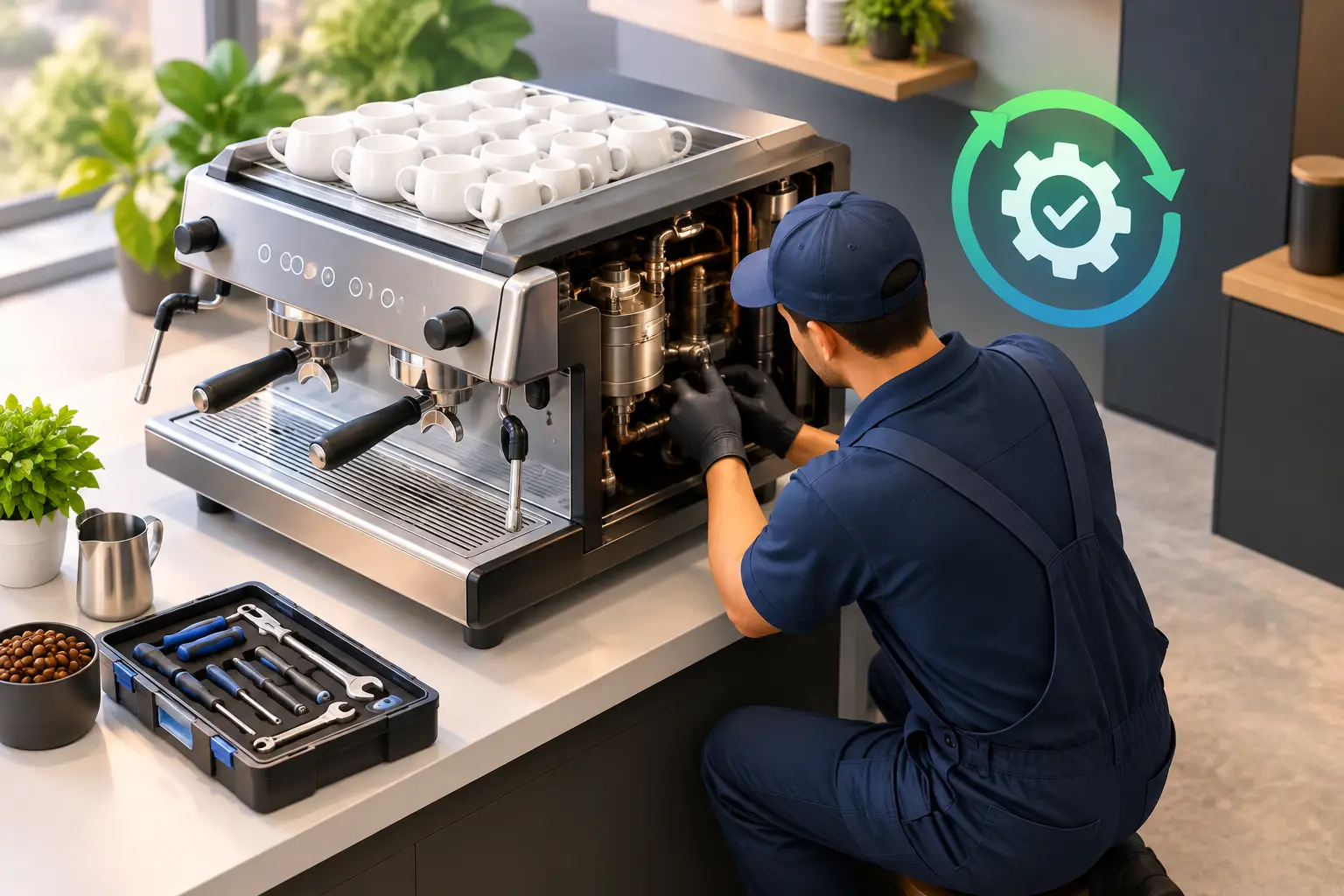
A coffee machine that stops working at 8:30 a.m. creates more than a maintenance issue. It disrupts the morning routine, frustrates employees and visitors, and leaves office staff looking for an answer before the day has properly started. Strong coffee equipment uptime keeps that disruption from becoming part of the workplace experience.
For offices and commercial facilities, the goal is not simply to have a coffee machine on the counter. The goal is to have the right equipment, the right products, and a service partner that keeps the entire break room operating reliably. That is what turns coffee service from another task for an office manager into a dependable employee amenity.
Why Coffee Equipment Uptime Matters at Work
Workplace coffee service has a direct effect on convenience and workplace culture. Employees expect a fresh cup of coffee, tea, or specialty beverage without having to leave the building, wait for a repair, or discover that the machine is out of service. When equipment works consistently, the break room remains a useful place to recharge, connect with coworkers, and welcome clients.
Downtime also has an operational cost. An administrative professional may spend time fielding complaints, buying temporary supplies, calling a repair company, and trying to determine whether the equipment is still covered. Facilities teams may be pulled away from higher-priority building responsibilities. A dependable service program prevents many of those problems before they reach that point.
The right standard is not perfection. All equipment needs attention eventually. The better measure is how quickly an issue is identified, how effectively it is resolved, and whether the service arrangement reduces the chance of the same issue returning.
Coffee Equipment Uptime Begins With the Right Machine
Many equipment issues begin before installation. A machine can be high quality and still be the wrong fit for the volume, beverage preferences, or water conditions at a particular location.
A small office with modest daily demand may be well served by a single-cup pod system or a thermal brewer. A busy corporate office may need a bean-to-cup machine, multiple brewers, or a premium automatic system that can handle concentrated morning traffic. In a reception area, presentation and variety may matter as much as capacity. In a warehouse or 24-hour operation, durability and fast recovery between brews may be the priority.
Choosing based on price alone can create a false economy. An undersized machine is more likely to be overused, while an overly complicated system may not suit a workplace where users need quick, straightforward operation. The best selection balances daily volume, peak usage, drink choices, available counter space, plumbing access, and the level of employee interaction the equipment requires.
Match Capacity to Peak Demand
Average daily cups are useful, but the busiest 30 minutes of the day matter more. If most employees arrive at the same time, a machine that meets the daily total on paper may still create lines, repeated brew cycles, and unnecessary wear.
A service provider should ask practical questions: How many people use the break room? Are there multiple shifts? Do employees prefer fresh-brewed coffee, espresso-style drinks, pods, tea, or all of the above? Is there a conference room or client area with separate needs? These details help determine whether one machine is sufficient or whether a more distributed setup will provide better reliability.
Consider Water Quality and Installation Conditions
South Florida water conditions can affect coffee equipment over time. Mineral buildup, improper filtration, and inconsistent water flow can reduce brewing performance and lead to avoidable service calls. Plumbed equipment should be installed with the appropriate filtration and maintained on a schedule suited to the location.
The physical setup matters as well. Equipment needs proper electrical access, ventilation where required, stable counter space, and room for routine service. When installation is planned carefully, technicians can access the machine without disrupting the entire break room.
Routine Care Prevents Avoidable Downtime
Coffee equipment does not need constant attention from office staff, but it does need consistent care. Small issues often become larger ones when grounds, scale, spilled ingredients, or worn components are allowed to build up.
Daily cleaning requirements vary by equipment type. Bean-to-cup and premium automatic machines often need users to empty drip trays, dispose of grounds, and follow prompted rinse cycles. Traditional brewers need clean spray heads, brew baskets, and servers. Single-cup systems benefit from regular exterior cleaning and checks for pod debris or leaks.
The key is clarity. Employees should know the few basic steps expected of them, while a trained service provider handles the maintenance work that calls for technical knowledge. Asking an office manager to diagnose internal equipment failures is not an efficient service model.
Regular preventive maintenance should include inspections, cleaning, calibration when applicable, replacement of worn parts, and attention to filters. This work is especially valuable because it can identify declining performance before the machine stops working altogether. A coffee maker that brews more slowly than usual, delivers weaker flavor, leaks intermittently, or displays recurring alerts is signaling that it needs attention.
Responsive Service Protects the Break Room Experience
Even the best-maintained equipment can experience an unexpected problem. When that happens, the response matters. A reliable office coffee service partner should provide a clear process for reporting issues, qualified technicians, and practical communication about what will happen next.
Fast service is valuable, but accurate service is just as important. Repeated visits for the same issue are frustrating and disruptive. Technicians need access to the right parts, familiarity with the equipment they support, and an understanding of how the machine fits into the customer’s daily operation.
Certified Coffee Service has built its approach around Service Above All, because equipment support is not an afterthought in a workplace beverage program. It is central to keeping employees supplied and office managers confident that help is available when it is needed.
Make Reporting an Issue Easy
When a machine needs service, a concise report can help speed up the process. The person reporting the issue should share the equipment location, the machine type if known, any message shown on the display, and a clear description of what happened. Details such as whether the machine is not powering on, not dispensing, leaking, brewing slowly, or producing an unusual taste give the service team a more useful starting point.
It also helps to identify whether the issue affects all beverages or only one function. For example, a machine that produces coffee but not hot water may require a different repair path than a machine with no water flow at all.
Build a Coffee Service Plan, Not Just a Repair Plan
The strongest uptime strategy combines equipment, replenishment, maintenance, and account support. Coffee, cups, lids, stirrers, sweeteners, creamers, tea, and water all contribute to the break room experience. A working machine without coffee products is still a service interruption from the employee’s perspective.
Working with one provider for coffee equipment and break room essentials can simplify ordering and reduce the risk of overlooked supplies. It also creates accountability. The provider understands the equipment in use, the product consumption pattern, and the service expectations for the account.
There are trade-offs to consider. A highly advanced machine can offer excellent variety and a premium user experience, but it may require more regular cleaning and more technical support than a basic brewer. A simple thermal brewer may be easier to operate and maintain, but it will not provide the same menu range as a bean-to-cup system. Neither option is universally better. The right choice depends on the workplace and the experience the business wants to provide.
Keep Small Warning Signs From Becoming Big Interruptions
Office teams do not need to become equipment experts, but they should not ignore recurring warning signs. Report repeated error messages, inconsistent cup volume, temperature changes, slow brewing, leaking, unusual noises, or a sudden decline in beverage quality. Early reporting gives service teams the opportunity to address a concern before the machine becomes unavailable during a busy morning.
A well-managed break room should feel easy to use because the planning behind it is thorough. Equipment is selected for the workload, products are replenished before they run out, maintenance is scheduled, and help is available when it is needed.
When evaluating office coffee service, ask a simple question: if the equipment has a problem tomorrow morning, who is responsible for getting the break room back on track? A clear answer is one of the best investments a workplace can make in reliable daily service.