
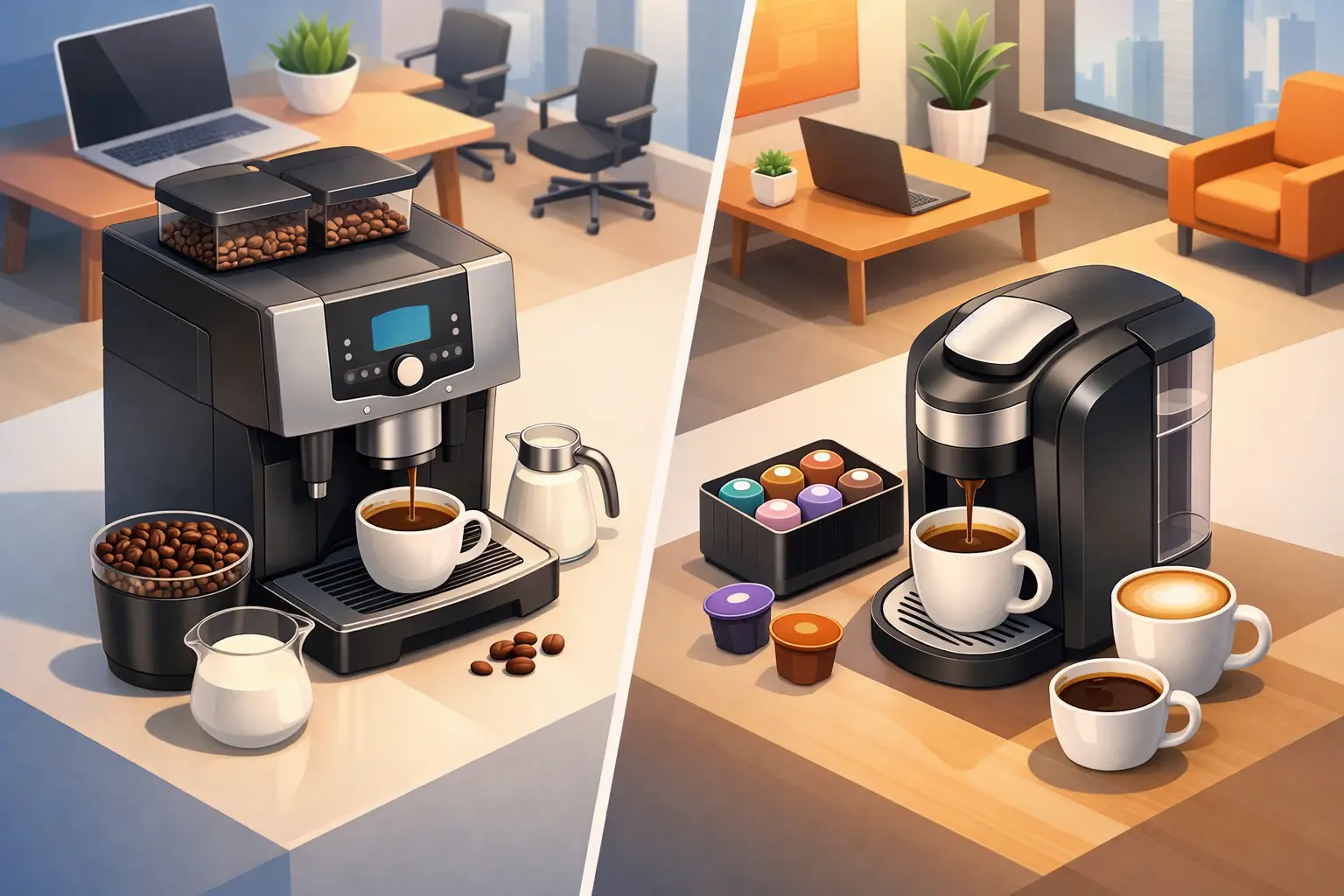
The right coffee machine can change how people use the break room. In the bean to cup vs pod coffee decision, the better choice is not simply the machine that makes the most impressive cup. It is the system that fits your team’s traffic, tastes, available space, cleaning expectations, and service requirements without creating another task for an already busy office manager.
For some workplaces, fresh-ground espresso-style drinks make the break room feel like a genuine employee benefit. For others, a familiar single-cup system keeps mornings moving and gives every employee a dependable option. Both can support a professional workplace coffee program when the equipment, products, and ongoing service are matched to the environment.
Bean to Cup vs Pod Coffee: The Core Difference
A bean-to-cup machine stores whole coffee beans, grinds them for each drink, and brews the beverage automatically. Depending on the equipment selected, employees may be able to choose regular coffee, espresso, cappuccino, latte, hot chocolate, or other specialty drinks from a touchscreen or button panel. The result is a fresher, café-style experience with little hands-on preparation.
A pod coffee system uses pre-portioned coffee pods or capsules. The employee selects a pod, places it in the machine, and receives a single serving in less than a minute. Pod systems are straightforward, familiar, and effective for offices where people want speed, easy drink selection, and minimal training.
The difference matters because the coffee format affects much more than flavor. It influences beverage consistency, the number of choices available, waste handling, counter space, supply replenishment, and the level of machine care needed to keep service running properly.
When Bean-to-Cup Is the Better Office Choice
Bean-to-cup coffee is often the stronger fit for workplaces that want to elevate their employee experience or welcome clients in a polished setting. Fresh grinding immediately before brewing delivers an aroma and flavor that pre-ground coffee cannot fully match. For organizations that view their break room as part of workplace culture, that added quality can be meaningful.
These systems also work well when a team has varied coffee preferences but wants one central machine. Instead of stocking several pod varieties, creamers, and separate specialty beverage equipment, a bean-to-cup unit can provide a range of drinks from one footprint. Employees who prefer a bold coffee can choose it, while others can select an espresso-based drink or a milk beverage if the machine is configured for it.
Cost per cup may also be favorable in offices with steady daily volume. Whole beans are typically more economical than individually packaged pods, particularly when many employees use the machine throughout the day. The calculation should include more than the bean price, however. Milk systems, filters, cleaning products, water quality, and service support all belong in the total cost discussion.
There are practical trade-offs. Bean-to-cup equipment requires routine cleaning to protect beverage quality and machine performance. Units with fresh milk capabilities need especially consistent attention. A machine can be highly automatic for the user while still needing scheduled maintenance behind the scenes. This is where a service partner matters: the goal is a premium coffee option that does not leave an office manager troubleshooting alerts or wondering why the machine is unavailable at 8:30 a.m.
Bean-to-cup is generally a good match for medium and larger offices, executive areas, healthcare waiting rooms, auto dealerships, hospitality settings, and client-facing businesses. It can also be an excellent option for smaller offices that want to make a strong impression and have enough daily use to justify the investment.
When Pod Coffee Makes More Sense
Pod coffee remains a practical workplace favorite for good reasons. It is simple to use, portions are consistent, and employees can choose from a wide selection of coffee, tea, cocoa, and specialty beverages. A new employee, visitor, or customer can usually operate the system without instructions.
For offices with lower or uneven traffic, pods help prevent wasted coffee. A traditional pot may sit unused after a meeting, while a bean-to-cup machine may be more capacity than the office needs. With a pod system, each person makes one fresh serving when they want it. That is particularly useful in smaller offices, satellite locations, conference rooms, and hybrid workplaces where headcount changes from day to day.
Pod systems also offer a simple way to accommodate personal preferences. Decaf drinkers, flavored-coffee fans, tea drinkers, and employees who prefer recognized brands can each select the beverage they want. A well-stocked pod station gives people choice without requiring a separate brewer for every preference.
The main consideration is ongoing product cost and waste. Individually packaged servings generally cost more per cup than whole beans, and the office needs a clear process for collecting and disposing of used pods. Product variety can also become clutter if supplies are not organized. A professionally managed coffee service helps maintain the right mix of popular choices, cups, lids, sweeteners, creamers, and other essentials without overstocking the break room.
Compare the Experience, Not Just the Machine
A coffee machine is only one part of the workplace beverage program. Before choosing between bean-to-cup and pod coffee, consider what your employees and visitors experience during the busiest part of the day.
If ten people line up for coffee at the same time, drink speed and machine capacity are important. A pod machine may offer quick individual beverages, but a single unit can still create a line during peak periods. A high-capacity bean-to-cup system can produce drinks efficiently, though specialty selections may take longer than a standard cup of coffee. In some larger environments, the right answer is more than one machine or a combination of equipment in different areas.
Think about the level of choice your workplace actually needs. An office with a strong coffee culture may value freshly ground beans and espresso drinks every day. Another office may be better served by a dependable pod brewer with coffee, tea, and hot cocoa options. Offering too many selections can increase cost and complexity without improving satisfaction.
Water quality is another operational detail that should not be overlooked. Coffee is mostly water, and scale buildup can affect performance in either type of equipment. Proper filtration, preventive maintenance, and timely service help protect both the machine and the beverage in the cup.
Questions That Help You Choose the Right System
Start with usage. Estimate how many cups your office serves on an average day, then account for high-traffic days, meetings, visitors, and seasonal changes. A machine sized only for quiet days may disappoint when the office is full.
Next, consider your beverage mix. If most employees drink standard coffee and a few want decaf or tea, a pod system may be the cleanest solution. If employees frequently visit coffee shops for espresso drinks, a bean-to-cup machine may bring more of that experience into the office.
Then consider who will handle the equipment. Even the best machine needs restocking, cleaning, and occasional attention. Reliable office coffee service should include more than equipment delivery. It should provide appropriate product replenishment, responsive support, and guidance when your needs change.
Finally, look at the entire break room. Coffee works best alongside quality water, tea, cups, condiments, and supplies that are consistently available. Managing these needs through one experienced provider can reduce administrative work and create a more dependable experience for everyone who uses the space.
Service Keeps the Coffee Program Working
The strongest coffee solution is the one employees can count on every day. Whether you choose bean-to-cup or pod coffee, downtime, empty supplies, and inconsistent cleaning quickly undermine the benefit of the machine itself. A service-first approach protects your investment and keeps the break room ready for employees and guests.
Certified Coffee Service helps South Florida workplaces evaluate equipment options based on actual use, not a one-size-fits-all recommendation. The right program may be a premium bean-to-cup machine, a flexible pod system, or a combination that gives different areas of the workplace what they need.
Choose the coffee experience that your team will use and appreciate, then make sure the service behind it is ready to support it. When the machine is stocked, maintained, and easy to enjoy, the break room becomes one less thing to manage and one more reason people feel cared for at work.
1 comment