
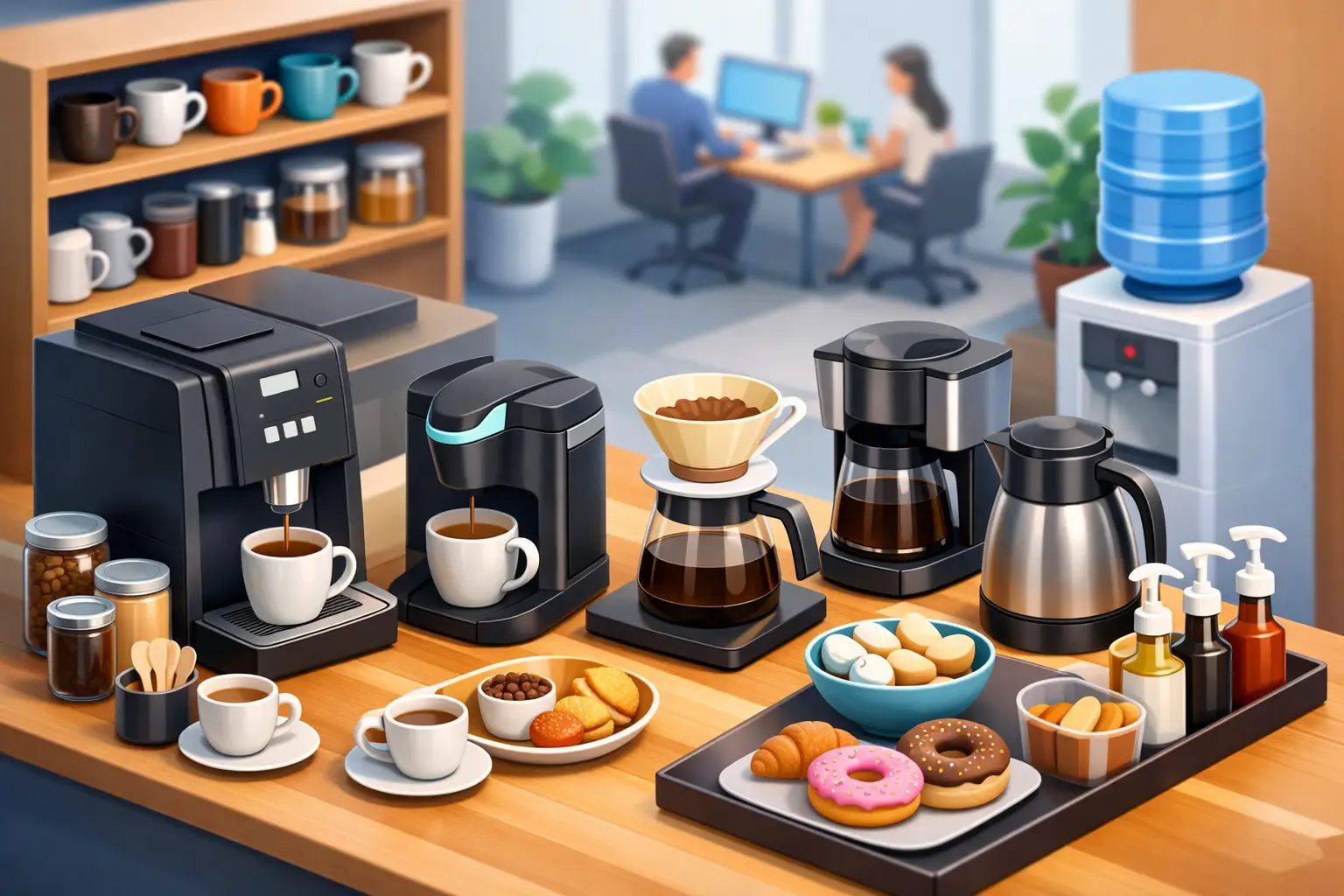
The fastest way to hear complaints about a break room is simple – put in a coffee setup that looks good on day one but slows everyone down by week two. The best office coffee station ideas are not just about style. They need to fit your headcount, your traffic patterns, your cleaning routine, and the way your team actually takes coffee breaks.
For office managers and facility leaders, that usually means balancing appearance with reliability. A coffee station should support the workday, not create lines, spills, supply shortages, or maintenance issues. When it is planned well, it becomes a practical employee perk that also reflects well on your workplace.
What makes office coffee station ideas effective
A strong coffee station starts with the basics – capacity, convenience, and consistency. An office with 15 employees has very different needs than a workplace with 150 people spread across departments and shifts. The right setup depends on how many people drink coffee, when they drink it, and whether they want variety beyond standard drip coffee.
There is also the issue of service. A premium machine does not help much if supplies run out or the equipment is difficult to maintain. That is why the most successful office coffee stations are built around dependable equipment, recognizable products, and a support plan that keeps the station stocked and working.
10 office coffee station ideas for modern workplaces
1. Build around your traffic level
Before choosing finishes or accessories, look at volume. A low-traffic executive office may do well with a single-cup pod brewer or a compact bean-to-cup system. A busier office often needs a higher-capacity automatic machine or thermal brewer that can keep pace during morning rushes.
This is where many offices make the wrong call. They choose equipment based on appearance or price alone, then deal with bottlenecks later. If your break room serves multiple departments, a machine with faster brew times and fewer refill interruptions usually pays off in employee convenience.
2. Create a dedicated self-service zone
The most efficient stations are easy to approach, use, and leave. A dedicated coffee zone should keep the brewer, cups, lids, sweeteners, stirrers, creamers, and waste bins within a few steps of each other. That cuts down on congestion and reduces the mess that happens when people have to cross the room for basic items.
Layout matters more than many offices expect. If people are reaching over each other for cups or tossing used stirrers into a trash can across the room, the station will never feel organized. A compact, well-planned footprint often works better than a larger but poorly arranged area.
3. Offer more than one coffee format
Not every office needs several machines, but many do benefit from more than one format. Traditional brewers work well for teams that go through coffee quickly. Single-cup systems appeal to offices that want variety and less waste from unused pots. Bean-to-cup machines can be a strong fit for companies that want a more premium coffee experience without hiring staff to manage it.
The trade-off is straightforward. More options increase employee satisfaction, but they also require a more thoughtful supply plan. If your office wants regular coffee, decaf, espresso-style drinks, and tea, make sure the station is supported with enough space and consistent replenishment.
4. Add premium touches without overcomplicating the station
A good office coffee station does not need to feel extravagant to make a strong impression. Recognized coffee brands, quality cups, a clean countertop, and well-organized condiments already signal professionalism. In many workplaces, that matters as much as the machine itself.
If you want to elevate the experience, small upgrades go a long way. Better creamers, hot tea selections, sugar alternatives, and clear supply organization can make the station feel more thoughtful. The key is to avoid adding so many extras that the area becomes cluttered or hard to maintain.
5. Plan for tea and non-coffee drinkers
One of the most overlooked office coffee station ideas is simple inclusivity. Not everyone drinks coffee, and a station that only serves coffee can feel incomplete. Adding tea, hot water access, and a few alternate beverage options gives more employees a reason to use and appreciate the break room.
This is especially useful in mixed workplaces where preferences vary by department, age group, or schedule. A broader beverage station supports employee satisfaction more effectively than a coffee-only setup, and it helps decision-makers get more value from the space.
6. Use storage that supports daily service
A coffee station should not rely on visible overflow. Extra cups stacked on top of the machine, loose sweetener boxes under counters, and random supply runs to a nearby closet all make the station feel temporary. Built-in cabinets, shelving, or designated undercounter storage help keep everything accessible without making the area look crowded.
There is a practical benefit here too. Better storage makes it easier to track inventory and spot shortages before they become a problem. For offices that want a more polished presentation, organized supply storage is one of the easiest improvements to make.
7. Choose surfaces and equipment that are easy to clean
A beautiful coffee area that stains easily or traps spills is not a smart investment. Coffee stations work best with commercial-minded finishes and equipment that can handle daily use. Counters should wipe down quickly, and machines should be simple enough for routine care between service visits.
This is one place where durability matters more than trend. Offices often prefer sleek design, but break room equipment still needs to stand up to repeated use, splashes, and regular cleaning. If maintenance is difficult, the station will start looking worn much sooner than expected.
8. Think beyond the main break room
Some companies benefit from a central coffee station. Others need satellite beverage points closer to work areas, conference rooms, or executive suites. If employees are walking across a large floor or between departments just to get coffee, usage patterns may point to a second setup.
This depends on your workplace layout and culture. A central station can encourage interaction and make service simpler. A secondary station can improve convenience and reduce traffic at peak times. The best decision usually comes from watching how employees move through the office, not from guessing.
9. Match the station to your company image
For client-facing offices, the coffee station often does double duty. It supports employees, but it also sends a message to guests, candidates, and visitors. A clean, well-stocked setup with quality beverages reinforces professionalism and attention to detail.
That does not mean every office needs a luxury café look. It means the station should feel intentional. If your company positions itself as efficient, polished, and well-managed, the beverage area should reflect that standard rather than look like an afterthought.
10. Work with a provider that can support the full picture
A coffee station is only as dependable as the service behind it. Offices often start by buying a machine and a few supplies, then realize they still need product delivery, maintenance, cleaning support, water options, and a more consistent replenishment process. At that point, managing the station internally can become more work than expected.
A full-service partner can make a major difference, especially for growing offices and commercial workplaces. Equipment options, recognized beverage brands, supply management, and ongoing service all matter. For South Florida businesses that want one source for office coffee, tea, water, and break room support, that service model helps keep the station running the way it should.
How to choose the right office coffee station setup
The right answer usually comes down to three questions. How many people will use the station each day? What kinds of beverages do they expect? And how much internal time do you want to spend managing equipment and supplies?
A smaller office may prefer a simple setup with a dependable single-cup or traditional brewer and a limited condiment section. A mid-sized or larger workplace may be better served by bean-to-cup equipment, multiple beverage choices, and a service plan built for higher demand. If image is a priority, premium finishes and better brand selection can help, but reliability should still lead the decision.
Certified Coffee Service has seen this play out across offices for decades. The coffee stations that deliver the most value are not always the most elaborate. They are the ones matched to the workplace, supported consistently, and built around service that keeps employees supplied without extra effort from your team.
A well-planned coffee station does more than serve drinks. It helps your office feel prepared, cared for, and ready for the day.