
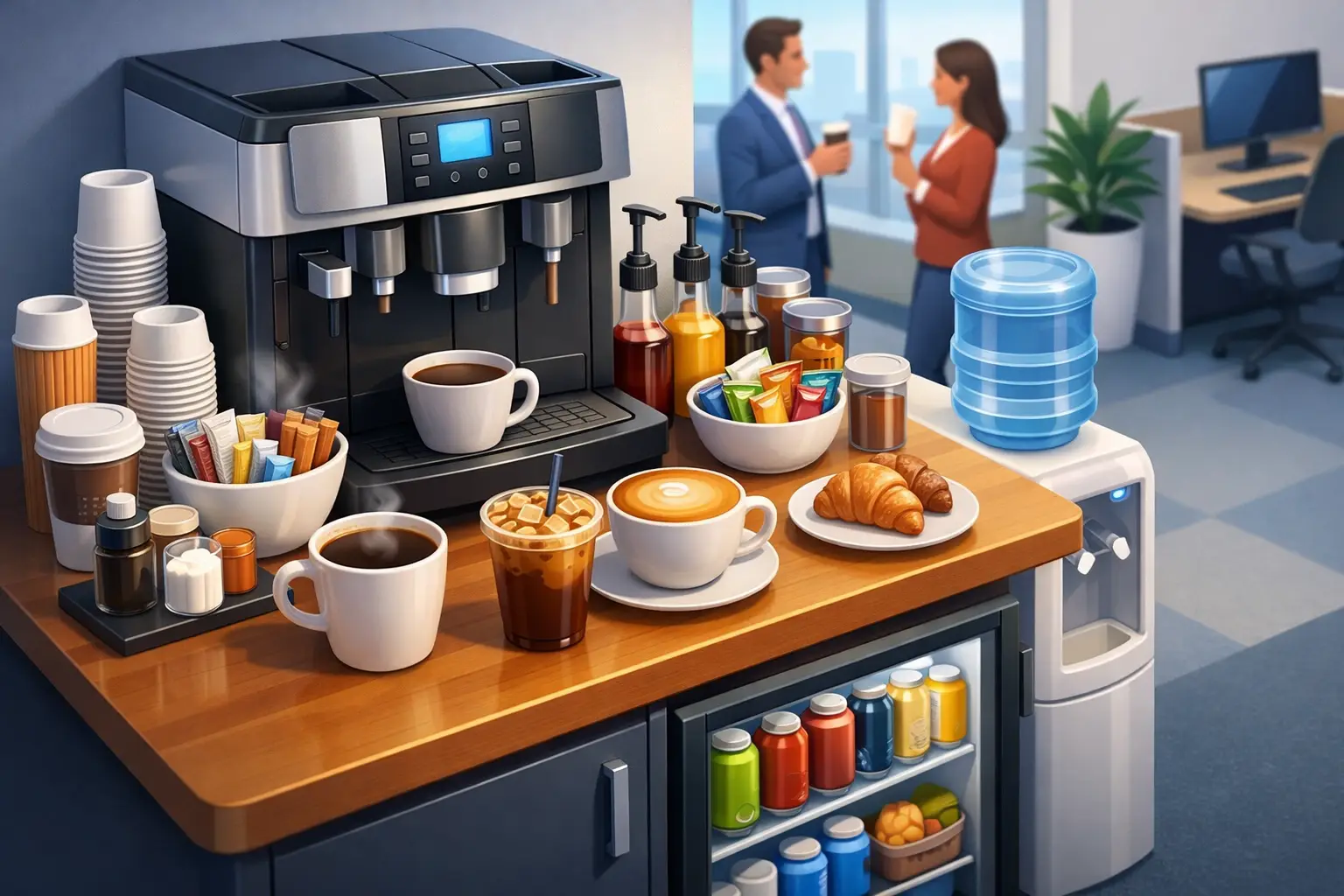
At 8:10 a.m., the break room is already telling employees something about the workday ahead. An empty coffee station, a machine that needs attention, or missing cups creates friction before the first meeting begins. So, what does office coffee service include? A dependable program should cover far more than a case of coffee. It should provide the equipment, products, replenishment, and hands-on support needed to keep a workplace beverage station ready every day.
What Does Office Coffee Service Include?
The exact mix depends on your office size, employee preferences, budget, and available break room space. A small professional office may need a single-cup brewer and a reliable supply of coffee, while a busy corporate location may require multiple machines, filtered water, snacks, and scheduled service. The common goal is the same: give employees and guests a consistently good beverage experience without placing another recurring task on the office manager.
A full-service office coffee provider typically begins by helping select the right equipment. This matters because the best machine is not necessarily the largest or most feature-rich model. It is the one that matches how many people use it, what they like to drink, and how much daily attention the team can reasonably give it.
Coffee equipment selected for the workplace
Office coffee equipment can range from traditional glass-pot brewers and thermal brewers to single-cup pod systems, bean-to-cup machines, and premium automatic coffee machines. Each format serves a different need.
Traditional brewers are practical for offices where several employees want regular coffee at the same time. Thermal brewers help preserve heat and flavor without leaving coffee on a burner. Single-cup systems offer variety and portion control, making them a strong choice for offices with mixed preferences or lower volume. Bean-to-cup and automatic machines provide a more elevated experience, grinding and brewing fresh coffee for employees, visitors, and customer-facing spaces.
Equipment placement, installation, and basic setup are often part of the service. A knowledgeable provider should also account for counter space, electrical access, water connections when needed, expected daily use, and whether the station must accommodate self-service throughout the day.
Coffee, tea, and beverage choices
The product side of office coffee service includes the beverages people actually look forward to. That can mean ground coffee, whole bean coffee, single-serve pods, decaf options, specialty blends, cappuccino or hot chocolate mixes, and coffee condiments.
Recognized brands can make a meaningful difference in employee satisfaction. Many workplaces want familiar choices such as Starbucks coffee, Lipton tea, or Bigelow tea alongside dependable everyday options. Providing regular and decaffeinated selections is usually a smart baseline, especially in offices that host clients or have employees working varied schedules.
Tea should not be treated as an afterthought. A well-stocked tea selection gives non-coffee drinkers a reason to use and enjoy the break room. Black tea, green tea, herbal tea, and decaffeinated choices create a more inclusive beverage station without adding much complexity.
The supplies that keep the station usable
Coffee without cups, lids, stirrers, sweeteners, or creamer is not a complete service. Office coffee programs commonly include the everyday supplies that prevent last-minute runs to the store and reduce the burden on administrative staff.
Depending on the program, supplies may include paper or recyclable cups, hot cups and lids, napkins, stir sticks, sugar, sugar substitutes, powdered or liquid creamers, and coffee filters. Some offices also prefer portion-controlled condiments to improve cleanliness and make inventory easier to manage.
The right supply level is not simply about ordering more. Overstocking takes up valuable storage space and can lead to waste, while understocking makes the break room look neglected. A responsive service provider helps set par levels based on consumption and adjusts them as office attendance changes.
Office Coffee Service Includes Ongoing Support
The biggest difference between buying coffee products and using an office coffee service is what happens after the initial delivery. A break room program only works when it stays stocked, the equipment stays operational, and someone takes ownership when an issue arises.
Scheduled delivery and replenishment are central to that experience. Instead of tracking coffee, tea, cups, creamers, and other essentials from multiple vendors, offices can receive regular service based on their usage. For many facilities teams, consolidating those needs with one provider means fewer purchase orders, fewer invoices, and fewer unexpected shortages.
Equipment service is just as important. Coffee machines work hard in commercial settings, particularly in offices with high morning traffic. A service program may include preventative maintenance, troubleshooting, cleaning guidance, repairs, and replacement equipment when appropriate. The details vary by agreement and equipment type, so it is worth asking who handles service calls, how quickly they respond, and what support is included.
For a busy office, local accountability matters. A provider that knows the market and treats service as a core responsibility can resolve small issues before they affect the workday. Certified Coffee Service has built its South Florida business around that standard with a Service Above All approach, helping commercial workplaces keep beverage service dependable rather than disruptive.
Water service and additional break room options
Many office coffee programs also extend beyond coffee. Bottleless water coolers and water filtration systems give employees convenient access to cold, hot, or room-temperature water while reducing the need to store and manage bottled water. In some workplaces, water service supports the coffee station directly by improving beverage quality and simplifying daily use.
Vending service, snack programs, and break room supplies may also be available through the same provider. This can be especially useful for larger offices, warehouses, medical practices, dealerships, and commercial properties where employees spend long shifts on site. Offering snacks and cold beverages can support morale and convenience, but it should fit the workplace rather than become an unnecessary expense.
A smaller office may only need coffee, tea, and water. A larger organization may benefit from a complete break room solution that includes vending, equipment maintenance, and regularly replenished supplies. The right scope depends on employee count, traffic patterns, budget, and the role the break room plays in your culture.
How to Choose the Right Level of Service
Before selecting a provider, start with the practical questions. How many employees are in the office on a typical day? Are people arriving at the same time, creating a morning rush? Do clients or visitors use the break room? Is there demand for espresso-style drinks, single-cup variety, tea, filtered water, or decaf?
Next, consider ownership and response time. Ask whether the provider supplies and services the equipment, how replenishment is scheduled, and what happens when a machine is not working properly. Pricing matters, but the lowest product price does not help if employees face an empty station or a broken brewer during a busy week.
It also helps to think about the experience you want to create. A simple, well-maintained coffee station can be the right answer for a compact office. A premium bean-to-cup machine may make more sense for a headquarters, executive suite, or client-facing environment. Neither option is automatically better. The value comes from matching the service to real workplace needs.
A coffee program should make the break room easier to manage and more enjoyable to use. When equipment, beverages, supplies, and support are handled with care, office managers can spend less time solving small operational problems and more time supporting the people who rely on the workplace every day.