
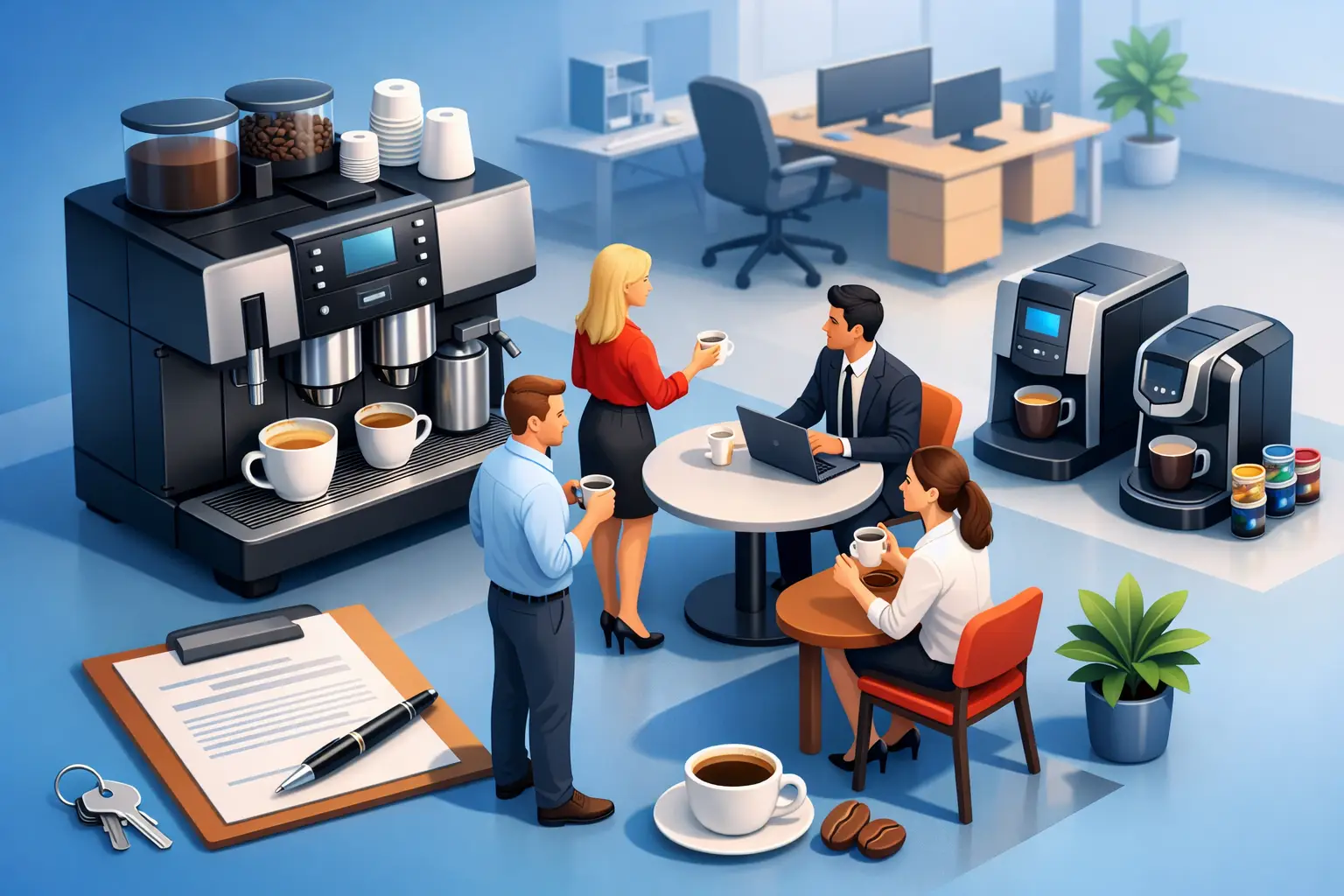
A coffee machine that sits out of service during a busy Monday morning creates more than a small inconvenience. It sends employees searching for coffee elsewhere, puts extra work on office staff, and leaves a poor impression on visitors. The right commercial coffee leasing options help businesses avoid that disruption while providing quality coffee equipment without a large upfront purchase.
For many offices, leasing is not simply a way to spread out the cost of a brewer. It is a practical way to secure the right machine, dependable maintenance, and a service partner that understands the daily demands of a commercial break room. The best arrangement depends on your employee count, beverage preferences, budget, and expectations for service.
What Commercial Coffee Leasing Options Can Include
A commercial coffee lease can range from equipment-only financing to a complete workplace beverage program. Before comparing proposals, clarify what is actually included. A low monthly equipment payment may look attractive, but it may leave your team responsible for service calls, water filtration, coffee ordering, installation, and supply management.
A full-service program typically pairs a commercial coffee machine with delivery of coffee, tea, cups, condiments, and related supplies. Depending on the provider and agreement, it may also include installation, routine maintenance, repairs, replacement equipment, and scheduled product replenishment. This approach gives office managers one point of contact instead of several vendors to coordinate.
Equipment-only leasing may be a fit for businesses with an established purchasing process and in-house facilities support. It offers greater control over coffee and supply choices, but that control comes with more responsibility. If a machine needs attention, someone still has to arrange the repair, verify the service timing, and keep the break room supplied while it is down.
Choose the Machine Before You Choose the Terms
The machine should match how people use the break room. Leasing a premium system that is too small for the office creates wait times and unnecessary wear. Choosing a basic brewer for a workplace that expects specialty drinks can make the coffee program feel like an afterthought.
Bean-to-cup and premium automatic systems
Bean-to-cup and premium automatic machines grind whole beans and prepare coffee by the cup. Many models can offer espresso-based drinks, cappuccino, latte-style beverages, hot chocolate, and other selections from a compact footprint. They are a strong choice for offices that want a fresh, upscale coffee experience without sending employees to a café.
These systems require regular cleaning and proper service to perform consistently. A lease with responsive maintenance is especially valuable here, because beverage quality depends on more than the machine itself. Water quality, cleaning schedules, ingredients, and calibration all matter.
Single-cup pod systems
Single-cup systems provide individual beverage choices with quick, familiar operation. They work well for smaller offices, conference rooms, executive areas, or workplaces with varied coffee and tea preferences. They also simplify portion control and can reduce brewed coffee waste.
The trade-off is that a high-volume office may go through pods quickly, and the ongoing product expense deserves close attention. Ask how supplies will be delivered, what brands and beverage varieties are available, and whether the chosen machine is designed for commercial usage rather than occasional home use.
Traditional brewers and thermal systems
Traditional brewers remain a dependable choice for workplaces serving a steady volume of regular coffee. Glass pot brewers can work well where coffee is consumed quickly and staff can monitor fresh pots. Thermal brewers are often better for larger offices, meeting areas, and hospitality settings because they hold coffee without a heated plate that can affect flavor over time.
These systems are straightforward, efficient, and often cost-effective. They may be the best lease choice when reliability, capacity, and speed matter more than drink customization.
Look Beyond the Monthly Payment
A monthly lease price is only one part of the cost. Decision-makers should compare the full operating picture over the term of the agreement. That includes the equipment payment, coffee and supply costs, installation, delivery fees, filtration, maintenance, repairs, and any charges tied to early termination or equipment upgrades.
Ask whether the agreement includes preventive maintenance or only repair visits after a problem occurs. Preventive care helps protect machine performance, particularly with automatic systems and equipment connected to a water line. It can also reduce avoidable downtime that affects employees and guests.
Service response standards should be clear. A provider that offers a low lease rate but takes days to respond may cost more in frustration and lost productivity than a slightly higher-priced program backed by local support. For South Florida offices, a local provider with an established route and service presence can offer a meaningful advantage when a machine needs attention quickly.
It is also worth asking about replacements. If equipment cannot be repaired promptly, does the provider supply a temporary machine? Does the lease allow for an upgrade if headcount grows or your beverage program changes? These details are often more valuable than a small difference in the initial monthly rate.
Match the Lease Term to Your Workplace Plans
Commercial coffee lease terms commonly run for multiple years. A longer term may lower the monthly payment, while a shorter term may provide more flexibility. Neither is automatically better.
A stable office with predictable staffing may benefit from a longer agreement, especially when it includes equipment, service, and supplies from one reliable source. A growing company, a temporary project office, or a business planning a move may need more flexibility. In those situations, ask about upgrade paths, relocation support, and the terms for adding machines or changing equipment during the agreement.
Review the end-of-term terms with the same care you give the payment amount. Find out whether the machine is returned, renewed, purchased, or replaced with updated equipment. Clear expectations prevent surprises later and make it easier to budget for the future.
Questions to Ask a Coffee Service Provider
Before signing a lease, have a practical conversation about how the program will work after installation. Start by asking who handles service, how quickly calls are addressed, and whether the provider stocks common replacement parts. Then discuss delivery schedules, emergency product needs, and the process for adjusting orders as consumption changes.
You should also ask about beverage choices. A workplace coffee program is more successful when it accommodates regular and decaffeinated coffee, recognized brands, tea drinkers, creamers, sweeteners, cups, and stirrers without creating a separate purchasing task for office staff. If water service, vending, or break room supplies are also needed, consolidating them with one accountable provider can reduce administrative work.
Finally, request recommendations based on actual usage, not just the size of the office. An office with 40 employees who host frequent client meetings may need more capacity than an office with 75 employees who are largely remote. A good provider will ask how many cups are served, when demand peaks, what drinks employees prefer, and where equipment will be placed.
Service Is the Value That Lasts
Coffee equipment is only as dependable as the support behind it. The right lease program should make your break room easier to manage, not add another vendor relationship that requires constant follow-up. Certified Coffee Service has built its workplace programs around that expectation with Service Above All, pairing equipment choices with hands-on support for offices that need consistency.
A well-planned lease gives your employees a better daily experience and gives your office team confidence that coffee, supplies, and equipment support are being handled. Choose a partner that listens to how your workplace operates, puts the right machine in the right space, and remains available long after installation day.
1 comment