
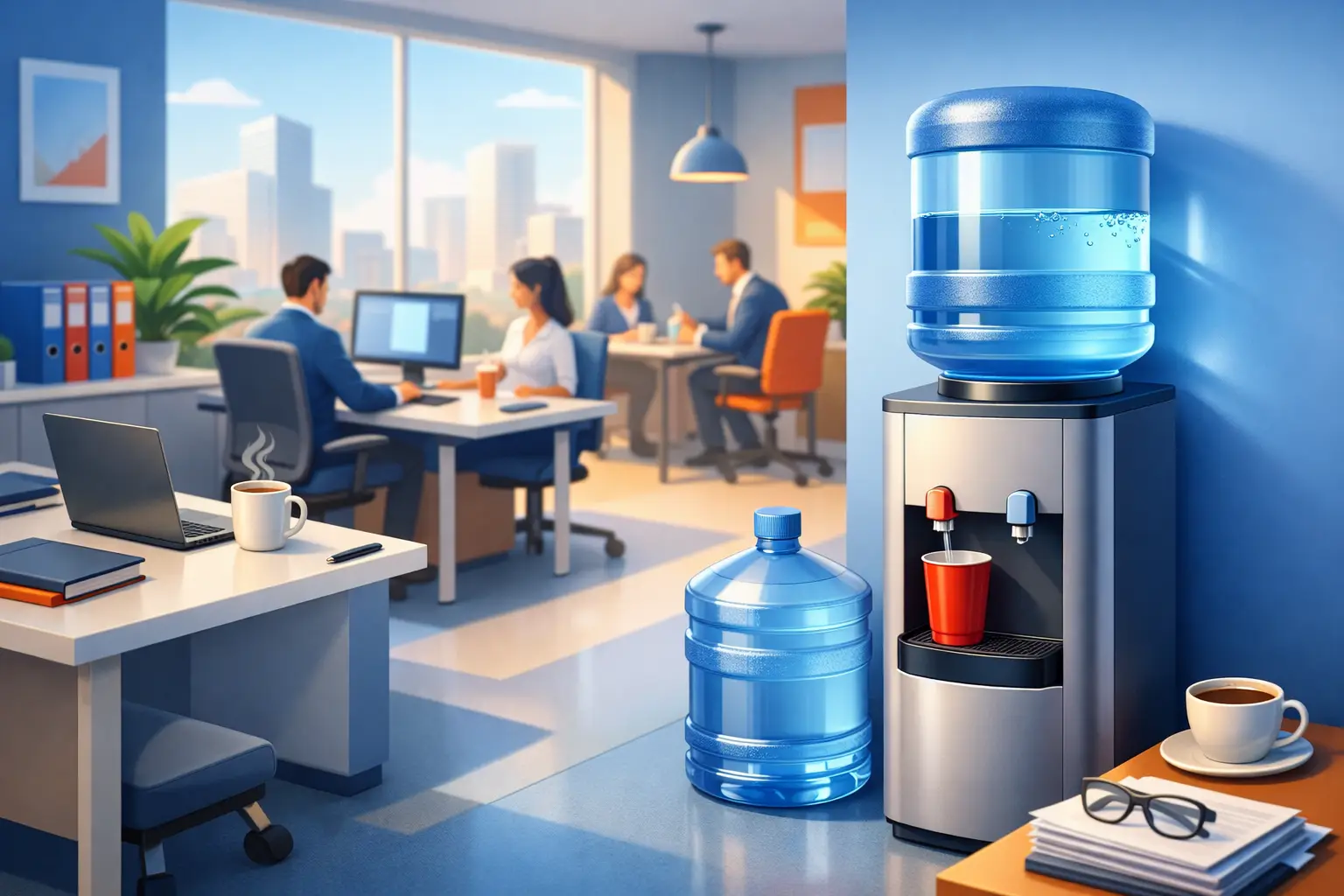
A water cooler becomes part of the workday quickly. It fills bottles before meetings, gives employees a reason to step away from their desks, supports visiting clients, and provides a reliable alternative to single-use plastic bottles. The best water coolers for offices are not necessarily the largest or most feature-packed models. They are the systems that match your team’s drinking habits, fit your space, and stay dependable with the right service behind them.
For office managers and facilities teams, the real decision is bigger than hot versus cold water. You need to consider traffic, water quality, available plumbing, sanitation, countertop space, and who will handle deliveries or maintenance when something needs attention. A well-chosen water solution should make the break room easier to manage, not add another task to the list.
What Makes a Water Cooler Right for an Office?
The right cooler starts with the number of people who will use it. A small office with 10 to 20 employees may be well served by a compact bottled water dispenser. A busy corporate floor, medical office, warehouse, or customer-facing location may need a higher-capacity bottleless system with faster recovery and greater hot-water output.
Usage patterns matter as much as headcount. An office that primarily fills reusable bottles will need generous cold-water capacity and a tall dispensing area. A workplace where employees make tea, oatmeal, soup, or pour-over coffee may benefit from a unit with a reliable hot-water function. If the cooler is placed near a reception area, appearance and noise level can also influence the choice.
Reliability should remain central to the decision. An attractive unit that cannot keep up with demand, leaks, or is difficult to sanitize will create more frustration than value. Commercial water coolers should be selected as part of an ongoing workplace beverage program, with a clear plan for delivery, cleaning, filter changes, and service support.
Best Water Coolers for Offices: Main Types to Consider
Bottled Water Coolers
Bottled coolers remain a practical choice for many offices, especially where plumbing access is limited or where a business prefers the familiar convenience of scheduled water delivery. These units use large bottles, commonly placed on top of the dispenser or concealed in a bottom-load cabinet, to provide cold and room-temperature water. Many models also offer hot water.
Top-load dispensers are straightforward and dependable, but lifting a full bottle can be inconvenient for some employees. Bottom-load models keep bottles out of sight and eliminate overhead lifting, making them a strong option for professional break rooms and reception areas. The trade-off is that bottom-load units have more internal components and should be supported by responsive service.
Bottled water is particularly useful for smaller offices, temporary workspaces, satellite locations, and buildings where connecting to a water line is not feasible. It also gives businesses a predictable supply of purified drinking water without relying on building plumbing.
Bottleless Water Coolers
Bottleless coolers, also called point-of-use systems, connect directly to a building’s water line and filter water as it is dispensed. For offices with steady daily demand, this can be an efficient long-term solution. There are no heavy bottles to store, lift, or reorder, and employees have a continuous source of chilled, filtered water.
These systems are often a good match for mid-sized and larger workplaces. They can reduce clutter in the break room, support sustainability goals, and make it easier to encourage reusable bottle use. Many commercial bottleless dispensers include multi-stage filtration, hot and cold dispensing, and higher-capacity cooling systems.
However, bottleless does not mean maintenance-free. Filters need to be changed on schedule, connections need periodic inspection, and the unit requires regular sanitation. The best results come from working with a provider that handles installation, preventive maintenance, and service calls rather than leaving those details to office staff.
Countertop Water Dispensers
When floor space is limited, countertop dispensers can provide a clean, practical answer. They are well suited to executive suites, small offices, conference areas, kitchens with limited space, and locations that need a secondary water station. Depending on the model, they may use bottled water or connect directly to a water line.
Countertop systems are compact, but capacity is naturally lower than a full-size freestanding cooler. They work best in lower-traffic settings or as an additional dispensing point. Before choosing one, confirm that the counter can support the unit, that there is clearance above it for servicing, and that nearby electrical and plumbing access are appropriate.
High-Capacity Hot and Cold Water Systems
For larger teams, employee cafeterias, distribution centers, and offices with active break rooms, high-capacity systems are often worth the investment. These units are built to recover quickly after repeated use, providing cold water during busy periods and enough hot water for tea, instant meals, and other daily needs.
The value of a high-capacity model is consistency. If employees regularly find the cold water warm by midafternoon or wait for hot water after a meeting lets out, the unit is undersized. A service provider can help assess expected demand and recommend equipment that supports real workplace use rather than an idealized estimate.
Features That Matter Beyond Hot and Cold Water
A water cooler should be easy for employees to use and easy for facilities teams to manage. A few practical features can make a meaningful difference over the life of the equipment.
Temperature options are the first consideration. Cold water is the baseline, but hot water adds value in offices where tea and instant beverages are popular. Room-temperature water is also preferred by some employees and can be useful for filling medication cups or preparing certain drinks.
Filtration quality matters most with bottleless systems. The appropriate filter depends on local water conditions and the taste expectations of your team. In South Florida, where water characteristics can vary by location, a knowledgeable provider can help match the filtration approach to the building and the desired result.
Touchless dispensing is another consideration for high-traffic offices. Sensor-operated units or bottle-fill stations can reduce contact points while making it easier to fill reusable bottles. A tall dispensing area, drip tray, child-safety hot-water lock, and indicator lights for filter or service needs are also worthwhile details.
Do not overlook design. A modern cooler can reinforce the professional look of a break room, lobby, or employee wellness area. Still, appearance should follow performance. Choose a finish and form factor that suit the space after confirming the unit has the capacity, serviceability, and dispensing options your workplace requires.
How to Choose Based on Your Office Setup
Start with a practical assessment of your workplace. Count regular employees, but also consider peak usage periods, visitors, shifts, and whether multiple departments share the same break room. One cooler near a central kitchen may work well for a 25-person office, while a larger facility may need several stations placed close to where people work.
Next, evaluate installation conditions. A bottleless cooler needs access to a suitable water line and drain considerations may apply depending on the equipment. A bottled cooler needs a safe, accessible place to store replacement bottles. Both need a stable electrical connection, room for servicing, and enough clearance for employees to use the dispenser comfortably.
It also helps to think about your broader beverage program. Offices that offer coffee, tea, cups, condiments, and vending products through one provider can simplify ordering and reduce the number of vendor relationships staff must manage. Water service should work alongside the rest of the break room, not operate as a separate inconvenience.
Service Is Part of the Equipment Decision
Water coolers are dependable when they are properly installed, cleaned, and maintained. They become a problem when filter changes are missed, bottles are not delivered on time, or an issue sits unresolved because no one owns the service request.
That is why the provider matters as much as the dispenser. Ask how equipment is installed, who handles scheduled sanitation, what happens when a unit needs repair, and whether your account has a local point of contact. Clear answers help protect employee satisfaction and prevent a minor issue from disrupting the break room.
Certified Coffee Service has supported South Florida workplaces since 1975 with office coffee, water, vending, and break room solutions built around Service Above All. For businesses that want dependable equipment and personal local support, working with one experienced provider can make daily operations much easier.
The best choice is the water cooler your employees use without thinking twice about it: cold water when they need it, hot water when they want it, and service support already in place when attention is required.
3 comments