
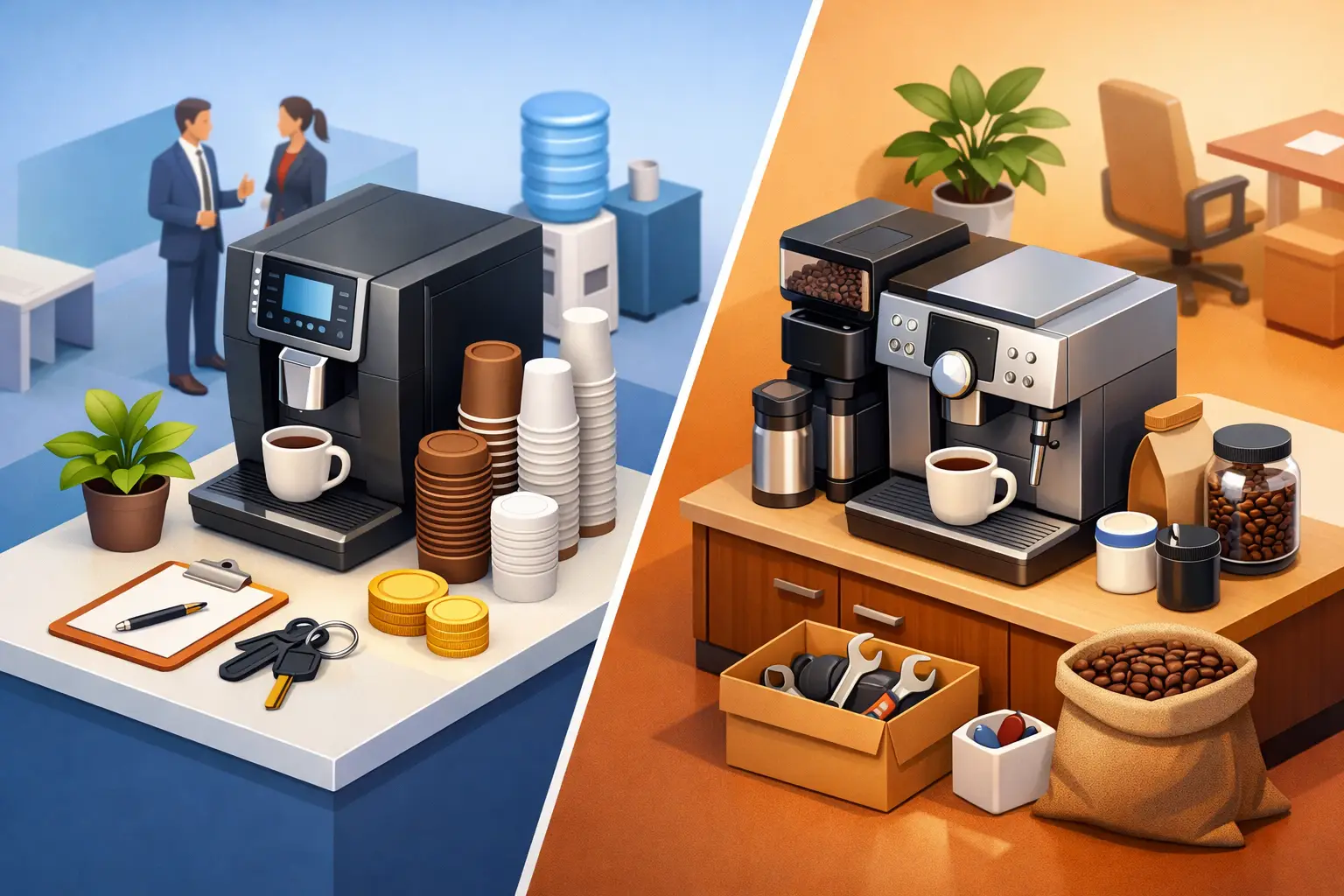
A failed coffee machine at 8:15 a.m. can affect far more than the first cup of the day. It can disrupt a busy office, frustrate employees, and leave an office manager searching for a repair solution during an already full schedule. That is why coffee leasing versus ownership is not simply an equipment decision. It is a decision about budget control, service responsibility, employee experience, and how much time your team can devote to keeping the break room running.
For South Florida workplaces, the best answer depends on the size of the office, the type of beverages employees expect, anticipated growth, and the level of support needed after installation. A lower upfront cost can be attractive, but it should not come at the expense of dependable service. Likewise, owning equipment can make sense for some organizations, provided they are prepared for maintenance and replacement costs over time.
Coffee Leasing Versus Ownership: The Core Difference
Leasing allows a business to use commercial coffee equipment through an ongoing monthly agreement. Depending on the service arrangement, the monthly cost may include equipment, installation, preventive maintenance, repairs, product delivery, and scheduled account support. This approach converts a major capital purchase into a predictable operating expense.
Ownership means purchasing the coffee machine outright. The organization owns the asset and has full control over how long it keeps the equipment, which products it uses, and which service provider handles maintenance. The upfront investment is higher, but there may be lower long-term equipment costs if the machine remains productive and well maintained for many years.
The important distinction is not just who holds the title to the machine. It is who is responsible when water filters need changing, brew quality declines, a grinder needs adjustment, or a component fails. Coffee equipment performs best when it receives regular attention. A workplace should consider the full support model, not only the price shown on an initial quote.
When Leasing Is the Better Office Coffee Choice
Leasing is often a practical fit for offices that value consistency, flexibility, and a clearly defined monthly cost. It is particularly useful when a business wants quality equipment without making a large upfront capital commitment.
A growing company may not know whether its current headcount will double, whether it will move locations, or whether employees will eventually prefer bean-to-cup drinks over traditional brewed coffee. Leasing can make it easier to select equipment that meets current demand without treating the decision as permanent. At the end of an agreement or during a service review, the business may have options to update equipment as workplace needs change.
Leasing can also reduce the administrative burden on office and facilities teams. Rather than assigning an employee to locate repair technicians, approve unexpected invoices, and follow up on service timing, the business works with one accountable coffee service partner. That support matters most when coffee service is part of the everyday workplace routine, not an occasional perk.
For many offices, a leased bean-to-cup brewer or premium automatic machine delivers a stronger experience than a lower-cost machine purchased outright. Employees can enjoy freshly ground coffee, espresso-style beverages, or specialty selections while the organization retains a more manageable monthly budget. The same logic can apply to single-cup systems, thermal brewers, traditional glass-pot brewers, water solutions, and other break room equipment.
Leasing is not automatically the lowest-cost option over every possible timeline. However, it can be the more predictable option. When service, maintenance, and equipment support are included, decision-makers have a clearer view of what their coffee program will require each month.
When Owning Coffee Equipment Makes Sense
Ownership can be a strong choice for established workplaces with stable needs, available capital, and a plan for equipment maintenance. A company that knows exactly what kind of brewer it wants and expects to use it for many years may prefer to make the initial purchase and avoid an ongoing equipment lease payment.
This approach can work well for a smaller office using a straightforward traditional brewer, especially when beverage volume is predictable and the equipment has fewer complex parts. A business may also have an internal maintenance process, an existing relationship with a qualified repair provider, or the ability to budget for occasional service calls.
Owning equipment gives the business maximum control over replacement timing. There is no lease term to consider, and the machine can remain in service as long as it performs reliably. For organizations with purchasing policies that favor capital assets over recurring agreements, ownership may also align more easily with internal approval procedures.
Still, a purchase price is only the beginning. Commercial coffee machines need cleaning, filter changes, calibration, parts, and professional service at some point. Higher-volume bean-to-cup and automatic systems can offer exceptional drinks, but they also require knowledgeable support to protect beverage quality and machine life. When evaluating ownership, include expected repairs, downtime, water treatment, installation requirements, and eventual replacement in the real cost.
Look Beyond the Monthly Payment or Purchase Price
A sound decision starts with the office itself. Consider how many people use the break room each day, whether the office has peak coffee periods, and whether employees expect more than standard drip coffee. A 20-person office with a single morning rush has different needs from a 200-person workplace serving coffee, tea, hot chocolate, and filtered water throughout the day.
It also helps to consider your team’s capacity. If an office manager is already coordinating vendors, supplies, employee needs, and facilities requests, managing another repair relationship may not be a good use of time. A full-service arrangement can consolidate equipment support, coffee and tea replenishment, cups, condiments, and other break room essentials under one provider.
Equipment quality affects the calculation as well. Less expensive equipment may appear economical until frequent repairs, inconsistent beverage quality, or early replacement create added costs. In a professional workplace, coffee is part of the employee experience and often part of how visitors are welcomed. Reliable equipment and recognized brands can make the break room feel intentional rather than overlooked.
Finally, ask what happens when something goes wrong. Does the agreement define response expectations? Is preventive maintenance included? Will the provider help match the machine to the office’s water conditions, volume, and beverage preferences? The value of a coffee program is most visible on the day equipment needs attention.
Service Should Drive the Decision
Whether you lease or own, equipment is only one part of office coffee service. A great machine without fresh products, proper cleaning, and responsive support will not provide a great experience for long. The strongest programs connect the right equipment with dependable delivery, familiar beverage choices, and a service team that knows the account.
For example, an office that wants Starbucks coffee options, premium teas from brands such as Lipton or Bigelow, and a reliable water station may benefit from a provider that can coordinate those needs together. Managing coffee through one company and water, snacks, or break room supplies through several others can create unnecessary work and inconsistent service.
Certified Coffee Service has supported South Florida workplaces with this kind of hands-on approach since 1975. The goal is not to place a machine and disappear. It is to recommend equipment that fits the workplace, keep products available, and stand behind the service with a Service Above All mindset.
Questions to Ask Before You Decide
Before approving a lease or purchase, ask the provider to explain the complete cost and support structure in plain terms. Find out what equipment is included, what happens if the machine needs repair, how quickly service requests are handled, and whether routine maintenance is covered. Ask about installation, filtration, delivery schedules, and whether product minimums or contract terms apply.
You should also ask how easily the setup can change. If your office adds employees, relocates, or wants to offer more specialty drinks, can the equipment be upgraded? If your needs are highly stable, ownership may be appropriate. If your workplace is evolving or your team prefers fewer surprises, leasing may offer better protection against operational interruptions.
The right choice is the one that lets your employees enjoy dependable coffee while your team spends less time thinking about the machine behind it. Choose a plan that gives your office the equipment it needs, the products people recognize, and the service support that keeps the break room ready for the next busy morning.