
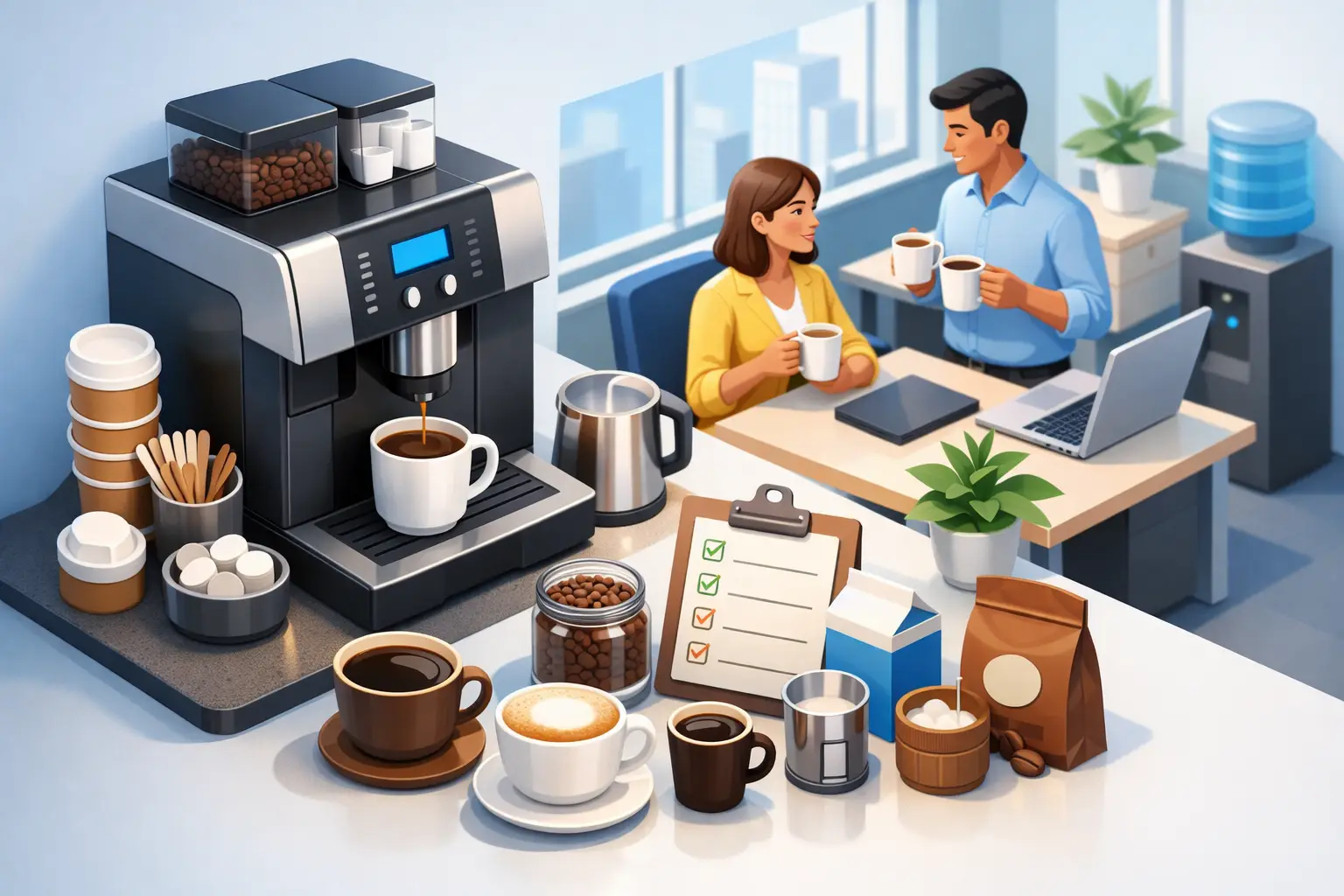
A break room can look well stocked at 8 a.m. and still disappoint employees by 10. Empty coffee canisters, a machine that needs attention, stale options, and missing cups all send the same message: the details are not being managed. For managers asking how to improve office coffee program results, the answer starts with treating coffee service as an everyday workplace experience, not a basic supply order.
A better program should make it easy for employees and guests to get a beverage they enjoy without creating more work for the office manager or facilities team. The right mix depends on your headcount, work schedules, preferences, available space, and budget. What does not change is the need for dependable equipment, fresh products, regular replenishment, and responsive service when something needs attention.
Start With How Your Break Room Is Actually Used
Before changing equipment or adding products, look at the traffic pattern around your current setup. A 20-person office with mostly traditional coffee drinkers has different needs than a 150-person workplace with early shifts, client meetings, and employees who expect specialty beverages.
Pay attention to when coffee is consumed, not just how much is ordered. If the brewer is busiest before 9 a.m., a higher-capacity thermal system may prevent long waits and reduce the need to brew several glass pots. If employees grab beverages at different times throughout the day, a single-cup or bean-to-cup machine can provide fresher results with less waste. Offices with conference rooms may benefit from a separate coffee solution for meetings so the main break room is not depleted before lunch.
Ask a few practical questions: Are people leaving the office to buy coffee? Is the current machine frequently out of order? Do employees request tea, decaf, flavored coffee, or cold water options? Are supplies being reordered inconsistently? These answers identify the real gap. A coffee program is rarely improved by simply buying more coffee.
Match the Equipment to Your Office Coffee Program
The machine is the foundation of the experience. It should fit the volume and habits of the workplace, while remaining easy to maintain and operate. Choosing equipment based only on its purchase price can create higher costs later through waste, downtime, employee frustration, or frequent replacements.
Bean-to-Cup for Freshness and Variety
Bean-to-cup systems grind whole beans for each beverage, making them a strong choice for offices that want a premium coffee experience. They can offer regular coffee, espresso-based drinks, and other selections from a compact, automated unit. This option works particularly well in workplaces where coffee is part of employee retention, client hospitality, or a more elevated break room environment.
The trade-off is that premium automatic equipment needs regular cleaning and knowledgeable service. It is a better investment when there is a reliable support plan behind it, rather than an expectation that office staff will troubleshoot it themselves.
Traditional Brewers for High-Volume Demand
Traditional brewers remain a practical solution for many offices. They are familiar, efficient, and well suited to teams that serve full pots during busy morning periods, staff meetings, or training sessions. Pairing a brewer with thermal servers helps preserve heat and flavor without leaving coffee on a burner for extended periods.
Glass pot brewers can be appropriate for smaller teams with immediate consumption, but they require closer attention. Coffee left on a warming plate too long can taste burnt, which often leads employees to assume the coffee itself is poor when the issue is really the holding method.
Single-Cup Systems for Flexibility
Single-cup pod systems are useful where individual choice matters most. Employees can select regular, decaf, tea, hot cocoa, or flavored beverages without brewing a full pot. They also help reduce waste in offices where coffee consumption is spread across the day.
However, pods should be managed carefully. A machine with only one or two choices can feel limiting, while too many varieties can complicate inventory. The best approach is usually a focused selection of popular coffee options, decaf, tea, and a few alternatives that fit your employee preferences.
Improve the Beverage Selection, Not Just the Coffee
A strong office coffee program recognizes that not everyone drinks the same thing. Offering recognized brands helps employees feel confident about what they are choosing, while a balanced assortment accommodates different routines without turning the break room into a complicated retail shelf.
Start with a dependable regular coffee and decaf option, then add choices that reflect your team. Starbucks coffee may be a familiar fit for a client-facing office or a workplace seeking a premium name employees recognize. Tea should not be an afterthought. Quality selections from brands such as Lipton and Bigelow give non-coffee drinkers a reason to use the break room and make the program more inclusive.
Consider the supporting items as part of the beverage experience. Fresh creamers, sweeteners, stirrers, cups, lids, napkins, and filtered water all affect satisfaction. An excellent coffee machine cannot overcome an empty cup dispenser or a counter that is never restocked. For offices offering flavored creamers or sweeteners, keep the variety sensible and watch which products move. The goal is choice with control, not a collection of items that expire untouched.
Build Reliability Into Daily Service
The best coffee program is the one employees do not have to think about. Coffee is available, water is fresh, supplies are present, and equipment works. That reliability comes from a clear service routine, not last-minute emergency orders.
Set regular delivery and replenishment schedules based on actual use, then adjust them as your office changes. Seasonal staffing, new hires, events, and return-to-office policies can all shift demand quickly. A service provider should be able to help you review consumption and make sensible changes before shortages become routine.
Equipment support matters just as much. Machines need cleaning, calibration, filter changes, and occasional repair. When service is slow, the break room becomes a source of complaints for the person responsible for facilities or administration. Working with a local provider that takes ownership of service reduces that burden. At Certified Coffee Service, Service Above All means supporting the equipment and the day-to-day details that keep a workplace beverage program running.
Make the Break Room Easy to Use and Maintain
Presentation affects whether employees see the break room as a genuine benefit. Keep the station organized with clearly designated spaces for coffee, tea, condiments, cups, and waste. Place the most-used products within easy reach, and do not crowd the counter with rarely used items.
Cleanliness is also operational, not cosmetic. Coffee spills, overflowing trash, and powdered creamer around the machine create avoidable dissatisfaction. Establish who handles daily wipe-downs and what the service partner manages during scheduled visits. Clear responsibility prevents the common problem where everyone assumes someone else is taking care of it.
Water solutions can add meaningful value as well. Filtered water dispensers encourage hydration, support tea and instant beverages, and give employees an alternative to bottled water. For many workplaces, combining coffee, water, vending, and break room supplies through one accountable provider simplifies ordering and reduces time spent managing separate vendors.
Review Performance and Adjust With Purpose
An office coffee program should evolve with the workplace. Review it periodically with input from employees and the people who manage the space. You do not need an elaborate survey every month. A few conversations and basic usage data can reveal whether the current mix is working.
Look for practical signs: frequent shortages, excess inventory, unused products, repeated service calls, long morning lines, or requests for beverages you do not offer. If a change solves one problem but creates another, adjust. For example, a single-cup system may improve variety but may not handle a large meeting rush on its own. In that case, adding a thermal brewer for events can be more effective than replacing the entire setup.
A thoughtful coffee program does more than provide caffeine. It gives employees a reliable pause in the day, helps welcome visitors, and reflects the level of care your organization brings to its workplace. When the equipment, products, and service are managed with that standard in mind, the break room becomes one less thing your team has to worry about.