
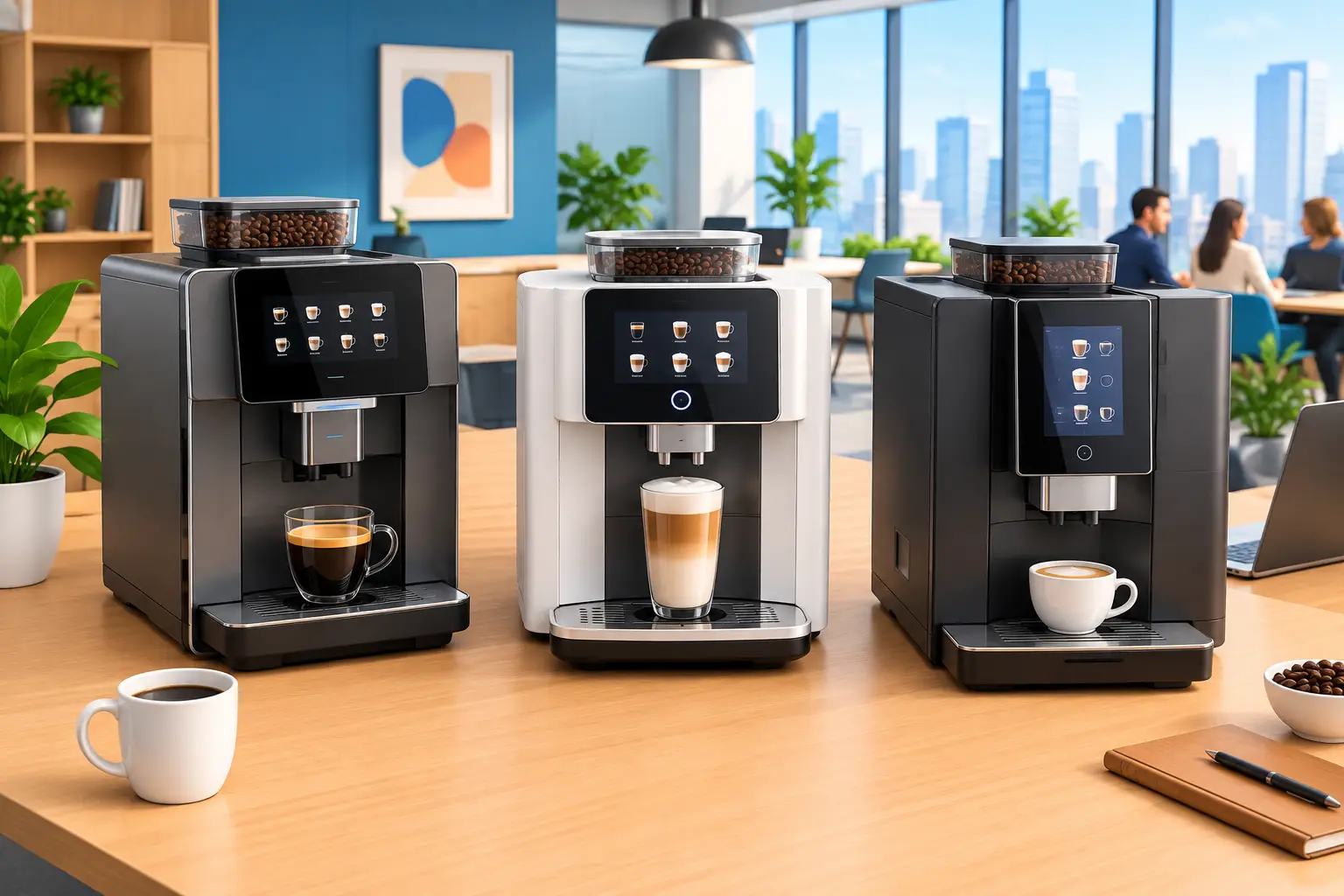
A coffee machine that looks impressive on day one can become a daily operational problem if it cannot keep up with the morning rush, requires constant attention, or leaves employees with inconsistent drinks. An automatic coffee machine comparison for offices should start with the workplace, not the machine. The right choice depends on how many people will use it, what they expect in their cup, and how much hands-on support your team needs.
For office managers and facilities teams, coffee equipment is more than a break room feature. It affects employee experience, guest impressions, supply planning, and the number of service calls your team has to manage. A well-matched machine keeps the break room moving. A poorly matched one creates lines, waste, and avoidable frustration.
Automatic Coffee Machine Comparison: Start With Usage
The most useful starting point is daily volume. A 20-person office with occasional visitors has different needs than a 150-person workplace with busy shift changes, client meetings, and a steady flow of guests. Buying for the maximum number of employees alone can lead to an oversized machine, while choosing based on average use can leave a break room overwhelmed during peak periods.
Consider when coffee is consumed, not just how much. Many offices see the highest demand between 8:00 and 10:00 a.m., with another spike after lunch. If several people need drinks within a few minutes, recovery time and beverage speed matter as much as the machine’s stated daily capacity.
A machine should also match the beverages your employees actually request. If most of the team wants regular coffee, a high-capacity brewer or fresh-brew system may offer the best value. If employees routinely ask for espresso, cappuccino, lattes, and hot chocolate, a bean-to-cup automatic machine can make the investment easier to justify. The goal is not to provide every drink imaginable. It is to provide a dependable menu people will use.
The Main Office Coffee Machine Options
Different automatic systems solve different workplace needs. There is no single best machine category for every office.
| Machine type | Best fit | Main advantage | Trade-off to consider | |—|—|—|—| | Bean-to-cup automatic machine | Offices that want fresh espresso-based drinks | Grinds whole beans and prepares specialty beverages on demand | Requires regular cleaning and the right service support | | Single-cup pod system | Smaller teams and mixed flavor preferences | Simple operation with individual drink choices | Pod costs and waste can rise with heavy use | | Commercial automatic brewer | Offices focused on coffee volume and speed | Consistent coffee for meetings and busy break rooms | Limited specialty beverage options | | Fresh-brew cup system | Workplaces that want a fresh cup with broad appeal | Convenient brewing with familiar coffee choices | May not satisfy employees seeking a full cafe-style menu |
Bean-to-cup systems
Bean-to-cup machines are often the strongest option for organizations that want a premium workplace coffee experience without assigning employees to act as baristas. These systems typically grind coffee beans, brew espresso or coffee, and dispense milk-based beverages through a touchscreen or button selection. The result is a fresh, made-to-order drink with a polished presentation.
They are especially effective in professional offices, reception areas, executive suites, and client-facing environments. Fresh whole-bean coffee also gives businesses access to recognized coffee brands and a stronger aroma in the break room, which can make the space feel more inviting.
The trade-off is maintenance. Milk systems, brew groups, waste containers, and bean hoppers need regular attention. The machine itself may automate drink preparation, but it does not eliminate cleaning requirements. For this reason, dependable scheduled service and clear employee guidance are essential.
Single-cup pod systems
Single-cup systems remain a practical choice for smaller offices, satellite locations, conference rooms, and teams with varied preferences. Employees can select regular coffee, decaf, tea, or specialty beverages without brewing a full pot. They are easy to understand, fast to train on, and useful when employees drink coffee at different times throughout the day.
Their limitations become clearer as volume grows. High pod consumption can increase supply costs, and a busy office can quickly fill waste bins. A single-cup unit also may not create the same premium impression as a bean-to-cup system in a customer-facing setting. It works best when convenience and individual choice are the priority.
Commercial brewers and fresh-brew systems
Traditional commercial brewers, thermal brewers, and automatic fresh-brew units continue to serve many workplaces well. They are efficient for meetings, training rooms, warehouses, and offices where employees primarily want a reliable cup of regular coffee. Thermal servers can help maintain coffee quality without leaving it on a hot plate, while glass pot brewers may suit lower-volume settings where immediate visibility is useful.
These systems are generally straightforward to operate and can deliver strong value at scale. They may not offer the specialty drink menu of an automatic espresso machine, but that is not a weakness when the workplace culture favors coffee by the cup or carafe. Matching equipment to actual demand is better than paying for features employees will not use.
What Matters Beyond the Drink Menu
An automatic coffee machine comparison should include the operational details that determine whether the equipment remains a benefit six months after installation. The most attractive feature list does not matter if the machine is difficult to clean, supplies run out unexpectedly, or employees are unsure how to use it.
First, review the water situation. Many premium machines perform best with filtration that protects internal components and supports consistent flavor. Water quality can affect scaling, maintenance frequency, and beverage taste. A workplace coffee provider should evaluate whether the location needs a plumbed setup, a refillable water solution, or filtration support.
Next, look at ingredient capacity. Bean hoppers, powder canisters, milk systems, cup dispensers, and waste bins should be sized for real demand. A machine with an excellent menu but a small grounds container can require attention several times a day in a larger office. That shifts work back to the office manager or receptionist, which defeats the purpose of automation.
Cleaning is another major consideration. Ask what must be done daily, weekly, and during professional service visits. Some machines have guided rinse cycles and automatic cleaning prompts, making routine care easier. Others require more detailed handling. Neither option is automatically wrong, but the responsibilities should be clear before the machine is placed.
Finally, consider placement. The machine needs adequate counter space, access to power and water where required, room for supplies, and enough space for employees to use it without blocking traffic. A break room setup should feel organized and professional, not crowded with boxes of cups, pods, sweeteners, and coffee bags.
Service Should Carry Real Weight in Your Decision
For commercial coffee equipment, service is part of the product. Even well-built machines can need adjustments, preventative maintenance, descaling, replacement parts, and occasional repairs. The question is not whether service will ever be needed. The question is whether there is a responsive plan when it is.
A full-service provider can simplify the process by coordinating equipment, coffee, tea, cups, condiments, filtration, and ongoing maintenance through one accountable partner. That approach reduces the burden of tracking multiple vendors and helps avoid disruptions caused by missing supplies or delayed repairs.
At Certified Coffee Service, Service Above All means helping businesses choose equipment that suits the location and supporting it after installation. For South Florida workplaces, local accountability can be especially valuable when a busy office cannot wait days for attention to a key break room machine.
Choosing the Right Machine for Your Workplace
The best decision is usually based on three questions: How many drinks will the office serve each day? What experience do employees and guests expect? Who will handle routine care? Answer those honestly, then compare equipment based on performance in your specific environment rather than on a consumer-style feature list.
A premium bean-to-cup machine can be an excellent fit for a growing office that wants fresh specialty drinks and a stronger workplace amenity. A commercial brewer may be the smarter solution for a high-volume team that values speed and familiar coffee. A pod system can serve a small office well when flexibility matters more than capacity.
Choose the machine that makes good coffee easy to provide, easy to maintain, and easy for your workplace to rely on. When the equipment, products, and service plan are aligned, the break room can do what it should: give employees and guests a dependable reason to enjoy the next coffee break.