
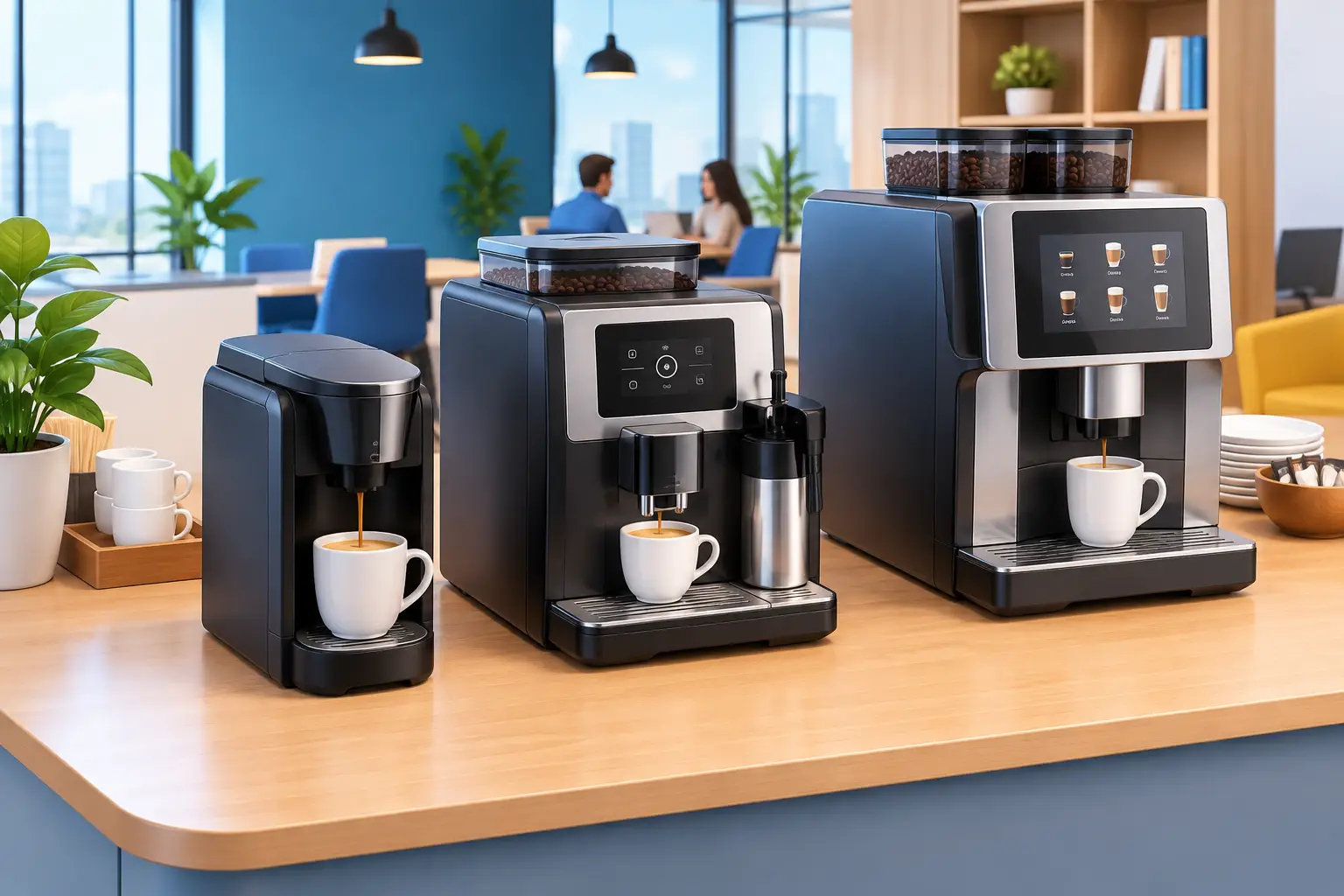
The wrong coffee machine size shows up quickly at 8:45 a.m. A small brewer creates a line, employees leave for a coffee shop, and the break room runs out before the first meeting ends. When deciding what size office coffee machine your workplace needs, the key is not simply headcount. It is how many people drink coffee, when they drink it, what they prefer, and how reliably you need the break room to operate.
A well-sized system supports employee satisfaction without taking up unnecessary counter space or creating waste. The best choice balances daily demand, peak traffic, beverage variety, available plumbing, and the level of service your team expects.
What Size Office Coffee Machine Fits Your Team?
Start with the number of regular coffee drinkers, not the total number of employees. In many offices, 60% to 80% of the team drinks coffee, while others may choose tea, hot chocolate, or water. A 50-person office, for example, may have 35 regular coffee drinkers. If those employees average two cups a day, the break room needs to comfortably produce about 70 cups, with much of that volume concentrated in the morning.
Peak demand matters as much as daily volume. An office with 25 employees arriving at different times may do well with a modest single-cup system. Another office with 25 employees who all arrive before a 9 a.m. meeting can overwhelm the same machine in minutes. Consider the busiest 30- to 60-minute period, not just average usage.
As a practical starting point, small offices with up to 20 employees often benefit from a quality single-cup brewer or a compact bean-to-cup machine. Offices with roughly 20 to 50 employees usually need a higher-capacity single-cup system, a bean-to-cup machine with larger ingredient hoppers, or a commercial brewer with thermal servers. Larger workplaces and high-traffic commercial locations generally require multiple units or high-volume equipment designed for continuous use.
These are starting ranges, not hard rules. A law firm with 15 frequent coffee drinkers may need more capacity than a 35-person office where many employees work in the field. The right equipment follows behavior.
Match Machine Capacity to Brewing Style
Coffee equipment comes in several formats, and each answers a different workplace need. Choosing the right size also means choosing the right kind of brewing.
Single-cup pod systems
Single-cup brewers are a strong fit for small offices, executive suites, conference rooms, and workplaces where employees value variety. Each person can select coffee, tea, or hot cocoa without brewing a full pot. They also reduce waste when consumption is spread throughout the day.
The trade-off is speed during a rush. One brewer can become a bottleneck when several people want a beverage at once. For offices with more than 20 to 30 regular users, adding a second machine or choosing a commercial-rated model can keep the line moving. Pod inventory also requires attention, especially when the office wants recognizable coffee brands and a range of flavors.
Bean-to-cup and premium automatic machines
Bean-to-cup machines grind whole beans and brew individual drinks on demand. They are often an excellent choice for medium-sized offices, client-facing environments, and workplaces that want a more premium coffee experience. Many units can prepare coffee, espresso-style drinks, cappuccinos, and lattes from one compact footprint.
Capacity depends on the machine’s bean hopper, water supply, grounds bin, milk system, and drink output per day. A unit may look substantial but still be designed for light use. For a team with 30 daily coffee drinkers, select a system rated to handle the expected number of beverages with room for morning demand and visitors.
These machines deliver freshness and choice, but they need regular cleaning and preventive maintenance. This is where a dependable office coffee service partner makes a meaningful difference. Equipment is only valuable when it is clean, stocked, and ready to serve.
Traditional brewers and thermal systems
Traditional commercial brewers remain a smart solution for offices with consistent, high-volume coffee consumption. They are especially effective where people want regular coffee quickly, such as warehouses, call centers, healthcare offices, training centers, and larger corporate break rooms.
A brewer that fills thermal servers can produce a large amount of coffee without relying on glass pots sitting on a warmer. Thermal service helps preserve flavor, supports multiple serving locations, and allows employees to pour a cup quickly during busy periods. For a large meeting, event, or shift change, this is often more efficient than asking dozens of people to wait for individual beverages.
Glass pot brewers can be appropriate for smaller teams with steady consumption, but they require closer attention. Coffee left on a hot plate can lose quality, and unused coffee can become waste. Thermal equipment typically offers better flexibility when freshness and volume are both priorities.
Plan for Demand Beyond the Daily Headcount
A coffee machine should be sized for the workplace you have on its busiest normal day. Think about staff meetings, customer visits, seasonal hires, training sessions, and shifts. A 40-person office may operate like a 70-person office when it regularly hosts clients or runs weekly meetings.
Look at how coffee is served, too. If employees carry insulated tumblers, they may use 12 to 16 ounces at a time rather than an 8-ounce cup. That changes volume requirements quickly. If your office provides coffee in a reception area, account for guests separately from staff demand.
Facilities managers should also consider location. One large machine in a central break room can be efficient, but it may not serve a multi-floor operation well. Two appropriately sized stations can reduce traffic, keep employees productive, and make coffee more accessible. A smaller brewer in a conference area may also prevent visitors from crowding the employee break room.
Avoid the Two Common Sizing Mistakes
The first mistake is buying too small. An undersized machine leads to long waits, frequent refilling, depleted supplies, and more pressure on staff who already manage many workplace details. It can also make a coffee program feel like an afterthought, even when the coffee itself is good.
The second is overbuying. A machine with far more capacity and features than the office uses can take up valuable space, increase operating costs, and create unnecessary maintenance needs. A premium automatic system is not automatically the best answer for every office. If most employees want one straightforward cup of coffee at different times, a well-supported single-cup brewer may be the better investment.
The goal is enough capacity to handle demand comfortably, with a little room to grow. It is not the largest machine available.
Consider Water, Counter Space, and Daily Support
Before selecting equipment, confirm the practical details. Is there a nearby water line for a plumbed machine, or does the office need a pour-over model? How much counter clearance is available? Will the machine be near a drain, refrigerator, microwave, or other break room equipment? These details affect both the equipment options and the day-to-day experience.
Plumbed systems are convenient for higher-volume environments because employees do not need to refill reservoirs. They are often a better fit for traditional brewers and busy bean-to-cup machines. Pour-over equipment can be more flexible where plumbing is unavailable, but someone must keep it filled during the day.
Service should be part of the sizing conversation, not an afterthought. Coffee, cups, lids, sweeteners, creamers, tea, filters, cleaning supplies, and machine maintenance all contribute to whether the break room works. A machine that technically meets output requirements can still disappoint if it is empty, dirty, or out of service.
Certified Coffee Service helps South Florida workplaces align equipment, beverage choices, replenishment, and ongoing support around the way their teams actually work. That approach keeps the focus where it belongs: dependable coffee and fewer break room issues for office managers to solve.
A Better Way to Choose Your Office Coffee Machine Size
Before making a decision, track coffee use for one or two typical weeks. Estimate regular drinkers, cups per person, peak-time demand, guest traffic, and the beverages employees request most often. Then choose equipment based on the busiest realistic period, rather than the quietest day on the calendar.
The right office coffee machine feels almost invisible in the best possible way. Employees get the drink they want without waiting, guests see a professional and welcoming workplace, and the person responsible for the break room can trust that service and supplies will be there when needed.