
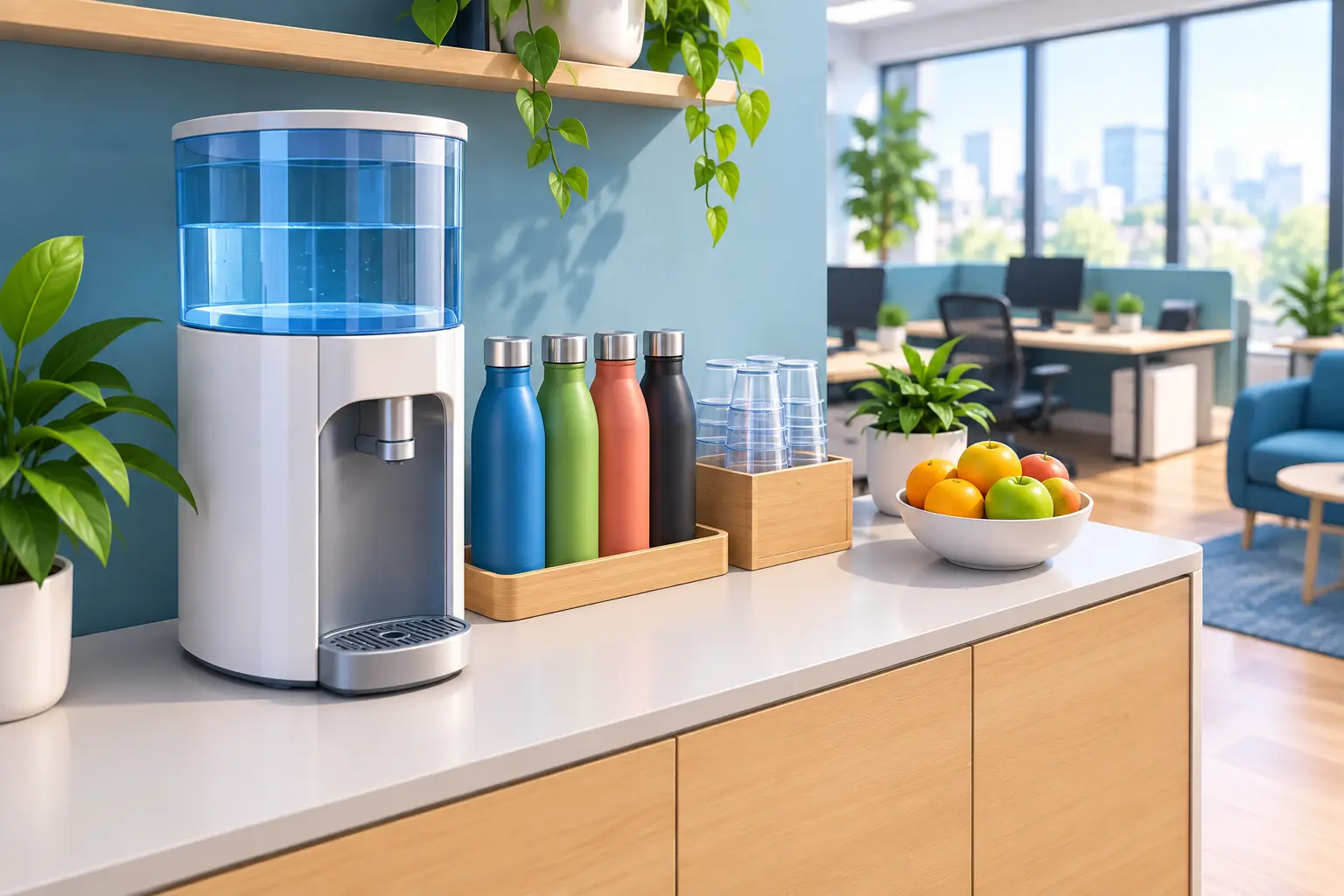
A water cooler tucked into a corner may meet a basic need, but it does not necessarily support a busy workplace. When you set up office hydration thoughtfully, employees have convenient access to fresh water throughout the day, visitors see a more polished environment, and your team spends less time dealing with empty bottles, supply runs, or equipment problems.
For office managers and facilities teams, hydration is not a minor break room detail. It is part of the daily employee experience. The right solution should fit your office traffic, available space, budget, and service expectations – without creating another vendor relationship to manage.
Start With How Your Office Actually Uses Water
The best hydration setup begins with a practical look at demand. A small office with 15 employees may need something very different from a large corporate location with multiple floors, conference rooms, warehouse staff, or frequent visitors.
Consider how many people are on-site on a typical day, when the office is busiest, and whether people bring reusable bottles or primarily use cups. A dispenser near the break room can work well for a smaller team, while larger workplaces may need hydration stations in more than one area to prevent long walks and long lines.
Also look at the way water is used beyond drinking. Conference rooms, training sessions, client meetings, and reception areas can create sudden demand. If your team regularly hosts guests, a dependable water solution helps maintain a professional experience without asking staff to make last-minute store runs for bottled water.
Choose the Right Office Water Solution
There is no single best system for every workplace. The right choice depends on your building, water usage, preferred features, and whether you want bottle delivery or a plumbed-in system.
Bottled Water Coolers
Traditional bottled water coolers remain a practical choice for many offices. They are familiar, easy for employees to use, and do not require a direct water line. They can be especially useful in leased spaces, temporary locations, or offices where plumbing access is limited.
The trade-off is storage and bottle handling. Your team needs room for full bottles and empties, and someone must be responsible for monitoring supply. A scheduled delivery program removes much of that burden, providing the right amount of water before your office runs short.
Bottleless Water Dispensers
Bottleless dispensers connect directly to your water line and filter the water on-site. They eliminate bottle storage, reduce the need for heavy lifting, and provide a consistent source of chilled or hot water. Many modern units also offer touchless dispensing, sparkling water, or enhanced filtration options.
This approach is often a strong fit for high-use offices and organizations that want a cleaner-looking break room. Before choosing it, confirm that the location has appropriate plumbing access and that the provider can handle installation, filter changes, sanitization, and service calls.
Countertop and Point-of-Use Options
Where floor space is tight, a countertop water system may be the better answer. These units can serve small offices, satellite kitchens, executive areas, and conference rooms without taking up valuable floor space. They are not always ideal as the only source of water for a large team, but they can be a valuable addition to a broader office hydration plan.
Put Hydration Where People Will Use It
Placement matters as much as equipment. A quality dispenser that is difficult to find or inconvenient to reach will not deliver the intended benefit. The break room is usually the natural starting point, especially when employees already visit it for coffee, tea, and lunch.
In larger workplaces, consider adding service near shared work areas, employee entrances, training rooms, or high-traffic departments. A hydration station should be visible, accessible, and positioned away from congestion. Avoid placing equipment where employees need to reach across food prep areas or navigate around stored supplies.
Think through the small details, too. A nearby counter for bottles and cups, a trash or recycling bin, and enough clearance for technicians make the station easier to maintain. If the unit dispenses hot water, the area should be appropriate for safe use and clearly understood by employees.
Build a Complete Office Hydration Station
Water service works best when the surrounding supplies are planned at the same time. A dispenser alone may not support every employee preference or every type of workplace event.
Reusable bottle use is growing in many offices, so make sure employees can comfortably fill taller bottles. Keep disposable cups available for guests, meetings, and employees who need them. For offices with a coffee program, hot water access can also support tea selections from recognized brands such as Lipton and Bigelow, creating more choice without adding another appliance.
A complete station may include:
- Chilled, ambient, and hot water options based on employee needs
- Paper or compostable cups in appropriate sizes
- Cup dispensers, lids, stirrers, and napkins
- Tea, sweeteners, and other break room essentials
- Clear cleaning and restocking responsibility
The goal is not to overstock every item. It is to make the station convenient enough that people can use it without asking the office manager to solve a problem every afternoon.
Make Service and Sanitation Part of the Plan
Hydration equipment should be dependable, but it still needs regular attention. Filters need replacement, dispensers need sanitizing, and parts occasionally need service. A low-cost unit can become expensive if it creates repeated downtime, inconsistent water quality, or a stream of employee complaints.
When evaluating a provider, ask who handles installation, how service requests are submitted, and what response you can expect when a unit needs attention. Ask whether preventive maintenance is included and whether supplies can be delivered on a schedule that matches your usage.
This is where a full-service partner makes a difference. Certified Coffee Service supports South Florida workplaces with water solutions, beverage programs, equipment service, and break room supplies, helping offices reduce the complexity of working with separate vendors. The focus is simple: keep the break room operating reliably so your staff can stay focused on their work.
Control Costs Without Cutting the Experience
Office hydration should be easy to budget, but the lowest upfront price is not always the best value. Compare the full picture: equipment costs, water delivery or filtration, cup and supply usage, maintenance, and the time your internal team spends managing the program.
Bottled water can be a sensible option when flexibility is the priority. Bottleless systems may offer greater long-term convenience for high-volume locations. Smaller offices may prefer a straightforward cooler, while larger campuses can benefit from several strategically placed systems. It depends on your building and usage pattern, not just headcount.
Review consumption after the first 60 to 90 days. If bottles are running out before delivery day, increase service frequency. If supplies are consistently untouched, adjust the order. A good provider should help you right-size the program rather than sell more than your office needs.
Give Employees a Reason to Use It
A new hydration station deserves a simple introduction. Let employees know where it is located, what temperature options are available, and whether they should bring reusable bottles. For a bottleless system, explain any special features, such as touchless dispensing or hot water controls.
You do not need a large campaign. A short office announcement and clear signage are often enough. The point is to make the service feel intentional, not like another piece of equipment that appeared overnight.
A reliable hydration program sends a practical message: the workplace is prepared for the people who keep it moving. Choose equipment that fits the space, supplies that fit the routine, and service support that keeps the water flowing long after installation day.