
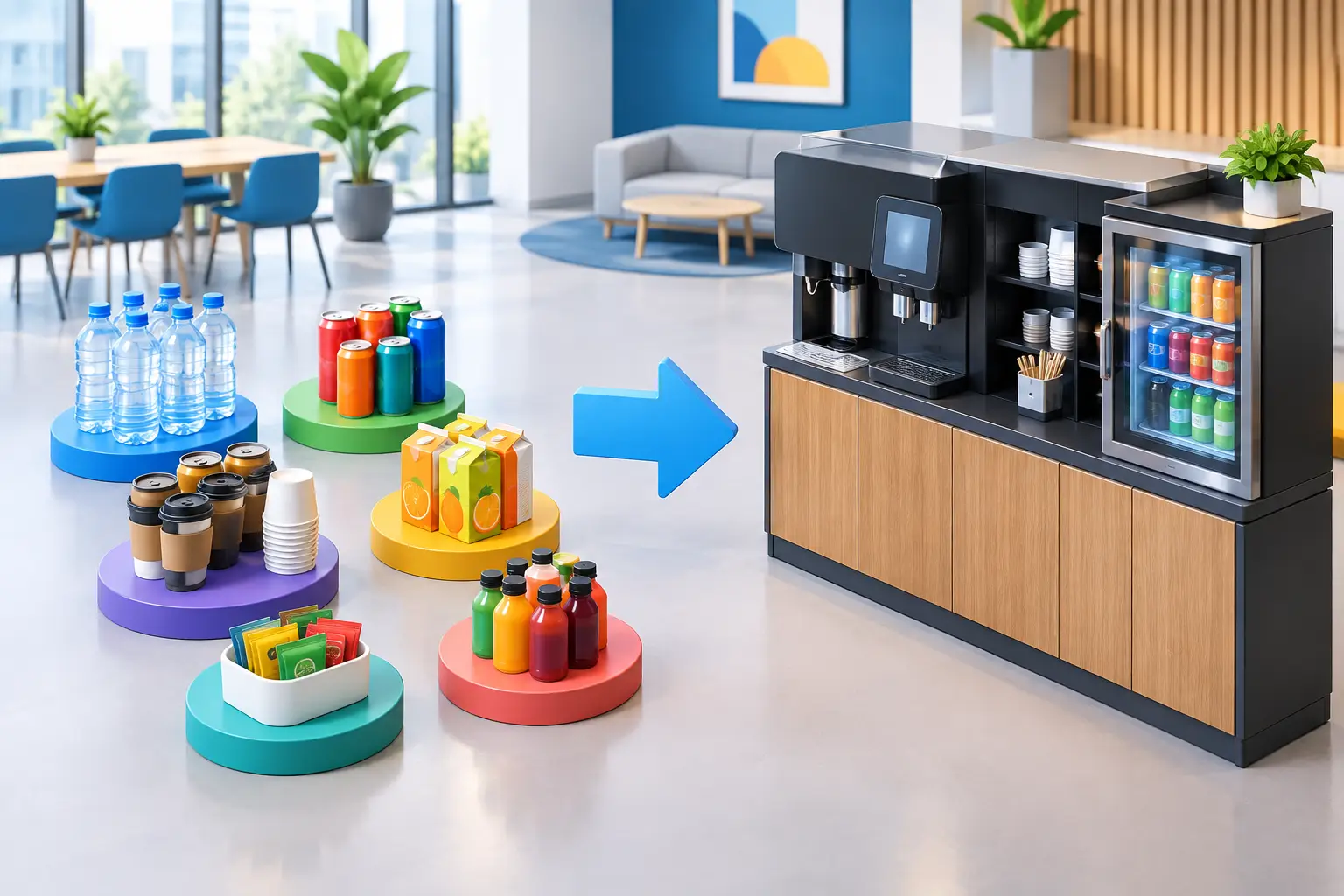
An office break room can look well stocked while still creating unnecessary work behind the scenes. Coffee may come from one supplier, bottled water from another, snacks from a third, and cups, lids, creamers, and cleaning supplies from whoever can deliver them fastest. These beverage consolidation examples show how bringing those needs under one service partner can reduce ordering friction, improve consistency, and keep employees better supported.
For office managers, facilities teams, and purchasing professionals, consolidation is not simply about receiving fewer invoices. It is about making the break room easier to manage without giving up the beverage choices employees expect. The right approach depends on office size, beverage preferences, available space, and the level of ongoing equipment support required.
What Beverage Consolidation Means in a Workplace
Beverage consolidation means coordinating multiple workplace drink categories through one provider or one managed service relationship. Those categories may include coffee, tea, filtered water, bottled water, single-cup pods, creamers, sweeteners, cups, and related break room supplies. In some workplaces, vending service is also part of the arrangement.
The goal is practical: one point of contact, a coordinated delivery schedule, and clearer accountability when products run low or equipment needs attention. Instead of placing separate orders and tracking separate delivery windows, the office can manage a more complete beverage program in one place.
Consolidation does not mean every employee must drink the same coffee or that an office has to choose a limited menu. A well-planned program can include traditional coffee, premium bean-to-cup selections, tea from recognized brands, cold water options, and individually portioned choices for employees and visitors.
Beverage Consolidation Examples That Work
1. Coffee, Tea, and Supplies on One Delivery Schedule
A 40-person office may use a traditional brewer for regular coffee, a selection of teas for non-coffee drinkers, and a steady supply of cups, stirrers, sugar, sweeteners, and creamers. When each category is ordered separately, small shortages become common. The coffee may arrive, but the cups do not. Tea might be available, but honey or stirrers run out before the next order.
With a consolidated program, these items are reviewed as one break room inventory. Deliveries can be scheduled around actual workplace usage rather than a collection of disconnected purchasing habits. This is especially helpful for administrative teams that already manage office supplies, meetings, and vendor coordination.
The trade-off is that the service partner needs a clear understanding of consumption. An office that hosts frequent client meetings or has seasonal staffing changes should communicate those patterns so product levels can be adjusted before shortages occur.
2. Bean-to-Cup Coffee and Filtered Water for a Growing Office
A growing professional office may want a higher-quality coffee experience without adding the labor of measuring coffee, changing pots, and managing daily cleanup. A bean-to-cup machine can provide fresh coffee and specialty-style options at the touch of a button, while a filtered water system gives employees a dependable alternative to bottled water.
Consolidating these services makes sense because both systems require regular attention. Coffee equipment needs preventive maintenance and replenishment. Water equipment may need filter changes, sanitation, or service support. When one provider manages both, the office has a clearer path for requesting help and tracking service activity.
This model works best when the office has enough daily use to justify premium equipment. For a smaller team with low consumption, a single-cup system and a countertop water option may be a better fit. The best solution is not always the most advanced machine. It is the one that matches employee demand and can be reliably supported.
3. A Multi-Location Beverage Standard
A company with several offices often faces a familiar problem: every location develops its own break room setup. One uses a glass pot brewer, another has a pod machine, and another relies on grocery store runs when supplies are low. Employees receive different experiences, while the facilities team receives different invoices, product lists, and service expectations.
A consolidated beverage program can establish a practical standard across locations. That might mean selecting approved coffee and tea brands, defining core supply levels, and using machine types suited to each office’s size. A larger headquarters may need multiple brewers or a bean-to-cup system, while a satellite location may be well served by a compact single-cup machine.
The value is consistency without forcing every office into the same exact setup. Procurement gains better visibility, employees know what to expect, and local administrators spend less time sourcing routine supplies. This approach also makes onboarding a new location easier because the beverage plan is already defined.
4. Reception, Conference Room, and Break Room Coverage
Some offices treat each hospitality area as a separate task. Reception needs bottled water or coffee for guests. Conference rooms need supplies before meetings. The employee break room needs daily coffee and tea. Because these spaces serve different people, they are often ordered separately.
Consolidation allows the office to view them as parts of one hospitality program. The break room can be stocked for employee use, the reception area can maintain a professional guest offering, and conference room needs can be planned around recurring meetings. A provider can help determine which products should be kept in each area and how often they should be replenished.
This is particularly useful for law firms, medical offices, financial services companies, and other businesses where the client experience matters. Offering fresh coffee, recognizable tea brands, and clean water is a small operational detail that can shape how visitors perceive the office.
5. Coffee Service, Water, and Vending Under One Partner
In a larger commercial workplace, beverages are only part of the employee refreshment picture. Employees may also expect snacks, cold drinks, and convenient food options. Managing coffee, water, and vending independently can create overlapping deliveries and confusion about who is responsible for service issues.
Combining these categories under one provider can simplify the day-to-day workload. One account contact can coordinate product replenishment, equipment service, and adjustments based on employee usage. It also gives the provider a fuller view of what the workplace needs. For example, an office with strong bottled water usage may benefit from a filtered water solution, while a vending area with frequent coffee purchases may signal demand for a better in-office coffee program.
Not every workplace needs vending. A small office may gain more from a focused coffee, tea, and water program. Consolidation should remove unnecessary complexity, not add services simply because they are available.
What to Review Before Consolidating Beverage Service
Before changing vendors or combining categories, start with a realistic picture of current usage. Review coffee consumption, tea preferences, bottled water needs, equipment condition, supply shortages, and service calls from the past few months. The goal is to identify where the current process creates waste, delays, or employee frustration.
It is also useful to separate must-haves from nice-to-haves. A dependable coffee brewer, consistent water service, and prompt equipment support may be essential. Specialty beverages, a larger flavor selection, or premium equipment may be worthwhile if they fit the budget and office culture. A strong provider should help evaluate both, rather than pushing a one-size-fits-all package.
Ask how delivery schedules are managed, who handles machine maintenance, and what happens when equipment is not working. Price matters, but an inexpensive program loses value quickly when employees arrive to an empty coffee station or a machine that has been waiting days for service. For Certified Coffee Service, that service responsibility is central to its Service Above All approach.
The Operational Benefits Are Usually Felt First
The most noticeable benefit of consolidation is often not a spreadsheet result. It is the absence of small problems. The office manager is no longer making an emergency run for cups. The receptionist is not calling three vendors before a client event. Employees are not finding an empty water station or a coffee machine that has been ignored.
Over time, consolidation can also improve purchasing control. Fewer suppliers make it easier to review spending, compare usage from month to month, and avoid duplicate orders. Delivery coordination may reduce interruptions at the office, and a consolidated account can make it easier to adjust products as preferences change.
A good beverage program should feel dependable rather than complicated. Start with the drinks and supplies your people use every day, choose equipment that fits the workplace, and work with a service partner that treats the break room as a responsibility worth getting right.