
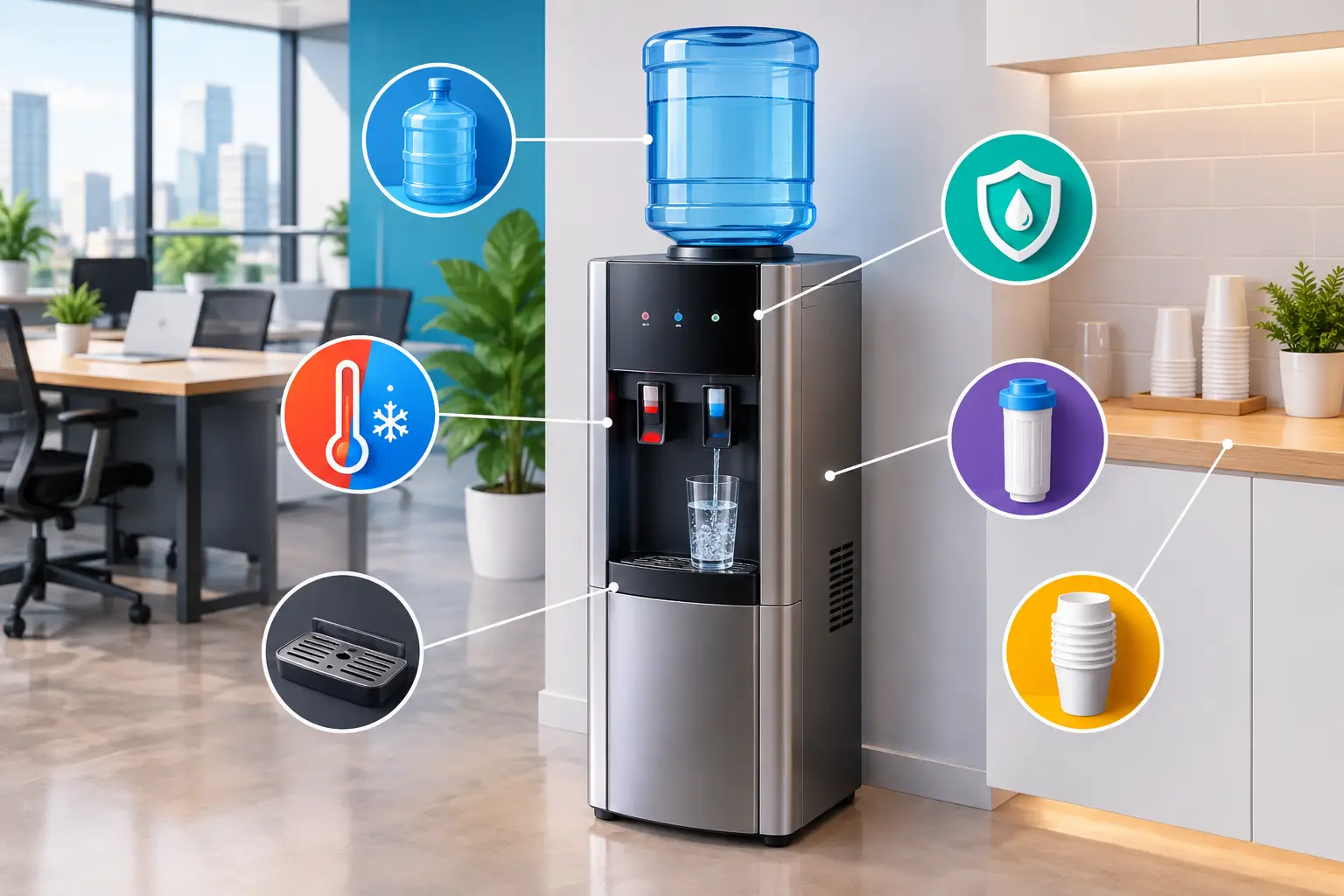
A water dispenser becomes part of the daily workflow quickly. Employees fill bottles before meetings, guests expect a clean glass of water, and busy break rooms need a dependable option that does not create more work for the office manager. The best office water dispenser features are the ones that match your team’s habits while keeping water fresh, accessible, and easy to manage.
For a commercial workplace, the lowest equipment price is rarely the whole story. Capacity, filtration, sanitation, installation, and ongoing service all affect whether the dispenser remains a valued employee amenity or becomes another maintenance issue.
Start With Your Office’s Water Demand
Before comparing dispensers, consider how many people will use the unit and when demand is highest. A small office with 10 employees has different needs than a busy corporate floor where dozens of people refill bottles during breaks. Underestimating demand can lead to slow dispensing, empty bottles, or frequent interruptions for maintenance.
For larger teams, a high-capacity bottleless water cooler or a plumbed-in dispenser is often the more practical choice. It provides a continuous source of water from the building’s supply, subject to the system’s filtration and dispensing capacity. Offices with lower usage, limited access to a water line, or temporary locations may prefer a bottled water dispenser instead.
The right choice depends on your space and service needs. Bottleless systems reduce bottle storage and lifting, while bottled systems can be easier to place where plumbing is not available. A qualified provider should help assess both options rather than pushing a one-size-fits-all solution.
Reliable Filtration Is a Core Water Dispenser Feature
Water quality is one of the most valuable features a workplace dispenser can offer. A properly selected filtration system can improve taste and reduce common concerns associated with municipal water, such as chlorine taste or odor. It also gives employees confidence that the water station is a better alternative to single-use bottled water.
Not every filter serves the same purpose. Basic carbon filtration is commonly used to improve taste and odor, while more advanced systems may address a broader set of water-quality needs. The appropriate setup depends on the building’s water source, local conditions, and the type of dispenser being installed.
Just as important as the filter itself is the plan for replacing it. A dispenser with excellent filtration will not perform as intended if filter changes are delayed. Ask who tracks replacement intervals, performs the service, and verifies that the unit is operating properly. This is where a full-service workplace beverage partner can save an office manager considerable time.
Ask About Water Quality, Not Just the Filter Name
“Filtered water” is a broad description. When reviewing equipment, ask what the filtration system is designed to improve and how often it needs service. A clear answer should include the maintenance schedule, not just a list of technical components.
Choose the Right Temperature Options
Cold water is expected in most offices, especially in South Florida, where employees and visitors appreciate a refreshing option throughout the day. A quality cold-water system should recover quickly enough to handle repeated use without delivering lukewarm water during busy periods.
Hot water can also add real value, particularly in offices that serve tea, oatmeal, soup, or other instant items. A hot-and-cold dispenser may reduce traffic around the coffee station and make the break room more useful without adding another appliance. However, hot-water capability is not necessary for every office, and it requires appropriate safety features.
Look for a child-resistant or safety-lock hot-water faucet when hot water is available. This matters in offices that welcome clients, employees’ families, or visitors who may not be familiar with the unit. For teams that prioritize bottle filling, some dispensers also offer room-temperature water, which is preferred by many employees for hydration.
Prioritize Hygiene and Easy Cleaning
A water dispenser should encourage use, not cause hesitation. The dispensing area needs to be easy to wipe down, with a drip tray that catches spills and can be removed for cleaning. A taller dispense area is helpful for reusable bottles, but it should still be designed to minimize splashing.
Hands-free or touchless dispensing is worth considering in high-traffic settings. Sensor-operated models can reduce contact at the dispenser, although they may cost more and require a dependable power source. For many offices, a well-designed push-button dispenser with a clean service plan is a practical and cost-effective choice.
Some systems include ultraviolet treatment or other sanitation technologies. These can be useful additions, but they do not replace regular cleaning and professional maintenance. The most dependable approach combines equipment designed for hygiene with consistent service from people who know how to maintain it.
Best Office Water Dispenser Features for Convenience
Convenience is what turns a water station into a workplace benefit employees actually use. A bottle-filling area with adequate clearance is especially valuable in offices where people carry insulated tumblers and large reusable bottles. It helps keep water off the counter and reduces the need for disposable cups.
Consider the physical location as carefully as the dispenser itself. A unit placed near the break room, conference area, or central work zone will receive more use than one tucked into a storage corner. At the same time, it needs enough surrounding space for employees to fill bottles comfortably without blocking a walkway.
Noise can matter as well. Compressor sounds and water-flow noise may be insignificant in a busy break room but distracting near private offices, reception desks, or conference rooms. If the dispenser will be visible to clients, appearance, footprint, and finish should fit the rest of the workplace environment.
Features That Are Helpful but Not Always Necessary
Sparkling water, ice dispensing, digital displays, and premium finishes can elevate the employee experience. They are not automatically the right investment, though. A traditional cold-and-hot water dispenser with strong filtration and responsive service may provide more everyday value than an advanced unit with features your team rarely uses.
The goal is not to purchase the model with the longest feature list. It is to select equipment that employees will use consistently and that your office can support reliably.
Think Beyond the Dispenser: Installation and Support
A water dispenser is only as dependable as its installation and ongoing care. Bottleless units may require access to a water line, drainage considerations, electrical power, and placement planning. A professional site review helps prevent surprises such as a unit that cannot fit where it is needed or a water connection that complicates the installation.
For bottled water systems, ask how deliveries are scheduled, where bottles will be stored, and what happens if usage rises unexpectedly. Water bottles are heavy, and a plan for delivery and replacement protects staff from having to manage inventory or lift bottles themselves.
Service response should also be part of the purchasing discussion. If a dispenser stops cooling, leaks, or needs a filter change, your team should know exactly who to contact and what level of support to expect. Workplace amenities are most successful when the provider handles equipment, replenishment, and service with clear accountability.
Certified Coffee Service approaches office water solutions with the same Service Above All commitment that supports workplace coffee, tea, vending, and break room programs. One experienced local provider can make it easier to coordinate equipment and supplies without adding another vendor for your team to manage.
Match the Equipment to Your Workplace Culture
The best dispenser for a medical office may emphasize hygiene, visitor access, and a polished appearance. A warehouse or industrial setting may need higher capacity, durable construction, and easy access during shift changes. A professional services office might prioritize a quiet, attractive model for employees and clients near the reception or conference area.
There is also a sustainability consideration. Bottleless dispensers can reduce deliveries and storage needs, while reusable-bottle-friendly stations can help cut disposable cup and plastic bottle use. Still, sustainability goals should be balanced with building limitations, employee count, and available service support.
A thoughtful water solution says something positive about how an organization treats its people. Choose a dispenser that makes hydration easy, then make sure there is a dependable plan behind it to keep that experience consistent every day.