
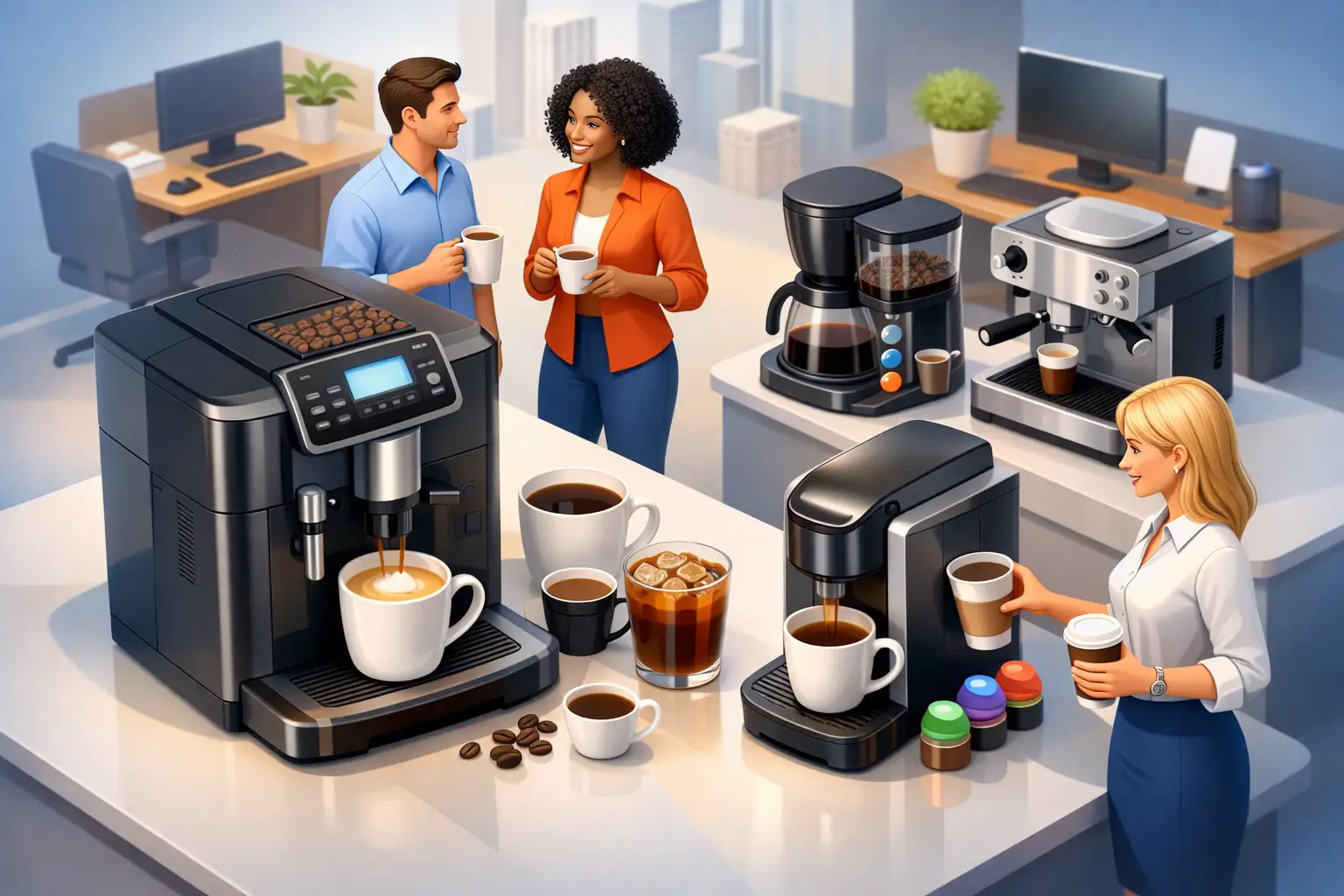
At 8:15 a.m., an office coffee machine is not a perk in the background. It is often the first stop for employees, visitors, and clients. The best office coffee machines 2026 should deliver a better cup without creating a new maintenance task for the office manager. That means looking beyond a machine’s menu or countertop appearance and choosing equipment that matches your headcount, beverage preferences, water access, and service expectations.
For many workplaces, the right answer is not simply the most expensive machine or the newest feature set. It is the coffee system that keeps pace with the day, offers choices people will actually use, and is supported by dependable replenishment and responsive service.
What Makes the Best Office Coffee Machines 2026?
A successful office coffee program begins with usage. A 12-person professional office has very different needs from a 150-person headquarters, a medical waiting room, or a busy warehouse break room. Before selecting equipment, consider how many cups are served during peak periods, whether the team prefers fresh-ground coffee or familiar brands, and how much counter space is available.
Reliability should carry as much weight as taste. A machine that produces excellent espresso but needs constant attention can create frustration quickly. Likewise, a basic brewer may be the right choice when a team wants several pots ready before a morning meeting. The best option is the one that makes quality coffee consistently while fitting the pace of the workplace.
Service is part of the equipment decision. Filters, cleaning, calibrations, product refills, and response when a machine needs attention all affect the employee experience. A full-service coffee partner can help prevent small issues from becoming a break room interruption.
Bean-to-Cup Machines for Freshness and Variety
Bean-to-cup systems are among the strongest choices for offices that want a premium experience with fresh-ground coffee at the touch of a button. These machines grind whole beans for each beverage and can offer coffee, espresso, cappuccino, latte, hot chocolate, and other specialty drinks, depending on the model.
They are a natural fit for executive offices, client-facing businesses, law firms, financial offices, and organizations using workplace amenities to support recruitment and retention. The visual appeal matters, but the bigger advantage is choice. Employees who prefer a straightforward black coffee can use the same unit as someone looking for a café-style latte.
The trade-off is that bean-to-cup equipment requires a planned approach to cleaning and upkeep. Milk-based beverages, in particular, demand proper daily care. With regular service and trained support, these systems can provide a high-end coffee bar experience without sending employees off-site for every specialty drink.
Single-Cup Pod Systems for Simple, Personal Choice
Single-cup brewers remain a practical option for offices with varied tastes, lighter volume, or limited break room space. Each person can select a preferred coffee, tea, cocoa, or specialty beverage, which reduces waste compared with brewing a full pot that may sit too long.
This format works well in smaller offices, conference areas, private suites, and satellite locations. It also gives employees recognizable beverage choices, including popular coffee and tea brands. For offices where decaf, flavored coffee, and tea are frequent requests, a single-cup system can cover a broad range of preferences with minimal setup.
The main consideration is volume. When many employees arrive at the machine at the same time, one cup at a time can create a line. Pod costs and supply storage should also be considered. In a larger office, a pod brewer often works best as a complement to a high-volume coffee system rather than the only option.
Traditional Brewers Still Have a Place
A traditional coffee brewer is not outdated when it is matched to the right environment. For workplaces that serve a lot of regular coffee in a short window, batch brewing remains efficient, familiar, and cost-conscious. It is especially useful for manufacturing facilities, warehouses, hospitals, large break rooms, and meeting spaces.
Glass pot brewers provide a clear view of coffee levels and work well where coffee turns over quickly. Thermal brewers are a better fit when coffee needs to stay hot and fresh without sitting on a warming plate. Thermal dispensers can also be placed in conference rooms or common areas, allowing teams to serve coffee away from the main break room.
The quality of batch-brewed coffee depends on more than the brewer itself. Water filtration, the right coffee-to-water ratio, fresh product, and regular cleaning all matter. With the right coffee and a proper schedule, a traditional brewer can deliver a dependable cup throughout a demanding workday.
Premium Automatic Coffee Machines for Client-Facing Spaces
Premium automatic machines suit businesses where presentation and convenience are both priorities. These systems can create café-style beverages quickly while keeping the counter organized and reducing the need for staff to prepare drinks manually.
Consider this category for reception areas, showrooms, upscale professional offices, hotels, and businesses that regularly welcome clients. A polished coffee station sends a practical message: visitors are valued, and details are managed. For employees, it creates a convenient place to take a short break and reset without leaving the building.
Not every workplace needs this level of equipment. If the majority of employees want standard drip coffee, paying for extensive specialty drink capabilities may not produce a meaningful return. The strongest programs align the machine with actual habits, not just an idealized picture of what the break room could be.
Water, Capacity, and Counter Space Matter More Than Expected
Before choosing a machine, assess the physical break room. A direct water line can support higher-volume equipment and reduce the need for staff to refill reservoirs. It can also improve consistency when paired with appropriate water filtration. In South Florida, water quality and filtration deserve close attention because they influence both flavor and equipment performance.
Capacity deserves the same attention. Ask how many drinks the machine can produce during a busy 15-minute period, not just its daily maximum. A machine may be suitable on paper but struggle when an entire department takes a break after a meeting.
Counter space, electrical access, drainage requirements, and room for coffee, cups, lids, sweeteners, creamers, and stirrers should be planned together. A well-organized station makes the service feel easier for employees and easier to maintain for the people responsible for the office.
Choose a Coffee Program, Not Just a Machine
The machine is only one part of a dependable workplace coffee experience. Product selection, delivery schedules, cleaning supplies, water service, and equipment support all need to work together. When these elements are handled by separate vendors, the office manager may spend time tracking inventory, resolving equipment concerns, and responding to employee requests.
A managed coffee program simplifies that workload. It allows the workplace to offer established coffee and tea brands, adjust products as preferences change, and receive ongoing support for the equipment. For organizations that also need bottled water, water filtration, vending, or break room supplies, combining services can reduce the number of vendors to manage.
Certified Coffee Service has supported South Florida workplaces with this service-first approach since 1975. The goal is not to place a machine and disappear. It is to help keep the break room stocked, the equipment operating properly, and employees confident that their coffee station will be ready when they need it.
A Practical Way to Make the Right Choice
Start by observing the current coffee routine for a week. Note the busiest times, the number of cups used, common requests, and recurring complaints. If employees routinely leave the office for specialty drinks, bean-to-cup or premium automatic equipment may be worth considering. If coffee is consumed in large quantities before shifts or meetings, thermal or traditional brewers may provide the most value. If personal variety is the priority in a small office, a single-cup system can be the better fit.
Then evaluate the service plan behind the equipment. Confirm who will provide products, handle scheduled maintenance, respond to service calls, and help when the office grows or preferences change. The right machine should not add another item to an already full facilities checklist.
A dependable coffee station helps the workday start on a better note, gives teams a reason to gather, and makes visitors feel welcome. Choose equipment that fits your real workplace, then make sure the service behind it is ready to perform just as reliably.