
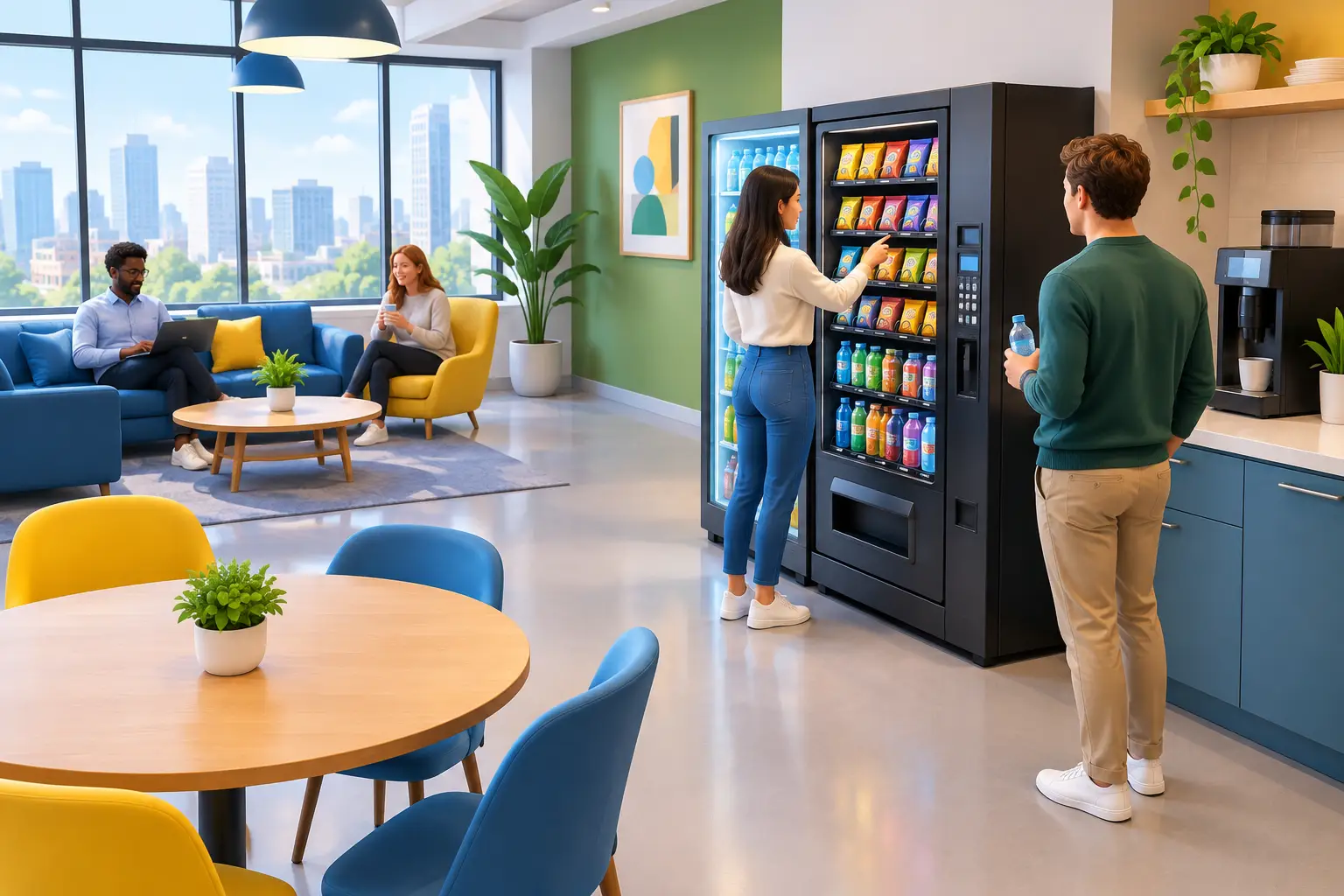
A break room vending machine should not become another item on an office manager’s weekly problem list. When popular drinks sell out early, payment readers fail, or empty slots stay empty for days, employees notice. Smart vending gives workplaces a more responsive way to offer snacks and beverages while giving service providers clearer information about what the location actually needs.
For offices, commercial buildings, healthcare facilities, and other shared workplaces, the value is not simply a newer-looking machine. The right vending program supports employee convenience, reduces administrative effort, and helps keep the break room ready throughout the workweek. As with office coffee, water, and supplies, dependable service makes the difference between an amenity that works and equipment that creates avoidable calls.
What Smart Vending Means for the Workplace
Smart vending uses connected technology to improve the buying and servicing experience. Depending on the equipment, that can include cashless payment options, touchscreen displays, remote inventory monitoring, product-level sales reporting, and automatic alerts when a machine needs attention.
The practical benefit is straightforward: the vending operator can make better service decisions before a machine becomes a problem. Rather than relying only on a fixed route schedule or an employee report that a favorite item is gone, the provider can review inventory activity and plan replenishment around actual demand.
For a busy office, this can mean a better mix of cold beverages, energy drinks, snacks, better-for-you choices, and familiar favorites. For the person responsible for workplace amenities, it means fewer interruptions and less time spent coordinating separate suppliers.
Smart technology does not eliminate the need for hands-on service. It makes hands-on service more informed. A connected vending machine still needs a local team that stocks it properly, addresses equipment concerns, keeps the area presentable, and answers the phone when help is needed.
Why Employees Notice the Difference
Workplace amenities affect the daily experience of coming to the office. A well-stocked vending area gives employees a convenient option between meetings, during late shifts, or when leaving the building is not practical. It can also support guests, field teams, and visitors who may not know the area.
Cashless payment is often one of the most visible improvements. Employees increasingly expect to pay with a card, mobile wallet, or contactless device instead of carrying cash. That expectation is especially relevant in offices with younger workforces, large visitor traffic, or employees who move quickly from one meeting to the next.
Product variety matters just as much. One workplace may have strong demand for bottled water, sparkling beverages, chips, and candy. Another may need protein bars, trail mix, low-sugar drinks, or afternoon coffee options. Smart vending data can help identify patterns, but the final assortment should still reflect the people using the machine. Sales reports are useful, yet they do not replace a conversation about employee preferences.
A machine that carries only the fastest-selling items may generate strong sales, but it may not serve the culture a company wants to create. The best mix balances proven favorites with practical variety. That may include traditional snacks alongside healthier selections and recognizable beverage brands employees already trust.
Smart Vending Is Also a Service Decision
Connected features are valuable, but they should not be the only factor in choosing a vending provider. A touchscreen cannot restock a machine. Remote reporting does not solve a refrigeration issue. And a large product catalog means little if the products your employees want are not consistently available.
When evaluating smart vending, decision-makers should look closely at the provider’s local service structure. Ask how often machines are serviced, how product assortments are reviewed, what happens when equipment needs repair, and who is accountable for resolving issues. These details are especially important in South Florida, where active commercial locations often have high beverage demand and equipment must perform reliably in warm conditions.
A full-service partner can also simplify break room management. Many businesses prefer one provider for vending, coffee equipment, coffee and tea products, water service, and break room essentials. Centralizing those services can reduce ordering complexity and create a more consistent experience for employees.
Certified Coffee Service has supported workplace refreshment programs since 1975 with a service-first approach built around dependable equipment, recognized products, and personal account support. For businesses that value local accountability, that service focus is as important as the technology inside the machine.
How to Determine Whether Smart Vending Fits Your Location
Smart vending is a strong fit for many commercial environments, but the right setup depends on location traffic, employee count, operating hours, and available space. A small office with limited daily traffic may benefit from a compact machine with dependable cashless payment and a focused product selection. A larger corporate office, manufacturing site, or multi-tenant property may need multiple machines and a broader mix of beverages, snacks, and food options.
Before selecting equipment, consider the number of people who use the break room and when they use it. A location with a large daytime workforce has different needs than a facility with evening or overnight shifts. A machine that is full on Monday morning but depleted by Wednesday afternoon may need a different service frequency, a larger capacity model, or a revised product lineup.
Placement deserves attention as well. Vending performs best in a clean, visible, accessible area where employees can use it without blocking traffic. The machine needs appropriate power, adequate space for doors to open, and enough clearance for service. If the break room is difficult to reach, employees may skip it even when the products are right.
It is also wise to think about the vending area as part of the overall refreshment experience. A bean-to-cup coffee system, filtered water solution, and well-maintained vending machine can work together to make the break room more useful. The goal is not to add equipment for its own sake. The goal is to create convenient options that fit the way your employees work.
Questions to Ask a Smart Vending Provider
The strongest vending programs start with clear expectations. Technology features should be easy to explain, but service standards should be equally clear. Before moving forward, ask how the provider handles equipment maintenance, inventory replenishment, cashless payment issues, product requests, and service calls.
You should also ask whether the product mix can evolve. Employee tastes change. Seasonal beverage demand changes. A snack selection that worked for one tenant group may not work after a company expands or changes shifts. A responsive provider should be able to use sales information and direct feedback to make practical adjustments.
Consider the reporting that is available, but keep it in perspective. Reports can show what sells, which machines are active, and where replenishment may be needed. They are most useful when a service team reviews the information and acts on it. Data without follow-through does not improve the break room.
Finally, ask who will support the account after installation. The answer should include real people, clear processes, and reasonable response expectations. Workplace managers should not have to chase down a vendor every time a machine needs attention.
The Right Balance of Technology and Personal Support
Smart vending can make workplace refreshments more convenient, more flexible, and easier to manage. It can help providers stock more accurately, give employees modern payment choices, and keep decision-makers better informed about usage. Still, the technology is only one part of the experience.
A dependable vending program combines connected equipment with quality products, thoughtful assortment planning, and service that stays accountable after the machine is installed. When your break room is supported by both useful technology and a responsive local team, employees can spend less time looking for a snack or drink and more time getting through their day comfortably.