
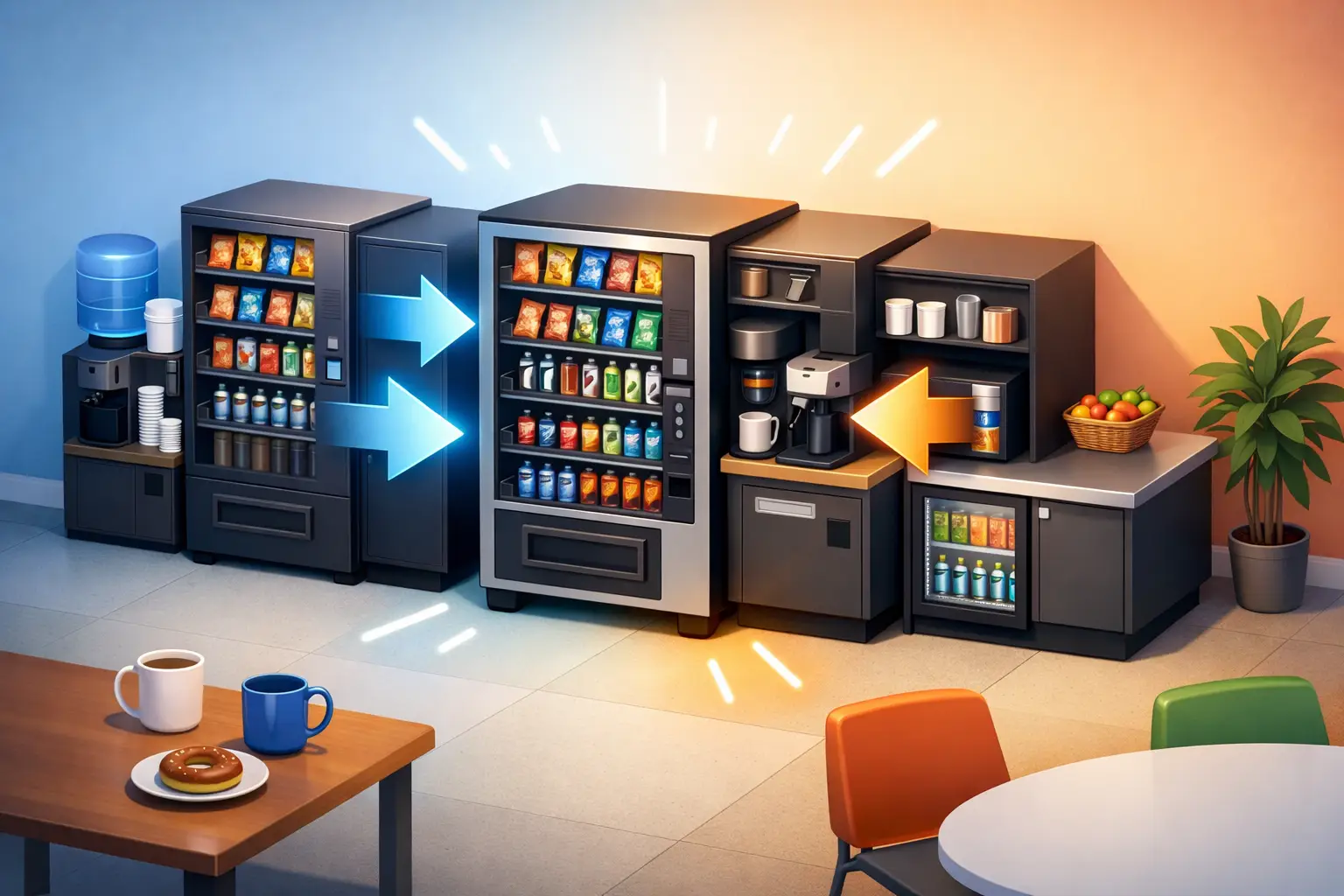
A break room can look well stocked on Monday morning and become a source of calls, emails, and frustration by Thursday. Coffee is low, the water dispenser needs attention, vending is waiting on a separate route, and someone is tracking down cups from yet another supplier. Breakroom vendor consolidation gives office and facilities teams a practical way to replace that fragmented process with one accountable service partner.
For businesses that value employee experience and operational consistency, consolidation is not simply about reducing invoices. It is about making sure the everyday amenities employees rely on are available, working, and properly maintained.
What Breakroom Vendor Consolidation Means
Breakroom vendor consolidation means working with one provider for multiple workplace refreshment needs rather than assigning each category to a different company. Depending on the workplace, that may include coffee equipment and coffee products, tea, filtered water, vending, cups, condiments, paper goods, and pantry essentials.
The goal is straightforward: fewer vendor relationships to manage and clearer ownership when something needs to be replenished, repaired, or adjusted. Instead of asking whether the coffee company, water provider, or supply distributor handles a problem, your team has one point of contact that understands the full break room.
That distinction matters. A low product price does not help much if a brewer is out of service, a delivery is missed, or employees have limited choices because no one is looking at the break room as a whole.
Why Multiple Vendors Create More Work Than Expected
Using separate vendors can make sense when a business has highly specialized needs or operates across locations with different requirements. But for many offices, the hidden administrative cost adds up quickly.
Each vendor may have its own delivery schedule, minimum order, invoice format, service line, account representative, and contract terms. Office managers can spend valuable time reconciling charges, monitoring deliveries, reporting equipment issues, and filling gaps when one supplier does not cover a basic item.
There is also a visibility problem. One vendor may see coffee consumption, while another sees bottled water use and another sees snack sales. No single partner has the full picture of how employees use the break room. That can lead to over-ordering in one category and shortages in another.
Consolidation brings those details into one service plan. It gives decision-makers a clearer view of usage, spending, equipment needs, and opportunities to improve the employee experience without creating more work for internal staff.
The Operational Benefits of a Single Service Partner
The strongest case for consolidation is often service accountability. When coffee, water, vending, and supplies come from multiple companies, problems can be passed from one provider to another. With a qualified full-service partner, the responsibility is clear.
A consolidated program can simplify purchasing and reduce invoice processing. Procurement teams have fewer accounts to manage, while office administrators spend less time placing small, separate orders. This can be particularly helpful for businesses with recurring needs but limited administrative bandwidth.
Equipment support also becomes more coordinated. A workplace may need a bean-to-cup machine for a busy employee lounge, a traditional brewer for meetings, a single-cup system for variety, and filtered water in common areas. The right provider can recommend equipment based on traffic, preferences, and available space, then support it after installation.
Employees notice the difference. Fresh coffee, recognizable brands, tea options, cold water, and dependable vending make the break room feel cared for. These details support a professional workplace culture and give employees a convenient reason to step away, recharge, and connect.
Where Consolidation Can Improve Cost Control
Vendor consolidation should not be confused with choosing the lowest bid for every product. The better question is whether the overall program delivers dependable value.
A single provider may help reduce duplicate delivery charges, emergency purchases, and the administrative cost of managing several accounts. It can also make it easier to align deliveries with actual consumption. If a particular coffee variety moves quickly while another sits unused, a service partner can adjust the mix instead of continuing a one-size-fits-all order.
Cost control also includes avoiding downtime. A broken coffee machine can lead to employee complaints, lost time, and unplanned retail coffee runs. Preventive service and responsive repairs protect the investment in workplace equipment and help maintain a consistent routine.
Still, consolidation is not automatically the right choice in every situation. Large organizations with national contracts, highly regulated purchasing rules, or unusual product requirements may need more than one provider. The key is to compare the total cost of ownership, service responsiveness, product selection, and equipment support – not just individual unit prices.
How to Evaluate a Consolidated Break Room Provider
Before making a change, start with an honest review of the current break room. Identify every active supplier, what each one provides, how often they deliver, and who handles service issues. This process often reveals overlaps, gaps, and recurring frustrations that were previously treated as separate problems.
Then evaluate prospective providers based on their ability to support the complete program. Product variety matters, but so does the provider’s ability to maintain equipment, communicate clearly, and respond when service is needed.
Ask About Service Before Signing
A provider should be clear about who handles equipment repairs, how service requests are submitted, and what response expectations look like. Ask whether maintenance is available for each machine type and whether the provider has local personnel who can address issues directly.
For South Florida offices, local accountability can be especially valuable. A provider with established market experience understands the pace of commercial workplaces and the importance of showing up when promised. Certified Coffee Service has built its approach around that commitment since 1975: Service Above All.
Confirm Product and Equipment Flexibility
A consolidated program should not force every employee into one coffee format. Some workplaces want premium automatic espresso-style beverages, while others need a dependable traditional brewer for large volumes. Many benefit from a combination of fresh-brewed coffee, single-cup choices, tea, filtered water, and vending.
Look for a provider that can support recognized brands employees know and enjoy, including coffee, tea, and related break room products. The right mix should reflect your headcount, work schedules, visitor traffic, and culture.
Review Delivery and Replenishment Practices
Reliable replenishment is central to a successful program. Discuss delivery frequency, inventory monitoring, ordering procedures, and what happens when consumption changes. Seasonal meetings, hiring growth, and office events can all affect demand.
A good partner does not simply drop off cases and leave. They pay attention to what is being used, what is running low, and whether the break room setup still fits the workplace.
A Practical Transition Plan
Changing vendors does not need to disrupt the office. Begin by creating a list of current equipment, products, contracts, and service concerns. Next, determine which categories should be included in the consolidated program and which, if any, need to remain separate.
Plan installation and product changeovers around normal business operations. If new brewers, water systems, or vending equipment are involved, confirm placement, electrical access, water connections where required, and employee communication before delivery day. A thoughtful transition prevents avoidable surprises.
Once the program is in place, review it after the first few weeks and again after a few months. Employee preferences and consumption patterns provide useful feedback. A break room should be managed as an active workplace amenity, not set up once and ignored.
Make the Break Room Easier to Manage
The best breakroom vendor consolidation arrangement gives your team fewer details to chase and employees more confidence in the break room they use every day. It replaces scattered orders and unclear service responsibilities with a program built around reliable products, working equipment, and responsive support.
When one trusted partner takes responsibility for the details, your office team can spend less time solving coffee and supply problems and more time supporting the business.
3 comments