
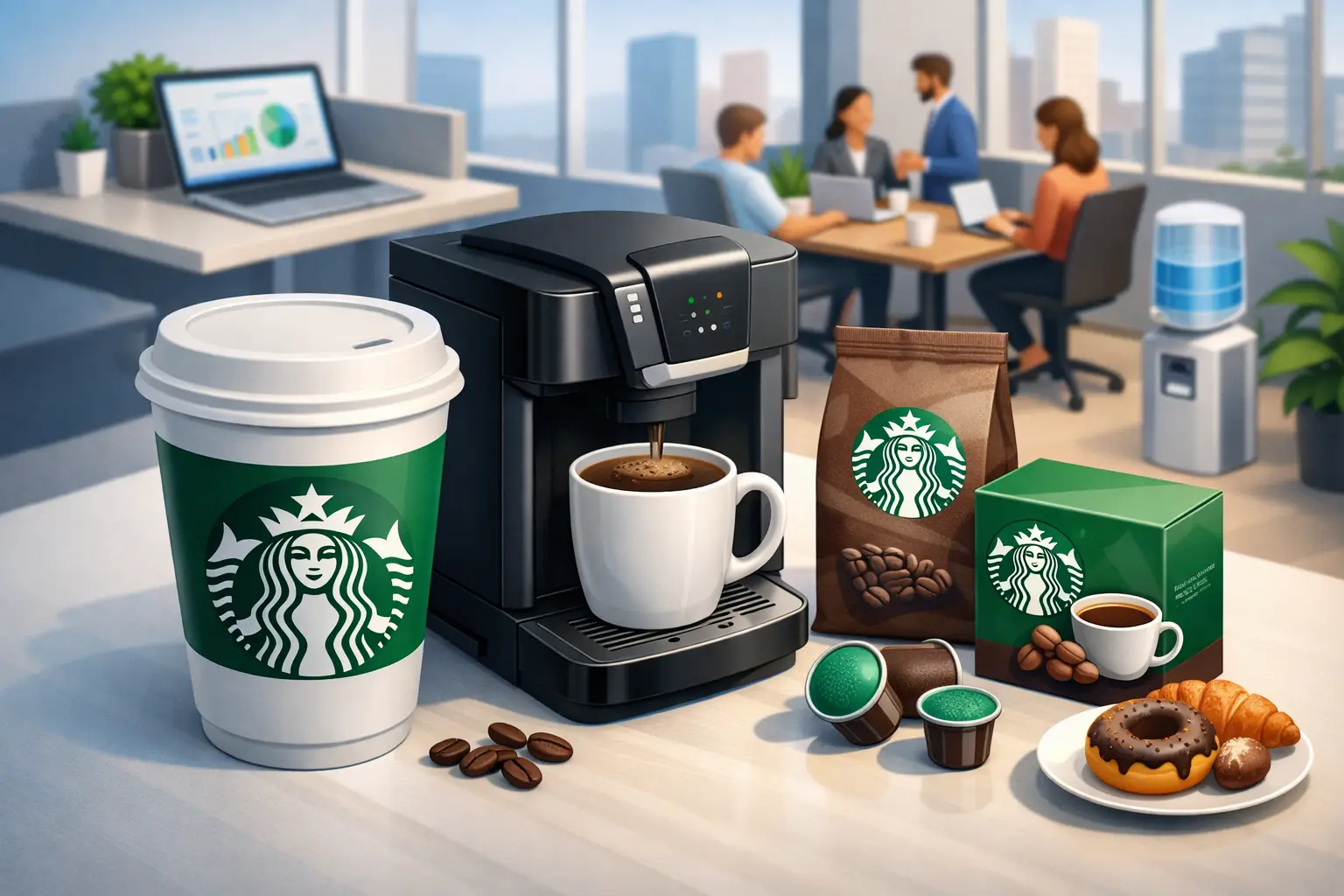
A familiar green logo can do more for an office break room than fill a coffee canister. It can make the coffee station feel intentional, give employees a recognizable choice, and offer visitors a better first impression. But brand recognition alone does not keep a workplace coffee program running. In this Starbucks office coffee review, the real question is whether the coffee, equipment format, replenishment plan, and service support fit the way your team works.
For many offices, Starbucks is a strong option because employees already know what to expect. The best results come when that familiarity is matched with the right brewer and a local service partner that handles the details behind the counter.
Starbucks Office Coffee Review: What Stands Out
Starbucks coffee brings a recognizable flavor profile to the workplace. Many blends are known for a fuller, more developed roast character than lighter office coffees. That can be a meaningful benefit for teams with employees who prefer a bold cup, especially in busy professional environments where coffee is part of the daily routine.
The brand also gives office managers an easy way to upgrade the perception of their break room. Employees may not discuss every supply decision, but they notice when a trusted coffee brand is available. For recruiting, client-facing offices, and workplaces focused on employee experience, that recognition can carry real value.
Still, Starbucks is not automatically the best fit for every coffee drinker. A darker roast profile can be too intense for employees who prefer mild or lighter-bodied coffee. The practical answer is variety. A program that offers Starbucks alongside decaf, tea, creamers, sweeteners, and water options serves more people than a one-product setup.
Flavor and consistency depend on the format
Coffee quality is affected by more than the name on the package. A Starbucks ground coffee program can produce a satisfying pot of coffee, but only when the brewer is clean, the coffee-to-water ratio is correct, and product is rotated properly. A neglected glass-pot brewer can make any premium coffee taste stale or bitter.
Single-cup systems offer a different experience. They provide portion control, give employees individual flavor choices, and reduce the concern of a half-full pot sitting too long. They are especially useful for smaller offices, hybrid teams, conference rooms, and locations with staggered schedules. Their trade-off is a higher cost per cup and the need to manage pod inventory carefully.
Bean-to-cup and premium automatic machines can create a more elevated coffee experience for larger offices with consistent demand. These systems can deliver fresh-ground coffee with less hands-on preparation, but they require regular cleaning, water management, and responsive maintenance. The machine should support the volume your office actually uses, not just the experience you want to provide.
Choosing the Right Starbucks Office Coffee Setup
The right format starts with a simple operational question: how does your office consume coffee from morning through afternoon? An office with 15 people who arrive at the same time has different needs than a 150-person workplace with meetings, visitors, and multiple shifts.
Traditional brewers remain a dependable choice for high-volume service. They work well in offices where teams want regular coffee available throughout the day and where staff are comfortable brewing fresh batches. Thermal brewers are often the better option when freshness matters. They hold coffee without a hot plate, helping preserve flavor during a meeting or a long morning rush.
A single-cup system is usually better when demand is lower or more varied. It allows employees to brew coffee when they want it, minimizes waste, and can make break room management easier. However, a single-cup program should be sized thoughtfully. A small machine may create a line during peak periods, while too few pod choices can limit the benefit of having the system in the first place.
For an executive area, reception space, or premium employee lounge, an automatic coffee machine may be worth the investment. These systems can offer a polished presentation and fresh coffee at the touch of a button. They also raise expectations. If the equipment needs attention, service needs to be timely. A premium machine that is out of order during a busy morning does not create a premium experience.
Consider the complete beverage station
A Starbucks office coffee program should not be evaluated as coffee alone. The surrounding supplies determine whether employees can make the cup they want. That includes cups and lids, stirrers, sugar and sugar alternatives, creamers, napkins, and coffee condiments that are replenished before they run out.
Tea is equally important in many offices. Offering familiar tea selections ensures that non-coffee drinkers and afternoon beverage drinkers are considered. Water service can also improve the overall break room experience, particularly in South Florida offices where cold, clean drinking water is a daily workplace essential.
Bundling coffee, tea, water, vending, and break room supplies through one provider can reduce administrative work. Instead of monitoring several vendors and separate delivery schedules, office managers can focus on a single relationship with clear accountability.
Cost: Look Beyond the Price of Coffee
The cost of a Starbucks office coffee program depends on the coffee format, employee count, serving volume, equipment requirements, and supply mix. Looking only at the cost of each bag or pod can lead to a program that appears economical but creates waste, service calls, or employee frustration later.
A traditional brewer often delivers the lowest cost per cup for a busy office. It is a practical fit when consumption is predictable and fresh pots are brewed regularly. Single-cup coffee typically costs more per serving, but it can reduce waste when daily volume fluctuates. That difference matters in hybrid workplaces where attendance changes from one day to the next.
Equipment support should be part of the calculation. A low-cost machine is not a bargain if it frequently needs troubleshooting, lacks capacity, or creates inconsistent results. Reliable equipment, scheduled product deliveries, and a knowledgeable service team can protect the value of the coffee investment over time.
There is also a people factor. Employees who have access to quality coffee are more likely to use the break room, take productive breaks, and avoid leaving the office for a midmorning coffee run. That does not mean every workplace needs the most expensive setup. It means the program should reflect the standards your organization wants to provide.
Service Is the Deciding Factor
The strongest Starbucks office coffee review is not only about flavor. It is about whether the program works on an ordinary Tuesday when the coffee machine needs attention, a department meeting needs extra supplies, or the office runs out of cups before the next delivery.
A dependable office coffee provider should help assess your headcount, traffic patterns, and available counter space before recommending equipment. They should also keep product replenishment organized and provide clear support when a machine needs service. This is where local accountability matters. A break room is a small part of an office, but disruptions are noticed immediately.
Certified Coffee Service approaches workplace beverage programs with Service Above All in mind. For South Florida businesses, that means pairing recognized coffee brands with equipment choices and hands-on support designed for the realities of a working office.
Is Starbucks a Good Choice for Your Office?
Starbucks is a good workplace coffee choice when brand recognition, fuller coffee flavor, and an elevated break room experience are priorities. It can work equally well in a traditional brewer program, a single-cup setup, or a premium automatic system, provided the equipment matches demand and the station is maintained properly.
It may be less ideal as the only option in an office with a wide range of taste preferences. In that case, pair it with complementary coffee profiles, decaf, and tea so the break room feels welcoming to everyone. The best office coffee program is not the one with the most recognizable package. It is the one employees can count on, enjoy every day, and find ready when they need it.