
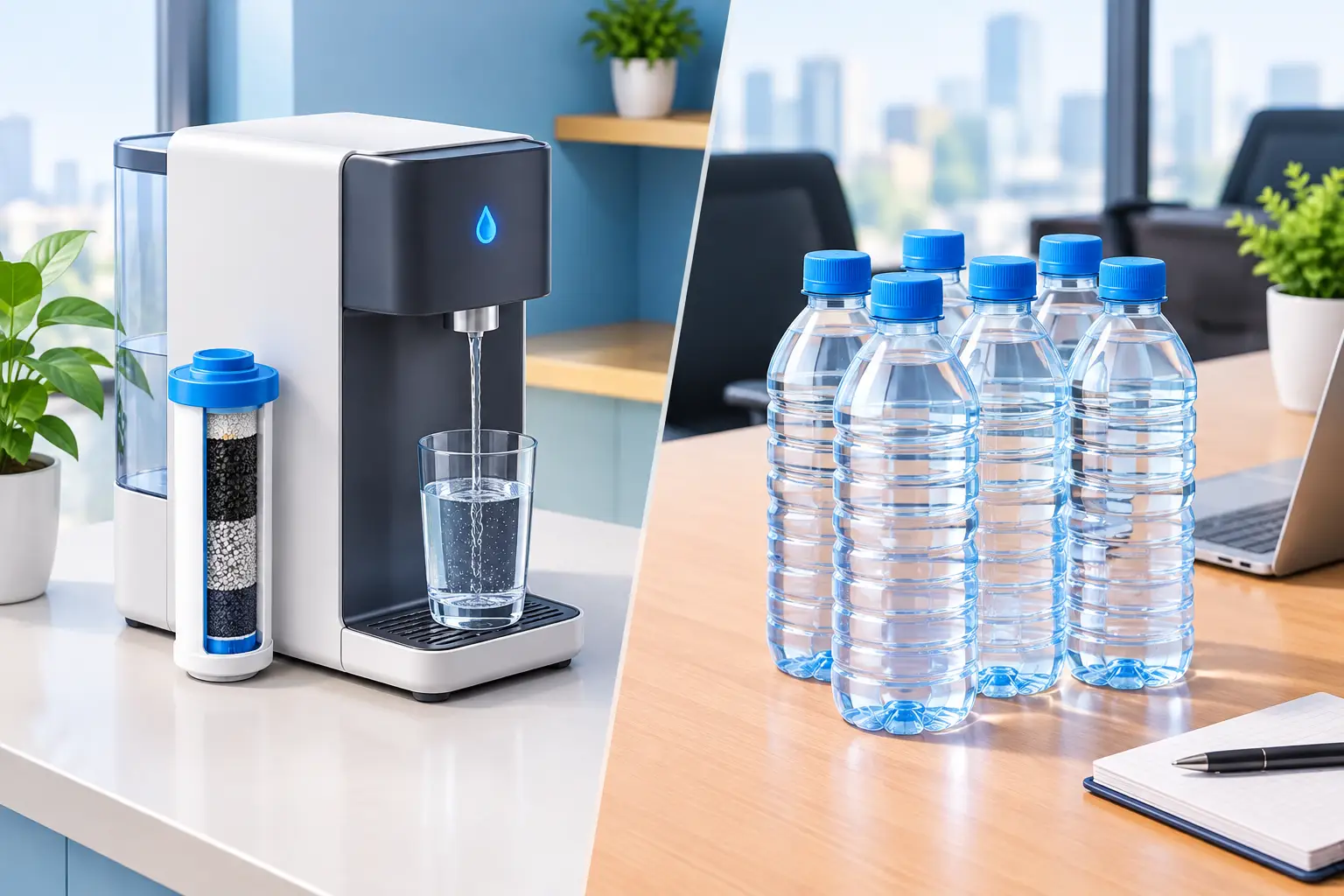
A case of bottled water can solve an immediate office need, but it also creates a recurring task: ordering, receiving, lifting, storing, chilling, and recycling bottles. The filtered vs bottled water decision is not simply about what employees prefer to drink. For facilities and office managers, it affects operating costs, break room space, service needs, and the everyday employee experience.
The right answer depends on your workplace size, water usage, building setup, and the level of convenience your team expects. A small office with limited plumbing access may have different needs than a busy South Florida workplace where employees and visitors consume water throughout the day. The best solution is the one that provides consistently good water without creating another item for your team to manage.
Filtered vs Bottled Water: The Workplace Difference
Bottled water is familiar and easy to understand. Individual bottles are portable, sealed, and simple to offer in conference rooms, reception areas, catered meetings, or off-site events. Larger bottle delivery programs can also provide a dependable water source for offices that want a dispenser without connecting it to a water line.
Filtered water systems work differently. They connect to a workplace water supply and use filtration to improve taste and reduce selected contaminants, depending on the equipment and filter type. Employees fill reusable cups or bottles from a dispenser that may offer chilled, ambient, sparkling, or hot water options.
Both options can support a professional break room. The more useful comparison is how each one performs in the areas that matter to the person responsible for keeping the office running.
Cost Is More Than the Price Per Bottle
Bottled water has a straightforward purchase price, which can make budgeting feel simple. However, the total cost includes more than the product itself. Delivery fees, fuel surcharges where applicable, cooler rental, storage space, employee time spent changing large bottles, and the occasional last-minute order all add to the picture.
For workplaces that use a high volume of water, a point-of-use filtered system may offer more predictable monthly costs. There is no recurring delivery of cases or five-gallon bottles, and there is less inventory to monitor. Instead, costs generally center on equipment, installation, scheduled filter changes, sanitation, and service.
That does not mean filtered water is automatically less expensive for every office. A small team that uses water lightly or only needs packaged water for occasional meetings may find bottled water practical. Cost advantages become clearer when regular consumption is high and bottled water storage is becoming a burden.
Consider the hidden labor cost
Office managers often absorb water-related work into a long list of smaller responsibilities. Someone has to notice when supplies are low, find room for incoming cases, move them to the break room, refill refrigerators, and handle empty packaging. A filtered water dispenser can reduce those touchpoints, particularly in larger offices.
On the other hand, a dispenser requires reliable maintenance. Filters need to be replaced on schedule, and the unit needs professional attention if performance changes. The savings only hold up when the service plan is dependable.
Convenience Depends on How Your Team Uses Water
Individual bottled water wins on portability. It is ready for a client meeting, a training room, a delivery driver, or an employee heading out the door. Sealed bottles are also useful when sanitation expectations or event logistics make single-serve packaging the most practical choice.
For daily hydration inside the office, filtered water is often more convenient. Employees can refill a tumbler or bottle whenever they want, and chilled water is available without waiting for a refrigerator to make room. A well-placed dispenser can also reduce traffic around the coffee station and encourage people to take a quick break away from their desks.
Placement matters. A water solution that is too far from the work area will be used less often, no matter how good the water tastes. In larger spaces, consider traffic patterns, conference room locations, employee entrances, and areas where visitors wait. The goal is to make hydration easy without turning it into a supply-management project.
Taste, Quality, and Employee Confidence
Employees notice water quality quickly, especially in regions where local tap water may have a noticeable taste or odor. Filtration can improve the drinking experience by addressing common concerns such as chlorine taste, sediment, or unpleasant odor. The exact result depends on the source water and the filtration technology used, so it is worth matching the system to the location rather than making broad assumptions.
Bottled water offers consistency from bottle to bottle, which is one reason it remains a trusted choice for many businesses. Still, bottled water is not one uniform product category. Some brands use spring water, while others use purified municipal water, and mineral content can vary. If taste is a key factor for your workforce, a small office tasting or employee feedback session can be more useful than choosing based on label recognition alone.
For either choice, confidence comes from proper handling. Bottled water should be stored in a clean, temperate location away from direct sun. Filtered systems should receive regular filter replacements and cleaning according to the manufacturer’s recommendations. Quality equipment needs quality service behind it.
Sustainability and Waste in the Break Room
For offices working to reduce waste, reusable bottles paired with filtered water can make a meaningful difference. Fewer single-use plastic bottles means less packaging to transport, store, and dispose of. It also reduces the volume of recycling that employees and building staff must sort and manage.
Bottled water can still have a place in a responsible workplace plan. Keep a supply for guests, emergency preparedness, outdoor events, or situations where reusable containers are not practical. The decision does not have to be all or nothing. Many offices use filtered water as their everyday solution and reserve individual bottles for specific needs.
A balanced approach also avoids asking employees to choose between sustainability and convenience. Provide clean refill stations, encourage reusable bottles, and make sure the dispenser capacity matches the number of people using it. If the unit frequently runs warm or empty during peak periods, employees will return to packaged drinks.
Service Should Be Part of the Decision
Water equipment is easy to overlook until it stops working. A dispenser that leaks, does not chill properly, or needs a filter change can disrupt the break room just as quickly as an out-of-service coffee machine. That is why equipment selection should include the service model, not just the product features.
Ask practical questions before choosing a provider. Who handles installation? How are filter changes scheduled? What happens if the unit needs service? Is there a local team available when an issue affects the office? Clear answers help prevent small break room problems from becoming facilities headaches.
For businesses that prefer one accountable partner for coffee, tea, water, vending, and supplies, a full-service workplace beverage provider can simplify coordination. Certified Coffee Service supports offices with water solutions alongside the products and equipment that keep a break room prepared for the workday. The standard should be simple: dependable equipment, consistent replenishment, and responsive support when it is needed.
Which Option Fits Your Office?
Choose bottled water when portability, individual servings, limited plumbing access, or occasional use are the priority. It works well for events, client-facing spaces, and offices that need flexibility more than daily volume efficiency.
Choose filtered water when your team drinks water throughout the day, storage is limited, and you want to reduce repetitive ordering and packaging waste. It is especially well suited to offices that encourage reusable drinkware and want a reliable hydration option alongside coffee and tea.
For many workplaces, the strongest setup uses both with clear roles. Make filtered water the everyday break room staple, then keep bottled water available for meetings, visitors, and special situations. Start by looking at how much water your office actually uses in a typical week, where the current friction occurs, and what level of service will keep the solution working without extra effort from your staff.