
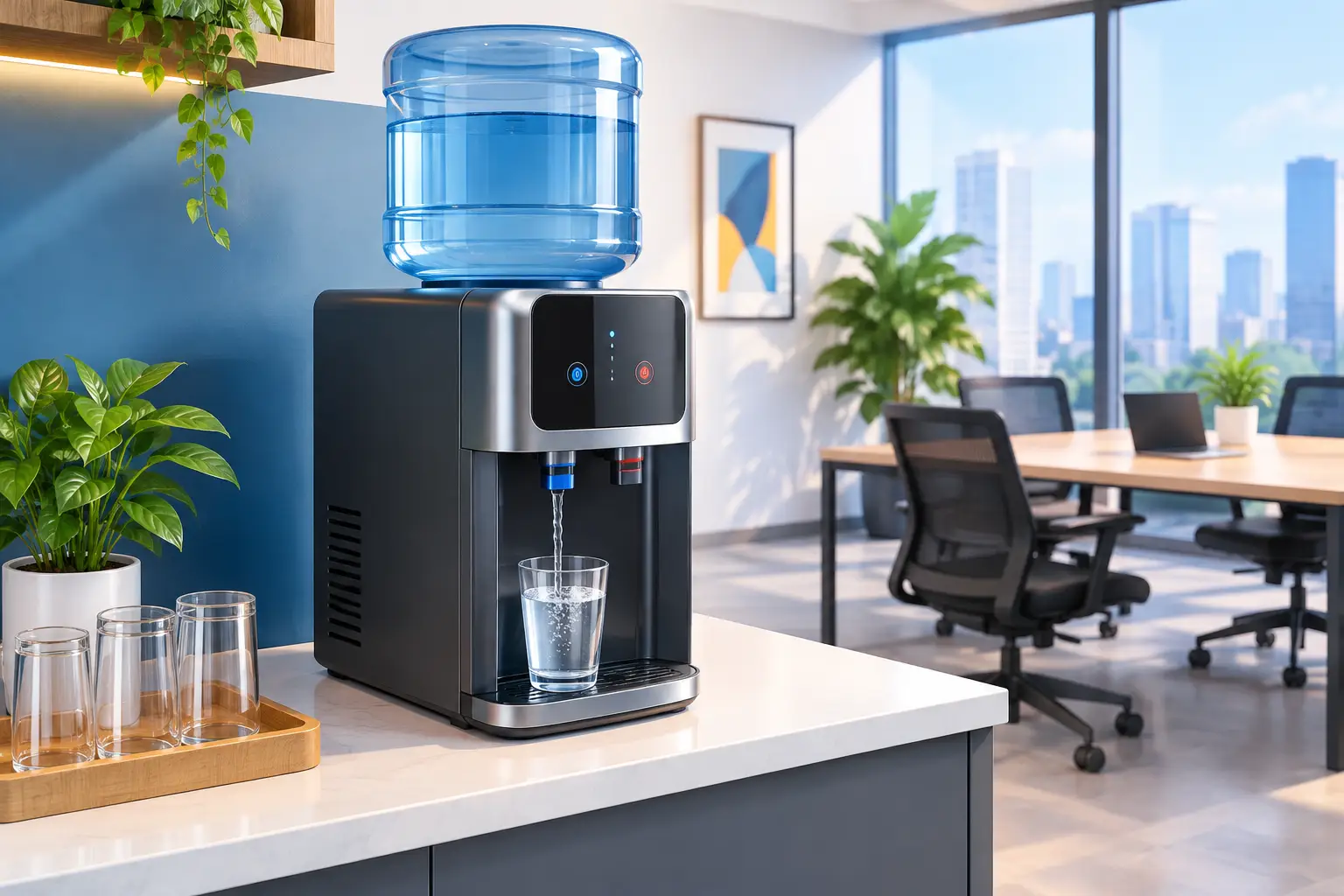
A crowded break room should not require employees to wait in line for a cold glass of water. The best countertop water dispensers give offices a compact, professional way to provide chilled, hot, or room-temperature water without taking up valuable floor space. For facilities teams and office managers, the right choice comes down to more than appearance. It must match daily usage, available plumbing, sanitation expectations, and the level of support needed to keep service consistent.
Countertop water dispensers work especially well in small offices, conference areas, reception spaces, healthcare waiting rooms, and satellite break rooms. They offer a cleaner alternative to cases of bottled water and can make tea, instant soups, and hydration more convenient throughout the day. The strongest option is the one that performs reliably for your team, not simply the one with the longest feature list.
What Makes a Countertop Dispenser Right for an Office?
A countertop dispenser sits on a sturdy counter, credenza, or dedicated water station rather than directly on the floor. Its smaller footprint makes it practical where space is limited, but compact does not have to mean underpowered. Many commercial models can serve a steady flow of employees when selected according to the office’s actual demand.
The first decision is usually between bottleless and bottled systems. Bottleless dispensers connect to a building water line and filter water at the point of use. They are a practical choice for offices that want a continuous supply and fewer deliveries or storage concerns. Bottled countertop dispensers use a water bottle placed above or inside the unit, depending on the design. They can be useful where plumbing access is difficult or where a flexible, portable setup is needed.
For most established workplaces, a bottleless solution offers the simpler long-term experience. There are no heavy bottles to lift, no empty bottles accumulating near the break room, and no concern that water will run out in the middle of a busy day. Still, bottled service may be the better fit for temporary locations, leased spaces with plumbing restrictions, or low-volume environments.
Best Countertop Water Dispensers by Office Need
There is no single best countertop water dispenser for every workplace. An executive suite of 12 people needs something different from a 75-person call center or a client-facing medical office. Selecting by use case keeps the investment practical and helps prevent employee frustration later.
For small offices and private suites
A compact cold-and-room-temperature dispenser is often sufficient for a small office with modest daily traffic. Choose a model with a dependable reservoir, easy-to-use push buttons or paddles, and a compact shape that fits safely beneath cabinets. If employees regularly make tea or oatmeal, add hot-water capability with a child-safety lock.
In these environments, simplicity matters. A unit with too many settings can create more questions than value. A clean look, consistent water temperature, and straightforward filter replacement are usually the priorities.
For busy break rooms
Larger teams benefit from a commercial-grade bottleless dispenser with a higher recovery rate. Recovery rate refers to how quickly the equipment can chill or heat additional water after repeated use. A unit may hold enough water for a few servings but struggle when several employees fill tumblers during a break. That is when capacity and recovery performance become more important than countertop size alone.
Look for separate cold and hot water reservoirs, a durable dispensing area that accommodates larger bottles, and controls designed to stand up to frequent use. In a high-traffic office, a model that makes both cold drinking water and hot beverages accessible can reduce demand on the coffee station and improve the overall break room experience.
For conference rooms and customer-facing spaces
Appearance and noise level carry more weight in reception areas, showrooms, and conference rooms. A sleek countertop unit can support guests without introducing the visual clutter of disposable bottles. Consider a dispenser with touchless or low-contact dispensing, a quiet cooling system, and a design that is easy for visitors to understand without instruction.
If the unit will be used for meetings, make sure the drip tray is large enough to manage occasional spills and easy to remove for cleaning. A small detail like this prevents a polished amenity from becoming a maintenance issue.
For health-conscious workplaces
Workplaces focused on wellness often prefer a filtration system that improves taste and reduces common contaminants found in municipal water. The exact filtration method should be matched to the local water supply and the facility’s goals. Carbon filtration can improve taste and odor, while more advanced filtration options may address additional concerns.
Do not assume that every filter delivers the same result. Ask what the system is designed to reduce, how often filters need to be replaced, and whether the unit has an indicator that alerts staff when service is due. Clear maintenance planning is part of delivering reliable water quality.
Features That Matter More Than a Flashy Control Panel
A countertop dispenser should make hydration easier, not give the office another machine to troubleshoot. When comparing equipment, focus on the features that affect daily performance.
Temperature options are the starting point. Cold water is essential for most offices, while hot water adds value for tea, cocoa, and instant meals. Room-temperature water is useful for employees who prefer it and can be a sensible option for spaces where hot water is not needed. Some systems provide all three, but added functionality should serve a clear workplace need.
Sanitation is equally important. Features such as antimicrobial surfaces, protected dispensing nozzles, sealed reservoirs, and touchless activation can help support a cleaner shared environment. These features do not replace routine cleaning and preventive maintenance, but they can make daily use more hygienic.
A properly sized drip tray, cup clearance, and spill-resistant design also deserve attention. Employees increasingly use refillable bottles and insulated tumblers, so a dispenser that only accommodates small cups may create unnecessary spills. Measure the available counter space and vertical clearance before selecting a unit, especially if it will sit beneath cabinetry.
Energy use is worth considering, but it should be evaluated in context. Energy-saving modes can lower operating costs during off-hours. However, a setting that limits cooling or heating too aggressively may not serve a busy office well when employees arrive. The goal is dependable performance during operating hours with sensible efficiency when the office is closed.
Installation and Service Are Part of the Decision
The dispenser itself is only one part of a successful water program. For a bottleless unit, installation requires access to a suitable water line, a nearby electrical outlet, and a stable countertop. A professional site review can identify the right placement, confirm plumbing requirements, and avoid putting equipment where it interferes with traffic or food-prep areas.
Ongoing service deserves the same level of consideration. Filters need replacement on schedule, dispensing areas need regular cleaning, and equipment occasionally requires adjustment or repair. An office manager should not have to track filter dates, source replacement parts, or figure out why a unit is not dispensing cold water.
A full-service provider can coordinate equipment selection, installation, scheduled maintenance, filter changes, and responsive support. That approach is particularly valuable for businesses managing multiple break room needs, including coffee equipment, tea, vending, and supplies. Certified Coffee Service brings this type of local, hands-on support to South Florida workplaces with a focus on Service Above All.
A Simple Buying Checklist for Office Managers
Before choosing a dispenser, confirm these practical details with your team and service provider:
- Estimated number of daily users and peak-use periods
- Available counter space, cabinet clearance, power, and water access
- Required temperatures: cold, hot, room temperature, or a combination
- Filtration goals based on local water quality and employee preferences
- Cleaning, filter replacement, and repair responsibilities
- Whether a bottleless or bottled setup best fits the location
These questions prevent the most common mismatch: choosing a compact residential-style unit for a commercial break room that needs greater capacity and stronger service support.
Create a Water Station Employees Will Actually Use
Placement can influence adoption as much as equipment selection. A water dispenser hidden in a back utility area will not provide the same value as one positioned near the coffee station, lunchroom, or central collaboration space. Keep the surrounding area organized with cups if needed, a recycling option, and enough clear counter space for employees filling bottles.
It also helps to think of water as part of the complete workplace beverage experience. Employees may start the morning with coffee, switch to tea in the afternoon, and refill a water bottle throughout the day. A dependable countertop dispenser supports that routine while reducing trips to the store, plastic bottle waste, and interruptions caused by an empty water cooler.
The right countertop water dispenser should quietly do its job every day: deliver clean-tasting water at the temperatures your employees want, fit the space you have, and receive the service it needs before a small issue becomes a break room disruption.
2 comments