
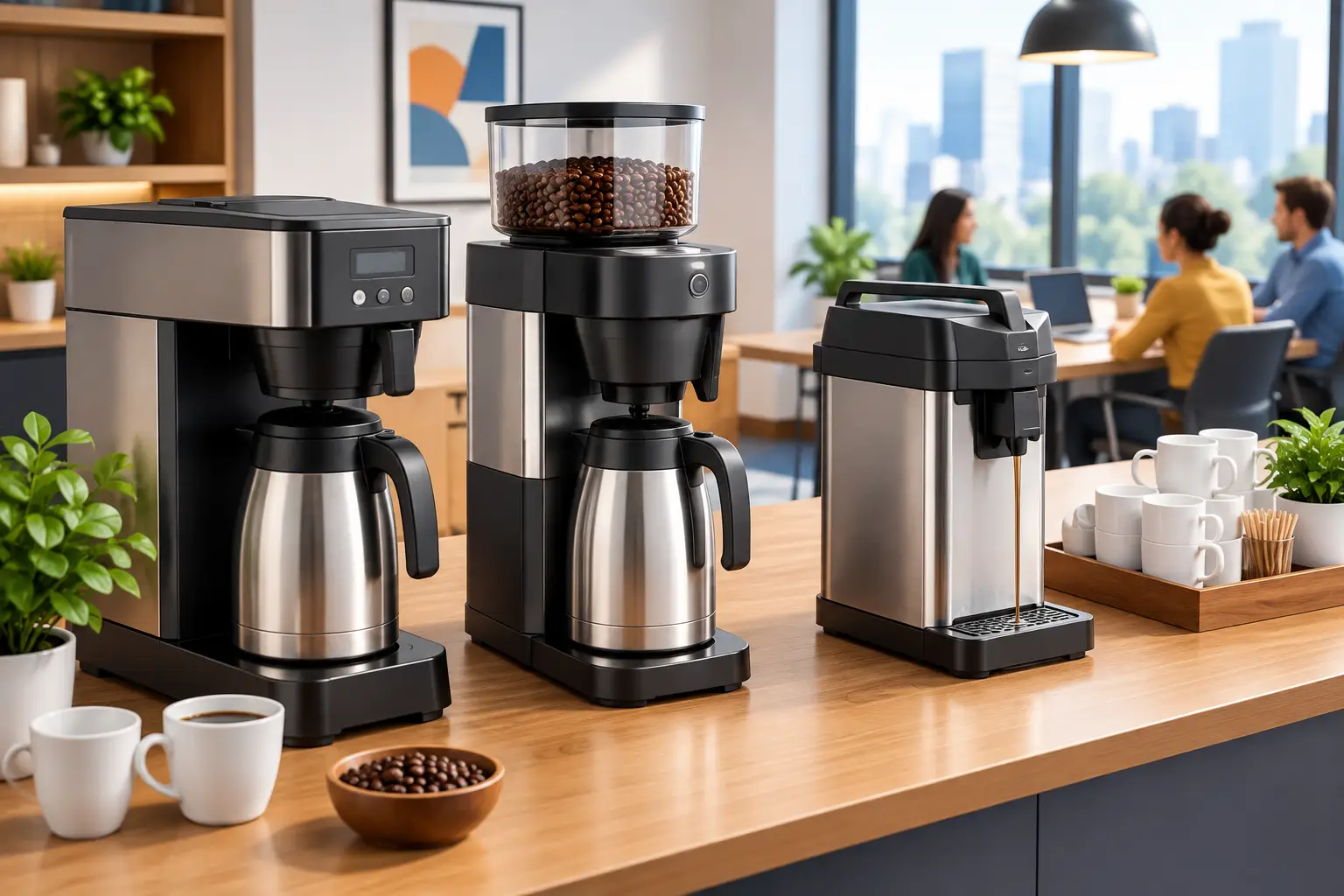
The coffee maker becomes a very visible part of the workday the moment it cannot keep up. A slow brew cycle, empty airpot, burned coffee, or machine that needs frequent attention can affect employee satisfaction and create extra work for office staff. Commercial brewer reviews are most useful when they go beyond a star rating and examine how a machine will perform during a real business day.
For offices, medical facilities, dealerships, waiting rooms, warehouses, and other commercial settings, the best brewer is rarely just the one with the most features. It is the one that fits the number of coffee drinkers, the pace of the location, the available counter space, and the level of support behind it.
What Commercial Brewer Reviews Should Actually Measure
A commercial coffee brewer is a workplace tool, not a countertop appliance selected for occasional use. Reviews should focus on output, consistency, maintenance requirements, and the employee experience. A machine that produces excellent coffee but requires constant refilling or complicated cleaning may not be the right fit for a busy office.
Start with volume. Estimate how many cups employees and guests consume on a typical day, then consider when demand peaks. A 20-person office with steady, all-day coffee use may be well served by a thermal carafe brewer. A large office where most employees arrive between 8:00 and 9:00 a.m. may need multiple brewers, larger satellite dispensers, or a high-volume automatic system.
Brew speed matters, but it should be evaluated alongside holding capacity. Fast brewing is helpful when demand is unpredictable. However, a brewer that fills an insulated airpot or thermal dispenser before the morning rush can reduce wait time without requiring employees to brew individual pots.
Coffee quality deserves equal attention. Commercial brewers should heat water consistently and deliver a repeatable brew ratio. Those details influence flavor, aroma, and strength. Equipment cannot make stale coffee fresh, but a dependable brewer gives quality coffee a fair chance to perform as intended.
Commercial Brewer Reviews by Office Need
The strongest commercial brewer reviews compare equipment categories to the workplace, rather than treating every office as if it has the same needs.
Traditional Glass Pot Brewers
Glass pot brewers remain a practical option for smaller offices, break rooms with moderate consumption, and locations where employees prefer to see a fresh pot ready to serve. They are familiar, straightforward to operate, and can offer a lower entry cost than more advanced equipment.
The trade-off is the warming plate. Coffee can lose its fresh flavor when it sits too long, and staff must pay attention to brewing and replacing pots. This format works best when coffee is consumed quickly and someone is comfortable monitoring the station throughout the day.
Thermal Carafe and Airpot Brewers
Thermal brewers are a strong choice for organizations that want better coffee holding quality without the need for a warming plate. Coffee is brewed directly into an insulated carafe, airpot, or dispenser, helping preserve flavor over a longer serving window.
These models are especially useful for conference rooms, client-facing areas, professional offices, and teams that serve coffee in several locations. They require some planning because the thermal containers need to be cleaned and returned to the brewer, but the improvement in coffee freshness is often worthwhile.
High-Volume Satellite Brewers
For busy facilities, high-volume satellite brewers are designed to produce and hold larger batches of coffee. They can support cafeterias, warehouses, hospitals, large corporate offices, and other locations where a standard pot brewer cannot keep pace.
Capacity is their main advantage. The consideration is footprint. These systems need appropriate counter space, water access, electrical capacity, and a clear plan for serving and replenishing coffee. A large machine in a small, lightly used break room is unnecessary. In a high-traffic environment, however, it can prevent frequent shortages and reduce the burden on staff.
Bean-to-Cup and Premium Automatic Systems
Bean-to-cup equipment grinds whole beans and prepares coffee by the cup, often with a selection of specialty beverages. These systems can make a strong impression in executive offices, modern workplaces, hospitality settings, and locations where coffee quality is part of the employee or guest experience.
Their convenience is a major benefit. Employees can select a drink without preparing a pot, and fresh grinding can improve aroma and flavor. Still, these machines require regular cleaning, ingredient replenishment, and service from knowledgeable professionals. The best review of a premium automatic brewer should account for the support plan, not just the drink menu.
Capacity Is More Than Cups Per Hour
Manufacturer capacity figures are helpful, but they do not tell the complete story. An office manager should consider whether the brewer can handle real demand without creating lines or requiring someone to stop other work to make coffee.
A practical assessment includes the number of daily users, the percentage of employees who drink coffee, guest traffic, meeting schedules, and shift changes. A law office may experience demand around client appointments. A manufacturing location may need coffee available before several shift starts. A corporate office may see repeated surges around meetings and mid-afternoon breaks.
It also helps to plan for growth. Choosing equipment that meets only the current minimum can lead to replacement sooner than expected. On the other hand, buying more capacity than the location can use may waste space, product, and budget. The right answer depends on the operation, not a single universal standard.
Service and Maintenance Belong in Every Review
The difference between a good coffee program and a frustrating one is often service. Commercial brewers need water, power, cleaning, periodic inspection, and prompt attention when an issue occurs. A machine can have an excellent reputation and still become a problem if support is difficult to reach or replacement parts take too long.
When comparing brewers, ask who installs the equipment, who explains daily operation, who handles preventive maintenance, and what happens if the unit is out of service. Also ask whether coffee, filters, cups, sweeteners, creamers, tea, and cleaning supplies can be managed through the same provider. Consolidating these essentials can simplify purchasing and help keep the break room ready for employees.
Water quality should not be overlooked. Mineral content can affect coffee flavor and contribute to scale buildup inside equipment. Depending on the local water supply and the equipment selected, filtration may be a practical part of protecting coffee quality and extending machine life.
Questions to Ask Before Choosing a Brewer
Before making a final decision, facility managers should request a clear recommendation based on their location. The conversation should cover daily coffee volume, preferred beverage types, physical space, plumbing availability, electrical requirements, cleaning responsibilities, and expected response time for service.
It is also worth considering the people using the machine. A simple, familiar brewer may be the best choice for a fast-paced employee break room. A touch-screen bean-to-cup system may make more sense where visitors, executives, or employee recruitment experience are priorities. The goal is not to select the most complex machine. It is to deliver consistently good coffee with an experience that fits the workplace.
For South Florida businesses, Certified Coffee Service helps match commercial coffee equipment, recognized beverage brands, replenishment, and responsive local support to the needs of each location. That hands-on approach matters because a coffee station should support the workday, not become another item on an office manager’s maintenance list.
A dependable brewer gives employees a reliable place to pause, connect, and recharge. Choose equipment with the capacity and service support to keep that moment ready whenever the next cup is needed.