
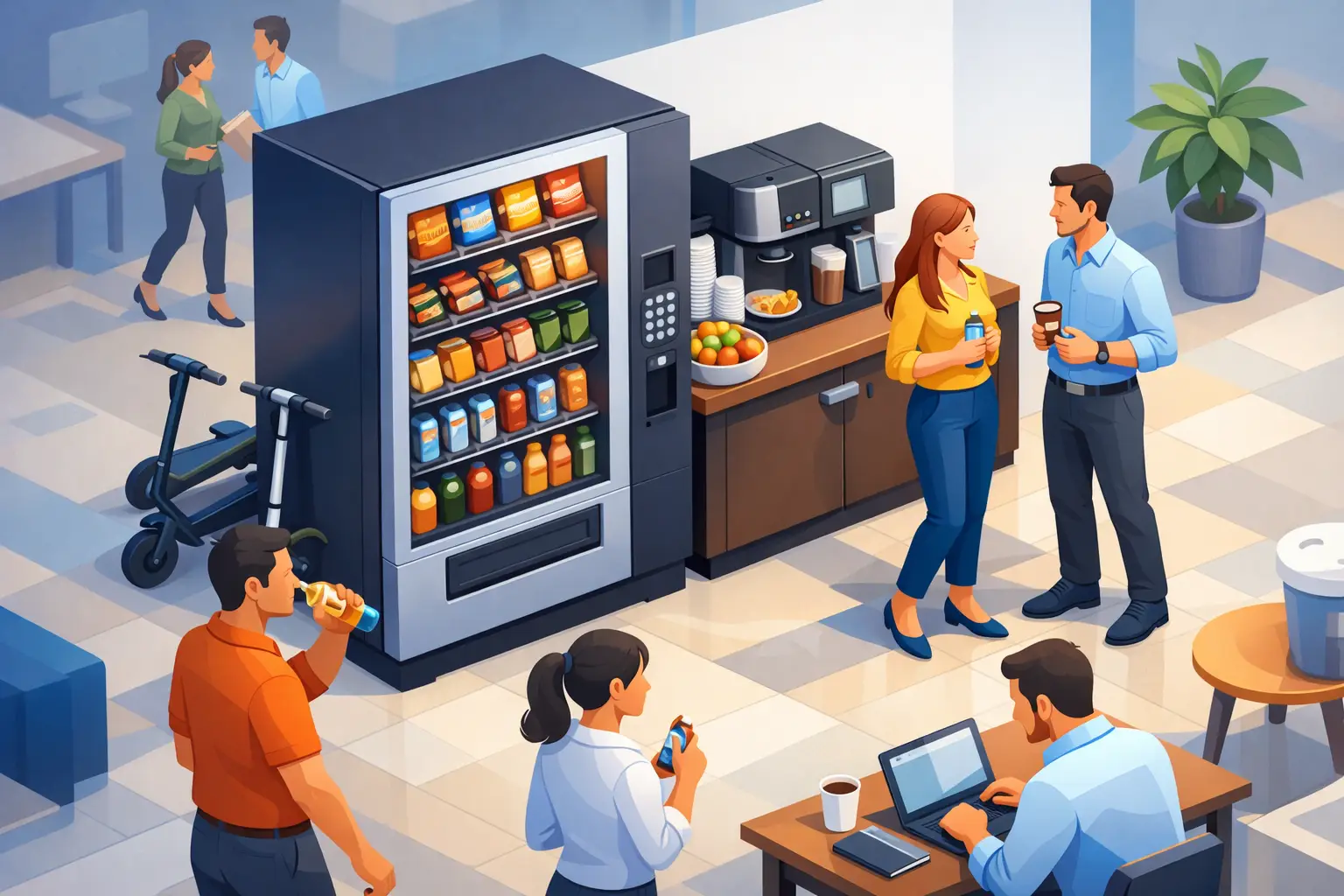
A break room can look well stocked on Monday morning and feel picked over by Wednesday afternoon. When employees cannot count on a cold drink, quick snack, or familiar coffee option during a busy day, the inconvenience is small but repeated. Workplace vending solutions address that daily gap by giving teams dependable access to refreshments without asking office staff to manage another supply closet, store run, or vendor relationship.
For facilities managers, office managers, and business owners, vending is not simply about placing a machine in a corner. The right program supports employee comfort, keeps visitors and staff supplied, and creates a more organized break room. The difference comes down to the products, equipment, replenishment schedule, and service behind it.
What Workplace Vending Solutions Should Deliver
A vending program should be easy for employees to use and easy for your organization to maintain. That starts with a selection that reflects how people actually work. A corporate office may need bottled water, sparkling beverages, snacks, and better-for-you options. A warehouse, healthcare facility, or commercial site with multiple shifts may place greater value on 24-hour access, hearty snacks, and consistently cold beverages.
Variety matters, but it should not become clutter. A well-planned machine offers recognizable choices employees trust, with a balanced mix of popular favorites and practical alternatives. Traditional snacks and soft drinks still have a place, while protein bars, nuts, baked snacks, juices, and low-sugar beverages can help serve a wider range of preferences.
Reliable equipment is equally important. Payment issues, empty selections, poor temperature control, and out-of-service signs quickly undermine the value of vending. Modern machines can accept cashless payment methods, provide clear product visibility, and help make each purchase quick and straightforward. Those features improve the employee experience, but only when the machine is properly maintained and stocked.
Start With the Needs of Your Workplace
There is no single vending setup that fits every commercial environment. Before selecting equipment or products, consider the number of employees on site, traffic patterns, operating hours, and nearby food options. A small professional office may need one compact snack and beverage solution. A larger campus or manufacturing location may require multiple machines positioned near common areas, entrances, or shift-change zones.
Think about who uses the break room and when. If most staff are in the office from 8 a.m. to 5 p.m., daytime replenishment may be appropriate. If employees work evenings or overnight, vending becomes a more essential amenity. In that setting, an empty machine is more than a minor frustration. It may be the only practical refreshment option available.
Product mix should also be reviewed over time. A machine stocked entirely from a standard plan may not reflect what your employees buy. Sales patterns can reveal which beverages move quickly, which items sit too long, and where selection changes would make a meaningful difference. A service provider that pays attention to those details helps the program stay useful rather than becoming an overlooked break room fixture.
Snack, Beverage, and Food Options
The strongest vending programs give employees convenient choices for different moments in the day. A midmorning coffee drinker may want a light snack. Someone working through lunch may need something more substantial. An afternoon meeting can create demand for bottled water, sodas, and grab-and-go options.
Depending on the location, a mix may include cold beverages, snack products, fresh food selections, frozen items, or specialty machines. Fresh food vending can be a valuable addition for larger workplaces or sites with limited nearby dining, but it requires careful product rotation and temperature management. It is a good fit when demand and service frequency support it. For smaller offices, a focused snack and beverage selection may deliver better value with less waste.
A good provider will help match the offering to the location instead of overselling equipment or filling a machine with products that do not move.
Why Service Is the Real Difference
Vending equipment gets attention because it is visible. Service is what determines whether the program works week after week. A machine needs more than an occasional refill. It needs reliable delivery, product rotation, responsive maintenance, accurate account support, and a clear point of contact when something goes wrong.
Office and facilities teams should not have to chase down a vendor after a service issue or spend time explaining the same problem to different people. Local accountability matters. When a machine needs attention, a quick response protects the employee experience and prevents a minor problem from becoming a long-running complaint.
This is especially important when vending is part of a larger break room program. Coffee machines, water systems, condiments, cups, and vending equipment all affect the same shared space. Working with one experienced provider can reduce administrative work and help maintain a consistent standard across the break room.
Certified Coffee Service has supported South Florida workplaces since 1975 with a service-first approach built around dependable equipment, recognized brands, replenishment, and hands-on support. That approach reflects a simple expectation: your break room should operate without becoming another task on your team’s list.
Pair Vending With Coffee and Water Service
Vending works best when it complements the rest of the break room. Employees often pair a snack with coffee, tea, or water, so these services should be considered together. A thoughtfully equipped break room may include a bean-to-cup coffee system for fresh specialty beverages, a traditional brewer for high-volume coffee needs, and a water solution for convenient hydration throughout the day.
The right coffee equipment depends on volume, preferences, and budget. Bean-to-cup machines offer a premium experience and fresh-ground coffee. Single-cup systems make it easy to provide variety. Traditional brewers remain a practical choice for workplaces that serve coffee by the pot. There are trade-offs in cost, capacity, and maintenance, which is why equipment selection should be based on actual usage rather than appearance alone.
Recognized coffee and tea brands also add value. Employees notice familiar names and consistent quality, whether they choose Starbucks coffee, Lipton tea, Bigelow tea, or a dependable everyday roast. Together with vending, these options give people more reasons to take a useful break without leaving the workplace.
Questions to Ask Before Choosing a Vending Provider
The best time to evaluate service is before there is a problem. Ask how often machines will be stocked, how product selections are reviewed, and what the response process looks like for equipment issues. Confirm whether cashless payment is available and whether machines can be placed in the areas where employees will actually use them.
It is also worth asking about flexibility. Your workplace may grow, add shifts, move locations, or change its approach to employee amenities. A vending provider should be able to adjust product selections, equipment, and service levels as those needs change.
Finally, look beyond the machine itself. A low-cost vending arrangement can become expensive in employee frustration if products are unavailable, equipment is unreliable, or service calls take too long. The better value is a program that stays stocked, stays clean, and stays ready for the people who depend on it.
A dependable vending program is a practical way to show employees that their time and comfort matter. With the right equipment, products, and service partner in place, the break room can remain a reliable part of the workday rather than a source of preventable interruptions.