
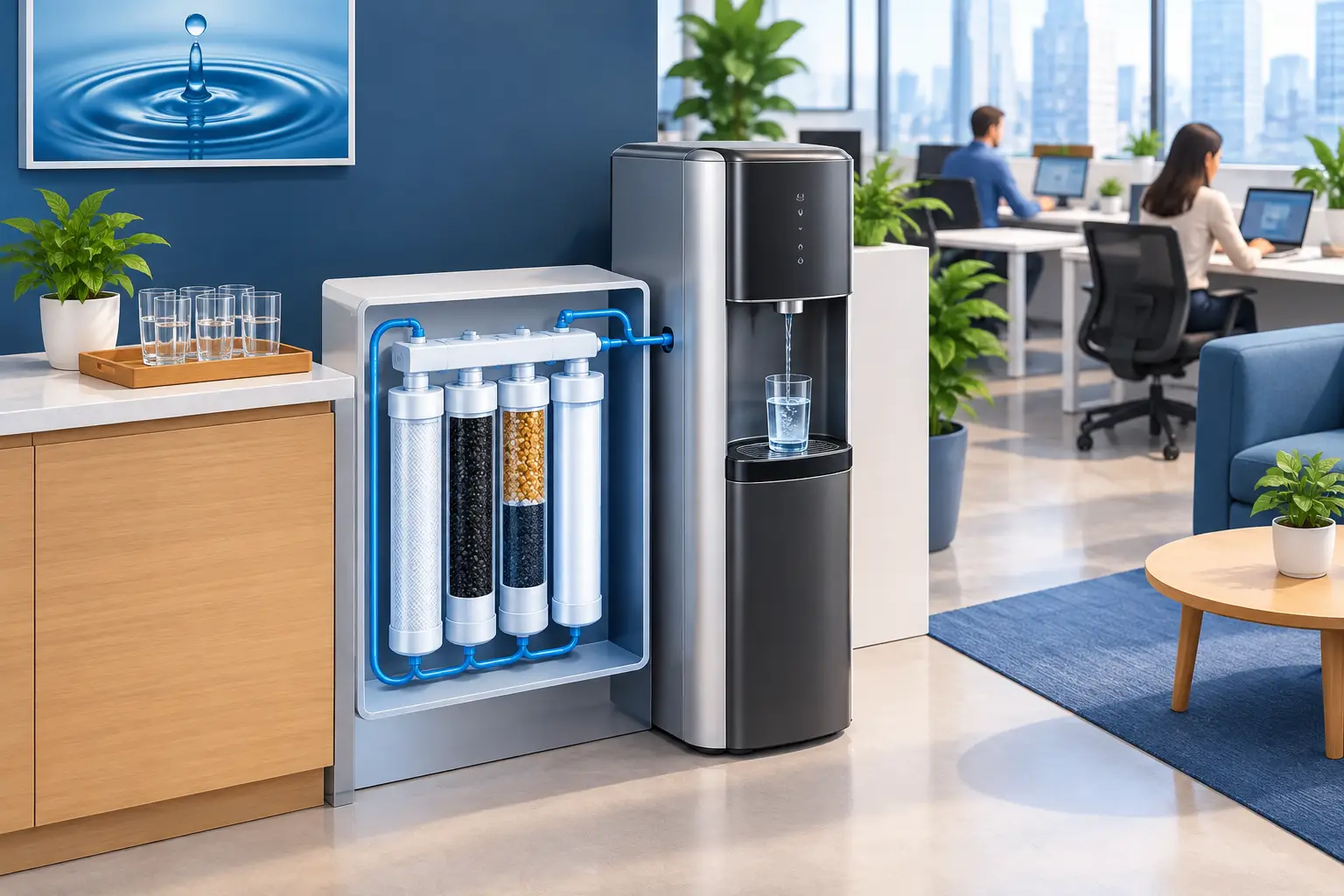
A water cooler that runs empty before lunch, bottled-water deliveries that take up valuable storage space, and an ice machine affected by mineral buildup are all small disruptions that add up. This workplace water filtration guide is designed for office and facilities decision-makers who want a more dependable way to provide fresh drinking water without adding another recurring headache to the break room.
For many workplaces, filtered water is more than an employee perk. It supports coffee and tea quality, gives guests a better impression of the office, and helps reduce the waste and logistics associated with single-use bottles. The right system depends on your water source, headcount, daily use, available space, and the service support behind the equipment.
Why Workplace Water Filtration Deserves Attention
Employees notice the basics. Fresh coffee, clean water, stocked supplies, and equipment that works when it is needed all shape the day-to-day break room experience. When drinking water has an unpleasant taste or odor, people often turn to individual bottled beverages instead. That can increase costs, create more waste, and leave the office managing cases of water and recycling bins.
A properly selected filtration system treats water at the point of use. Depending on the equipment and filter media, it can reduce chlorine taste and odor, sediment, and certain contaminants. It may also help protect connected equipment from particles and mineral scale. The result is a cleaner-tasting water option that is ready when employees, customers, and visitors need it.
In South Florida, water conditions can vary by location and building. A solution that works well in one office may not be the best fit for another. That is why a site review and an understanding of the building’s water supply matter before choosing equipment.
Start With Your Office’s Actual Water Needs
Before comparing dispensers or filtration technologies, look at how water is used throughout the workplace. A small office with 15 employees has different needs than a busy corporate floor with several hundred people, a client reception area, and multiple break rooms.
Consider daily demand, not just employee count. Does the office host frequent meetings? Are employees filling reusable bottles throughout the day? Is there a fitness area, warehouse, waiting room, or cafeteria? These details affect dispenser capacity, recovery rate, and whether one centrally located unit is enough.
Temperature options also matter. Chilled and ambient water may suit a basic break room, while hot water can add convenience for tea, oatmeal, and instant meals. Sparkling water is increasingly popular in some offices, but it adds equipment complexity and should be selected only when demand supports the investment.
Placement is equally practical. The best water system is one employees can reach easily without creating congestion. A break room is the common choice, but a second dispenser near conference rooms or high-traffic work areas can make sense in larger facilities. Confirm that the location has access to a water line, drain requirements if applicable, electrical service, and enough clearance for service visits.
Understand the Main Filtration Options
Not every workplace needs the same level of filtration. Water testing, local water information, and equipment requirements should guide the decision rather than assumptions about what is necessary.
Carbon Filtration
Activated carbon filtration is common in workplace drinking-water systems. It is often used to improve taste and odor by reducing chlorine and other compounds that can affect how water tastes. This can be a strong choice for offices seeking a noticeable improvement in everyday drinking water and better-tasting coffee and tea.
Sediment Filtration
Sediment filters capture particles such as rust, sand, or debris that may enter through plumbing. They are particularly useful when protecting water dispensers, coffee brewers, and ice equipment from buildup. In some installations, sediment filtration is paired with carbon filtration for broader treatment.
Reverse Osmosis Systems
Reverse osmosis, often called RO, uses a membrane process to reduce a wider range of dissolved materials. It can be appropriate where water quality concerns, high dissolved solids, or specific workplace needs call for more intensive treatment. RO systems typically require more planning, may produce wastewater during treatment, and need consistent maintenance. They are not automatically the right answer for every office.
Scale-Control Solutions
Scale control is especially relevant for equipment that heats water, including coffee brewers and hot-water dispensers. Mineral deposits can affect performance, shorten equipment life, and lead to more frequent service needs. A water treatment plan designed around equipment protection can be as valuable as one designed around drinking-water taste.
Choose the Right Water Delivery Format
The filtration system is only one part of the decision. The dispenser and delivery format determine how employees interact with it every day.
Bottleless water coolers connect directly to the building water supply and filter water on site. They eliminate the need to store and lift five-gallon bottles, provide a consistent source of water, and can be an efficient fit for offices with steady demand. Many models offer chilled and hot water, and some include touchless or bottle-filling features.
Countertop dispensers can work well in smaller offices where floor space is limited. They offer a compact solution but may have lower capacity than freestanding units. For high-volume environments, a commercial bottle-filling station or multiple point-of-use units may be a better fit.
Traditional bottled-water coolers still have a place in temporary offices, locations without easy plumbing access, or situations where installation is not practical. The trade-off is ongoing delivery coordination, storage space, and manual bottle changes. The right format should make the break room easier to manage, not simply shift work from one task to another.
Service Is Part of the Filtration Plan
A water dispenser can look excellent on installation day and still become a problem if filter changes, sanitization, and repair response are overlooked. Filters have a service life, and that life depends on water conditions and volume used. Waiting until water tastes different or flow slows down is not a maintenance strategy.
A dependable service plan should establish who monitors filter replacement intervals, who sanitizes the dispenser, how service requests are handled, and what happens if equipment goes out of service. For offices with coffee, tea, water, and vending needs, working with one accountable break room partner can reduce the number of vendors employees have to contact.
Ask direct questions before committing: Is scheduled maintenance included? Are filter changes handled by trained technicians? What is the response process for leaks or equipment issues? Is there a clear point of contact for the account? Equipment selection matters, but consistent support is what keeps workplace water available month after month.
Compare Cost Beyond the Monthly Equipment Price
The least expensive monthly option is not always the lowest-cost solution over time. Consider installation requirements, filter replacement, service coverage, water use, energy consumption, bottled-water deliveries, storage, and staff time spent managing supplies. A point-of-use filtered water system may reduce ongoing bottle handling and purchasing, but it requires suitable plumbing and professional maintenance.
Employee experience should be part of the calculation as well. When a convenient filtered-water station encourages reusable bottles, it can help reduce disposable beverage purchases and support a cleaner, more organized break room. For client-facing offices, it also provides a simple but meaningful sign of hospitality.
A Better Break Room Starts With Reliable Water
Water filtration works best when it is planned as part of the entire workplace beverage program. The water that fills a cup, makes tea, supports coffee equipment, and welcomes a visitor should be consistent, clean-tasting, and readily available.
Certified Coffee Service approaches break room support with Service Above All, helping South Florida workplaces coordinate dependable water solutions alongside coffee, tea, equipment, and supplies. The most useful next step is simple: assess how your office uses water now, identify the frustrations your team manages today, and select a filtration and service plan built to keep the break room moving.