
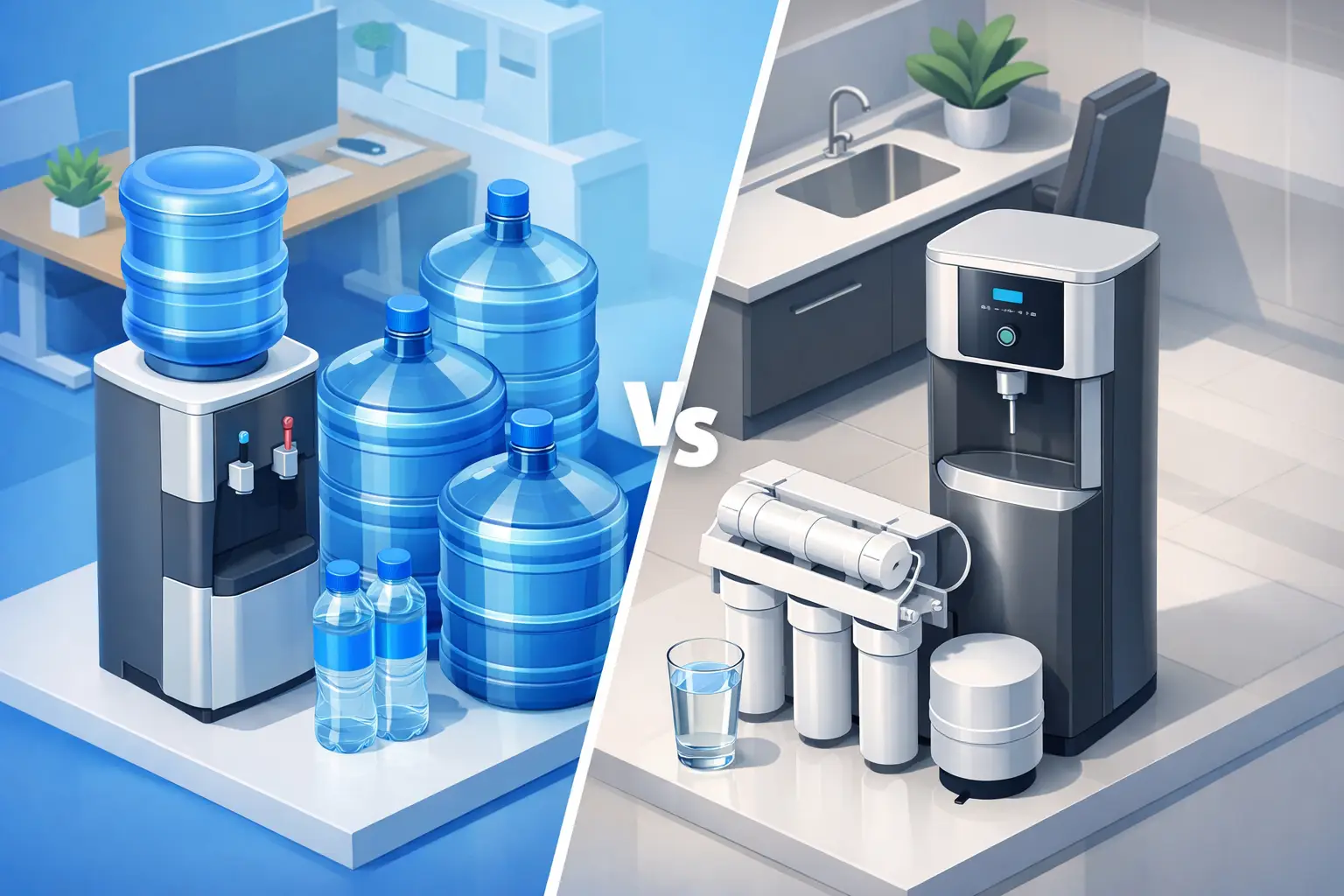
At 8:45 a.m., the break room water station can either be a quiet workplace benefit or the source of an avoidable problem. Empty bottles, a dispenser that needs cleaning, poor-tasting tap water, or an unexpected delivery gap all become someone’s responsibility. For the person making the bottled water vs filtration office decision, the real question is not simply which option costs less. It is which solution keeps employees hydrated with the least disruption to the workday.
Both bottled water coolers and point-of-use filtration systems can serve an office well. The right choice depends on headcount, building access, water quality, employee expectations, storage space, and the level of ongoing service your business needs. A dependable water program should feel simple for employees and manageable for the office team behind it.
Bottled Water vs Filtration for Offices: The Core Difference
Bottled water coolers use pre-filled five-gallon bottles that are delivered to your workplace and loaded onto a dispenser. The water is typically purified or spring water, depending on the selected product. Employees get familiar hot and cold water at the push of a button, while deliveries replenish the supply on a regular route.
A filtration system, often called a point-of-use or bottleless water cooler, connects directly to the building’s water line. The unit filters the incoming water and dispenses chilled, hot, or room-temperature water without requiring bottled water deliveries or storage.
The choice is often framed as bottles versus no bottles. In practice, it is a choice between two service models. Bottled water relies on delivery, inventory, and bottle handling. Filtration relies on proper installation, scheduled filter changes, sanitation, and equipment support. Neither approach is automatically better for every office.
When Bottled Water Is the Better Office Choice
Bottled water remains a strong fit for many workplaces, especially where convenience means avoiding plumbing work. A dispenser can be placed in a break room, reception area, warehouse, training room, or temporary office without connecting to a water line. That flexibility matters in leased spaces, older buildings, and locations where plumbing access is limited.
It can also be the right answer for smaller teams with modest water consumption. If an office uses only a few bottles each month, a delivery-based program may be easier to manage than installing a dedicated filtration unit. The equipment is straightforward, employees already understand how it works, and the water source is consistent from bottle to bottle.
Bottled water can provide added confidence when a business has concerns about the taste, odor, or reliability of its municipal water. While a quality filtration system addresses many of those concerns, some organizations prefer water that arrives ready to dispense. This is particularly common in client-facing spaces where presentation and perceived quality are part of the experience.
The trade-off is physical handling. Full bottles need a clean, accessible storage area, and empty bottles must be held for pickup. Five-gallon bottles are heavy, so offices should consider who will load them and whether the dispenser design reduces lifting. For a busy workplace, running out of bottles before the next delivery is another planning issue that needs attention.
Where Office Filtration Makes Sense
A filtration system is often a practical choice for offices with steady or high water consumption. Because the unit is connected to the building water supply, employees do not need to wait for bottle deliveries or monitor the remaining bottle supply. Water is available throughout the day, which can be especially useful in larger offices, medical facilities, call centers, and high-traffic common areas.
Filtration also helps reduce the clutter associated with bottle storage. There are no stacks of full bottles near the break room and no empty containers waiting for a driver to collect them. For offices with limited square footage, that can improve organization immediately.
Modern bottleless systems can offer more than cold water. Depending on the equipment, offices may have hot water for tea and instant meals, touchless dispensing, enhanced filtration, or sparkling water options. These features can make a water station feel like a more complete employee amenity rather than a basic utility.
However, filtration equipment should never be treated as install-and-forget equipment. Filters must be changed on schedule, systems need periodic sanitation, and any issue with water pressure, drainage, or the dispenser itself requires prompt attention. The quality of the service provider matters as much as the equipment selection.
Compare the Costs Beyond the Monthly Price
The monthly rate is an important consideration, but it does not tell the full story. Bottled water expenses generally reflect the number of bottles used, delivery frequency, equipment rental or purchase, and any related service. Costs can rise as headcount grows or as employees use more water during hot South Florida months.
With filtration, expenses typically include installation, equipment rental or purchase, scheduled maintenance, replacement filters, and service. The monthly cost may be more predictable for organizations with high consumption because it is not directly tied to the number of bottles delivered. Still, a low initial quote has less value if it excludes the maintenance required to keep the system performing properly.
Office managers should also account for internal costs. How much staff time goes into tracking inventory, moving bottles, placing emergency orders, cleaning around a dispenser, or coordinating repairs? A water solution that appears inexpensive on paper can become less attractive when it creates recurring administrative work.
The best comparison uses your actual situation: employee count, average bottle usage, current delivery schedule, available storage, plumbing access, and the number of locations that need water. This gives decision-makers a realistic picture rather than a generic cost estimate.
Water Quality, Taste, and Employee Confidence
Employees notice water quality. If the water tastes clean and is easy to access, they are more likely to refill a glass or reusable bottle during the day. If it has an unpleasant taste, inconsistent temperature, or a dispenser that looks neglected, they may choose less healthy alternatives or bring drinks from home.
Bottled water offers consistency based on the selected water product. Filtration improves water at the point of use by reducing common impurities and addressing taste or odor concerns. The results depend on the system, the condition of the building’s plumbing, and the local water supply.
For that reason, businesses should avoid assuming that all filtration systems perform the same way. The equipment should match the workplace and the water conditions. A reliable provider can help assess usage needs, recommend suitable equipment, and explain the maintenance schedule clearly.
Service Is the Deciding Factor
Whether your office chooses bottled water or filtration, the service experience determines whether the program stays easy. Water should be delivered when promised. Equipment should be installed professionally. Filters should be replaced before performance suffers. When a dispenser needs attention, employees should not be left without drinking water for days.
This is where a full-service workplace beverage partner can simplify operations. Rather than treating water as a separate supply problem, the right provider can coordinate water equipment, coffee service, tea, cups, and break room essentials through one accountable relationship. Certified Coffee Service has built its approach around Service Above All because dependable support is what keeps workplace amenities working day after day.
Ask prospective providers practical questions before making a decision. What is included in routine maintenance? How quickly do they respond to service calls? Who handles installation? How are deliveries managed? What happens if usage changes? Clear answers are a good sign that the program will be managed professionally after the initial sale.
Choosing the Right Water Solution for Your Workplace
Choose bottled water when portability, simple placement, and a delivered water source are your top priorities. It is often ideal for smaller offices, spaces without easy plumbing access, and companies that prefer a familiar dispenser-and-delivery model.
Choose filtration when your office has reliable plumbing, consistent water demand, and limited space for bottle storage. It can be an efficient long-term option for larger teams and workplaces that want continuous access without managing bottle inventory.
Some organizations benefit from a combination. A bottleless unit may serve the main break room, while bottled water dispensers support a remote conference area, warehouse, or temporary workspace. The best setup reflects how people actually move through the workplace, not just what looks best on a proposal.
A well-supported water station is a small detail that employees use every day. Choose the option that fits your facility, then make sure it is backed by responsive service that keeps cold, clean water available when the workday gets busy.